Why “I’ll just cut down first” usually keeps you stuck
July 29, 2026·7 min read
Cutting down feels like a plan, but often keeps your cigarette count the same. Here’s when tapering works, when it backfires, and how to fix it.
“I’m going to quit by cutting down.”
Most people who say this… are still saying it a year later. And their daily number is more or less the same.
The problem isn’t tapering itself. The problem is this sentence.
This is a wish, not a plan
A real plan has three parts: a goal, a way to measure it, and a date.
“I’ll quit by cutting down” has none of those. How much will you cut down, how will you track it, when does it end?
As it is, you can say this sentence again every Sunday night and feel like you “did something” each time. It’s the same trap as the classic “I really should quit”: pointing in the right direction without actually moving.
Why does the number creep back up?
Here’s what a typical two months of “cutting down” looks like:
Week 1: 20 → 12. Easy. You feel proud.
Week 2: 12 → 10. A bit of struggle shows up.
Week 3: 10 → 13. “It was a stressful week.”
Week 6: 16. “I’ll get serious again on Monday.”
That climb back up has two main reasons, and neither is about willpower — it’s also not about whether you’re “ready” or not.
First is your body’s compensation: as the number goes down, your drags get deeper, and the nicotine in your blood doesn’t fall as much as you’d expect. We walk through how measurements show this in a separate post.
The second is less known and more important: when you cut down, the cigarettes you keep become rewards.
Intermittent reward: the hardest pattern to break
When a behavior gets rewarded every single time, it tends to fade fairly quickly once the reward disappears.
But when the reward shows up only sometimes — yes on some tries, no on others — the behavior becomes much more stubborn. In behavioral psychology this is the most resistant pattern; it’s also how slot machines work.
When you smoked 20 a day, each cigarette was just… normal. When you cut down to 5, each one becomes a waited-for, postponed, earned reward. So while you’re lowering the number, you’re increasing the value of each remaining cigarette in your mind.
The strange result: quitting 20 can feel easier than quitting 5.
You can test this on yourself: after a week of cutting down, try skipping one of the remaining cigarettes. The ones you could casually skip when you were on 20 become almost “unskippable” at 5 — the count is lower but each one is heavier. The total weight hasn’t really changed; you’ve just packed it into fewer pieces.
The third, sneakiest cost of cutting down: decision fatigue
We’ve talked about two mechanisms. The third one is less famous but often what actually makes tapering fall apart.
On 20 a day you’re not really deciding anything. It’s a routine: hand reaches out, done.
The moment you start cutting down, every cigarette becomes a decision. “Now or later?” “Does this one count?” “Did I ‘earn’ an extra today?” Fifteen tiny choices a day drain more energy than one clear decision.
With an all-at-once quit, the decision is made once and doesn’t get reopened every hour. The hard part is urges — but the bargaining stops, because there’s no table to bargain at.
That’s why the number often climbs again in week three: your willpower isn’t gone, your decision budget is.
⚠️ This is not the same as “cutting down is bad.” Fewer cigarettes are always better than more. The point here is narrower: as a path to quitting completely, cutting down is very unreliable.
When does cutting down actually work?
When you change one thing: cutting down has a finish line on the calendar.
That’s what we call a bridge. On one side is today’s number; on the other side, a specific quit date. In between, you work through your prep list. That bridge shouldn’t last more than two weeks — any longer and it stops being a bridge and turns into a new lifestyle.
A second tweak that helps is more subtle: cut down by time, not by number.
Switch from counting cigarettes to watching the clock
The usual taper sounds like: “I’ll smoke two fewer a day.” The catch is that the moment chooses which two — and the moment always picks the easiest ones to skip.
Instead, hook your cigarettes to the clock:
Count how many you smoke today. Say it’s 16.
Divide the hours you’re awake by that number. 16 waking hours / 16 = one cigarette per hour.
Tomorrow, smoke only on the hour. If you crave one at 10:40, wait for 11:00.
The next day, extend the gap by 15 minutes. The day after that, add another 15 minutes.
The key shift: your cigarettes are now set by the time, not by the craving. Coffee, your phone, the car — those chains stop being automatic triggers, because the link between trigger and cigarette is cut.
And this neatly fixes the problem from the previous section: it drops the number of decisions to zero. If it’s not the agreed time, there’s nothing to argue about. The clock itself clears the bargaining table.
⚠️ In real life there are two common traps. First, feeling you “have to” smoke just because the time has come — you don’t. Skipping one simply stretches the gap; it doesn’t “break” anything. Second, the “I missed 11:00, so I’ll just have one at 11:20” deal: missed cigarettes don’t get paid back. You wait for the next full slot.
And underneath all of this, one rule stays: this method is moving toward a date. Once your gap reaches 3 hours, your quit day has arrived.
As the gap widens you’ll notice something interesting: going from 45 minutes to 1 hour is hard, but going from 2 hours to 3 is easier. Reason is simple — the early gaps slam into your usual triggers; the later ones slide between them. The toughest part of the method is at the start; if you get through the first three days, it tends to speed up on its own.
Who does the clock method help, and who does it not?
Like any tool, this one fits some people better than others.
Where it works well: you smoke 15+ a day, and most of them score 1 or 2 on your own scale — automatic ones. As you stretch the interval, those automatic ones drop away on their own and you’re left with a smaller number of genuine cravings.
Where it struggles: you smoke 5–8 a day and every single one scores high on your own 1–3 scale. In that setup, the interval method is trying to thin out something that’s already sparse; gain is small, hassle is big. For this profile, picking a quit date directly tends to be more efficient.
Where it basically doesn’t work at all: your first cigarette comes within five minutes of waking up. There the issue is less habit and more physiology; stretching that first gap turns the morning into torture. In this profile, extra support options matter more than the specific method.
One question to tell plan from postponing
There’s a quick way to know whether your cutting down is a bridge or just a delay:
Is there a quit date written on your calendar?
If yes, you’re on a bridge. Keep walking. If not, you’re not really cutting down — you’re just smoking more carefully.
⚠️ “I’ll cut down first, then I’ll pick a date” is the order flipped on its head. The date comes first; cutting down becomes a funnel narrowing toward that day. We go through how to choose that date in another post.
Cutting down isn’t a bad idea. Cutting down without an end point is.
Pick a date today, use the clock method in the days leading up to it, and then see what happens hour by hour once that day starts.
You can track the intervals on paper; or, if you want it in your pocket, the Tar2Star app gives you the same timers and crisis tools on your phone.
This page is a photo. The app is the film.
These numbers show today. Tar2Star shows you a new one every morning — and stays with you when a craving hits.
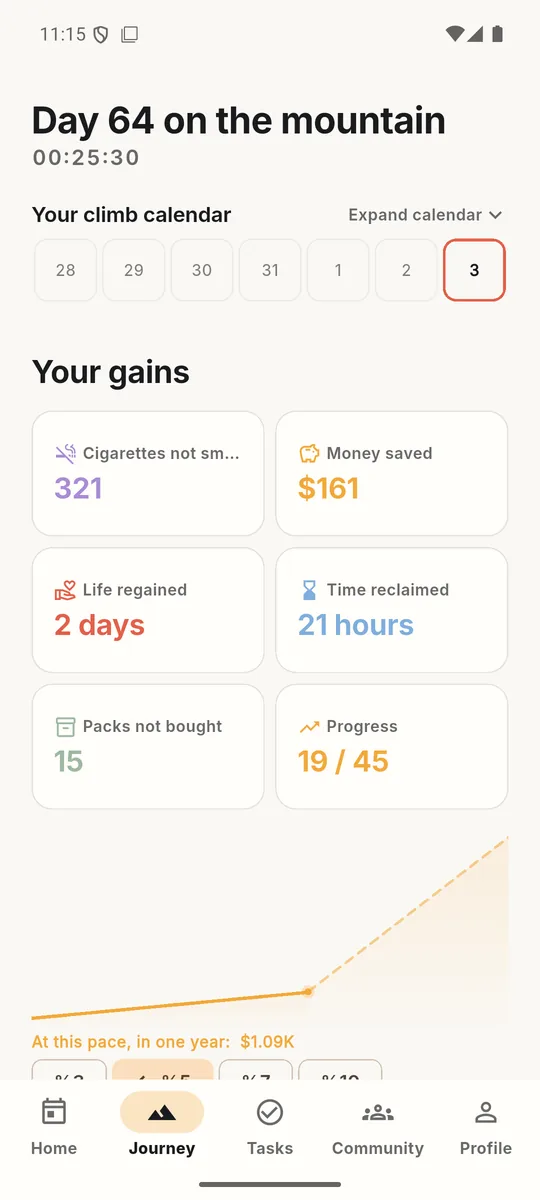
Your gains day by day: cigarettes not smoked, money saved, life reclaimed.
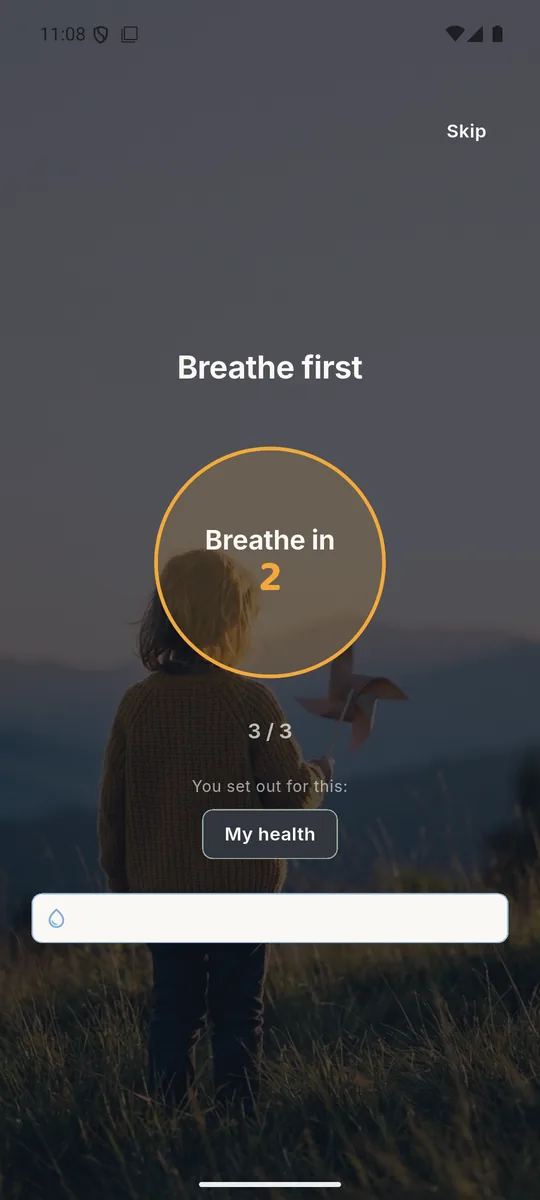
One tap when a craving hits: breathe first. A three-round guided breathing exercise.
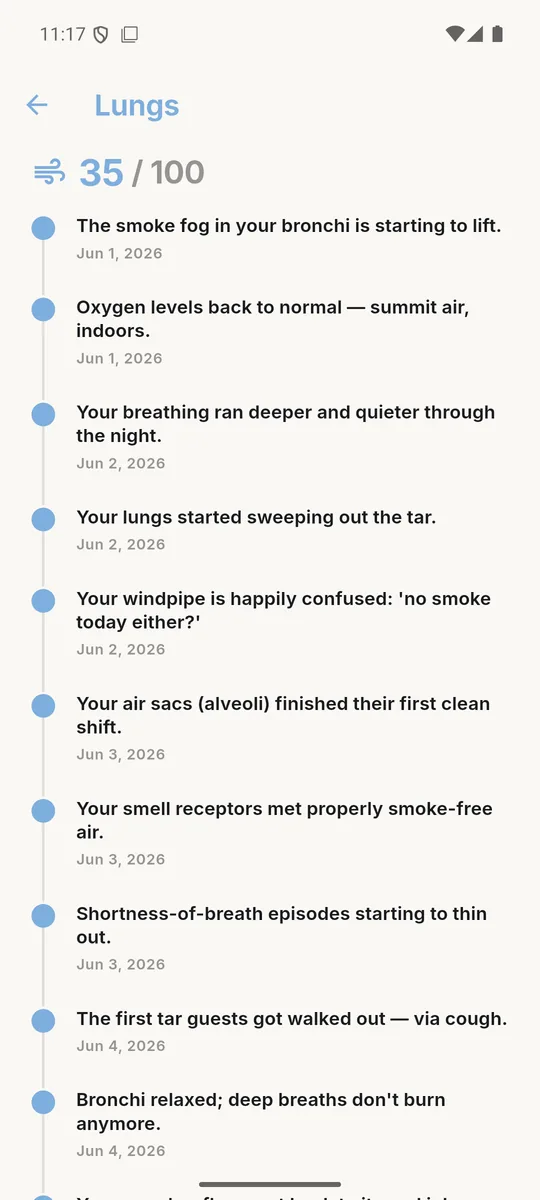
Six routes, 600 stops. Whatever is repairing in your body, you read it there.

You choose the view you are climbing — summit, forest, sea, or your own photo.
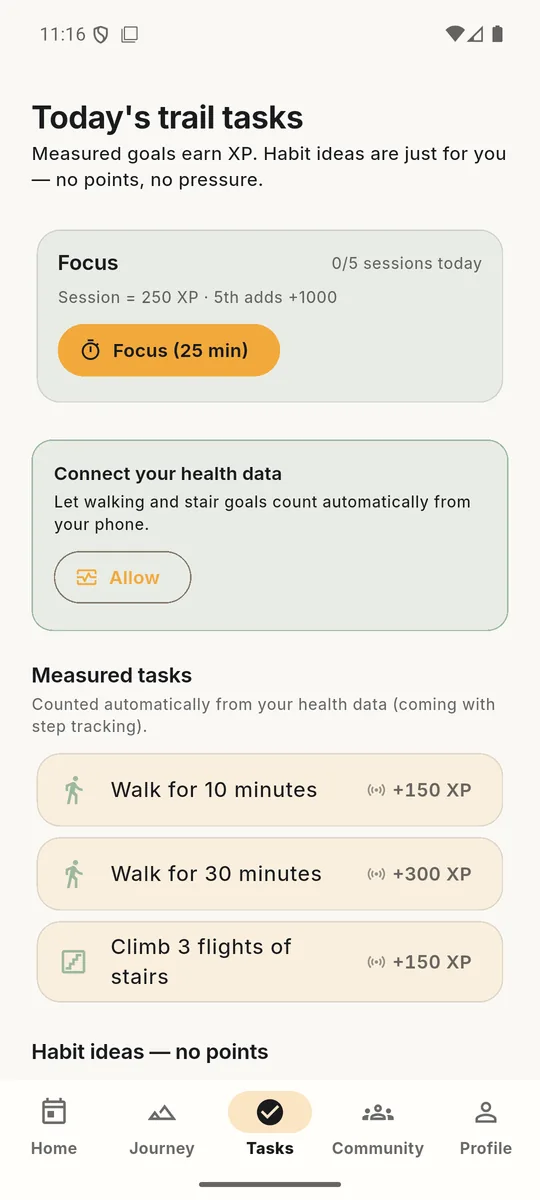
Small tasks every day. You are building a habit, not willpower.
Real screens from the app.
- Hear your own voice when a craving hits — the reason you quit, in your own words. You can add the voices of people you love, too.
- One tap for guided breathing and a distracting task — enough to fill those four minutes.
- 600 stops across six routes: read exactly what is repairing in your body today.
- Your numbers live on your device and keep counting offline — even on a plane.
- You pick the view you are climbing: summit, forest, sea, or your own photo.
- Interface, content and notifications in 14 languages.
You start free. The first day of the journey and the last are both yours.