Am I Too Old to Quit Smoking? What Actually Changes When You Stop
July 29, 2026·7 min read
“At my age, what’s the point of quitting?” Here’s the real answer: what changes when you stop, how fast it happens, and why it still matters right now.
“At my age, what difference does it make?”
It sounds like a calculation. It isn’t. It’s just a way for the brain to put off a decision by pretending to do math.
Let’s look at the hidden glitch in that sentence.
The hidden error: sunk cost
If you’ve smoked for thirty years, those thirty years are gone. They don’t come back.
The “what difference does it make” line quietly jumps from there to this idea:
“Because the time (and health) already spent won’t come back, nothing I do from now on matters either.”
There’s no logic connecting those two. The decision in front of you isn’t about the years behind you; it’s about the time you still have.
In economics this is called the sunk cost fallacy: continuing a harmful choice just because you’ve already paid a high price.
You hear it in other forms too: “after all this time…”, “damage is already done.” We broke down that second one with actual data in a separate post: “I’ve smoked for years, can the damage reverse?”.
The bias shows even more clearly in a different setting: a concert you bought a ticket for but don’t feel like going to.
The money is gone either way. The real question isn’t “is it worth the ticket price?” It’s “how do I want to spend tonight?”
Smoking is the same: the last thirty years don’t get a vote on today’s choice, because the choice is not about them.
Over 2,000 years ago, Cicero answered this idea in his book on old age:
“No one is so old as to think that he cannot live one more year.” (Nemo enim est tam senex qui se annum non putet posse vivere. — Cicero, On Old Age, 44 BC)
The sentence secretly relies on this: nobody actually walks around feeling “my life is over.” We all live assuming there’s some time ahead.
That’s true for the person saying “what difference does it make,” too.
So the real question is: how do you want that time to feel?
“Does quitting at my age even matter?” — what’s the right measure?
Most people asking this are thinking about one thing only:
“How many extra years will I live?”
Those numbers exist — and they’re real. We broke down years gained at different quit ages in another article: years regained by quitting.
But for someone quitting later in life, that’s the wrong yardstick.
Because life expectancy is far away, abstract, and impossible to verify personally. You never stand there and hear someone say, “Congratulations, that was your bonus year.”
What you actually feel when you quit later are things that are close, concrete, and measurable:
Climbing stairs without having to stop for breath
Morning cough easing up
Better sleep quality
Stronger sense of taste and smell
Being able to walk farther
Shortness of breath shrinking back in daily life
These don’t move on a “years” scale; they move on a weeks scale.
And they’re not about the date on your death certificate. They’re about how next Saturday feels.
If you quit later in life, when do things change?
Whatever your age, the very first hours follow the same pattern:
Around 20 minutes: heart rate and blood pressure start to move toward normal
Around 12 hours: carbon monoxide levels in the blood drop
Around 48 hours: taste and smell begin to improve
We laid out the full timeline here: what happens in your body after your last cigarette.
For later ages, the important part is what comes after that:
Breathlessness and cough usually ease over weeks
As circulation improves, your walking distance grows
So your first clear, visible gains don’t show up “years later.” They usually show up this month.
Is quitting harder at this age?
This one is more reasonable to ask — and the answer is a bit surprising.
Smoking for many years does deepen the dependence. That part is true.
But a few things actually get easier with age:
Less social pressure. The “everyone smokes” vibe in your twenties is gone for most people.
Reasons are more concrete. An effective reason isn’t abstract anymore; it’s lived. In later years, stairs, breathing, grandkids — these aren’t slogans, they’re your daily reality.
There’s also this: most people quitting later have already tried more than once. Those past attempts are not wasted.
Your daily schedule is more in your hands. Work hours, smoke breaks, the crowd outside the office — many of the things that made quitting in your twenties harder simply aren’t in the picture anymore. You control more of your time, and you have more say over your triggers.
What does get harder is worth naming honestly: the habit is forty years old, the ritual has settled into every room in the house, and that first morning cigarette often happens early.
That’s why support options usually matter more at older ages — not because you “lack willpower,” but because the dependence has had longer to dig in.
Three things people notice in their first month after quitting later in life
To keep it concrete, here are the three changes people most often describe when they quit at an older age:
“The stairs are different.”
This is usually the first thing they notice, often somewhere between week two and week four. Circulation and lung function are improving in that window.
“Mornings are different.”
The coughing fits right after waking can actually get worse in the first weeks (that’s your lungs clearing themselves), and then they ease.
Many people don’t know this bump is part of healing. They feel the cough flare up and think, “Quitting didn’t agree with me,” and go back — when in reality, that cough is the improvement.
“Food is different.”
Taste and smell switch back on around the 48‑hour mark. For someone who’s been struggling with low appetite at this age, that can be an unexpected bonus.
Notice what all three have in common: none of them are about how long you’ll live.
They’re all about the next few weeks.
The real question behind “what difference does it make?”
Let’s be honest: most people saying “what difference does it make” aren’t running a calculation.
They’re asking for permission.
So the answer isn’t another statistic. It’s another question:
How do you want the next five years to feel?
That question isn’t about the length of your life. It’s about what’s inside those years.
Out of breath at the top of every staircase — or getting there without stopping.
There’s a flip side to that hidden permission, and it often comes from other people. You’ve probably heard some version of: “Don’t quit at your age — that’s your only pleasure.”
It’s meant kindly, but the message underneath is: “The years you’ve got left aren’t worth planning for.”
Nobody actually believes that when you say it out loud. But it’s the assumption inside the sentence.
And the response is still the same question: how do you want the next five years to feel?
“I’m already sick — what’s the point now?”
This is the heaviest version of “what difference does it make,” and it deserves its own answer.
Getting a diagnosis doesn’t make quitting less meaningful. It does the opposite: it makes the effects of quitting more concrete.
Sometimes, with certain conditions, lost function won’t fully come back. But the speed of further loss can change when you stop.
On a graph, the line for someone who keeps smoking slopes down more steeply. The line for someone who quits is flatter. That flatter line is something you feel directly in daily life.
There’s also the treatment side.
Smoking can change how some medications work in your body and how wounds heal. So quitting after a diagnosis isn’t just about how the illness progresses; it’s also about how well treatment can work.
We unpacked that in more detail here: quitting smoking at 60 and beyond.
⚠️ One more thing: when you quit later in life, your current medications and conditions matter.
Smoking changes how some drugs are processed. When you stop, doses sometimes need adjusting.
If you’re on medication for your heart, blood pressure, diabetes, or breathing, mention your quitting plan to your doctor. It’s not a barrier — it’s just something to fine‑tune.
“Too late for me” isn’t a calculation. It’s a way of asking for permission.
Today’s only job is this: finish one sentence about how you want the next five years to feel.
If your answer includes “not gasping for air,” that sentence is your reason.
To see what you’re gaining starting today, put your quit date into the counter on the right; most of the first shifts show up on a weeks scale.
And if you want to keep that tracker in your pocket, the Tar2Star app was built exactly for that.
This page is a photo. The app is the film.
These numbers show today. Tar2Star shows you a new one every morning — and stays with you when a craving hits.
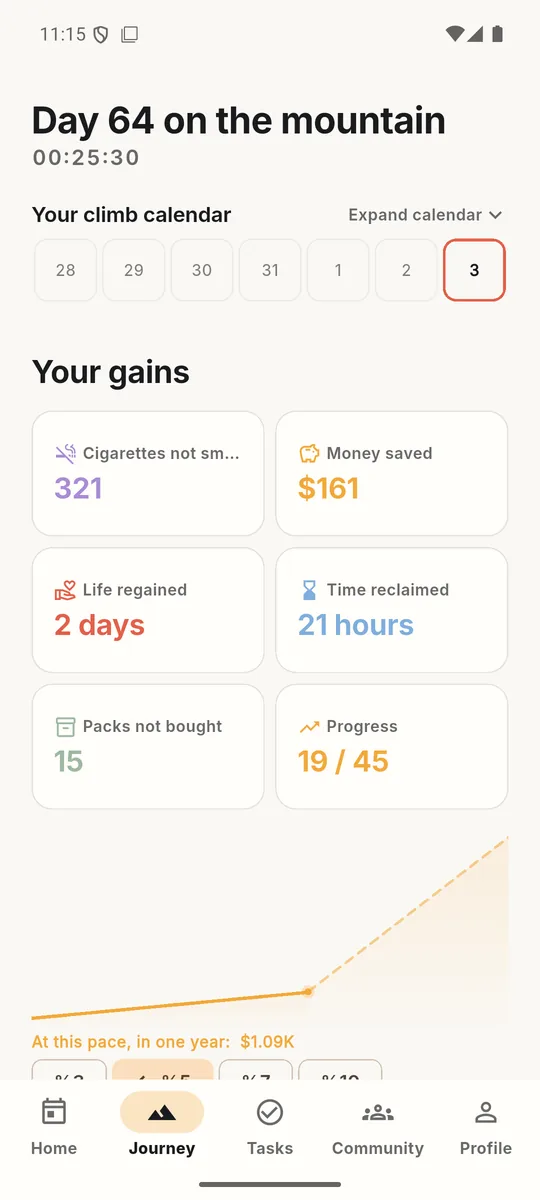
Your gains day by day: cigarettes not smoked, money saved, life reclaimed.
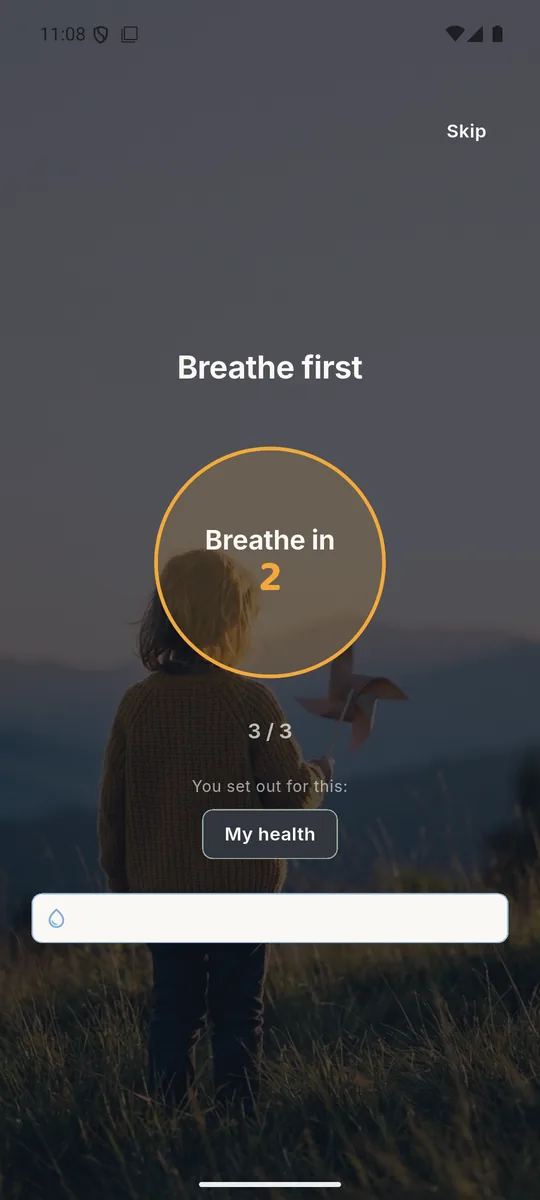
One tap when a craving hits: breathe first. A three-round guided breathing exercise.
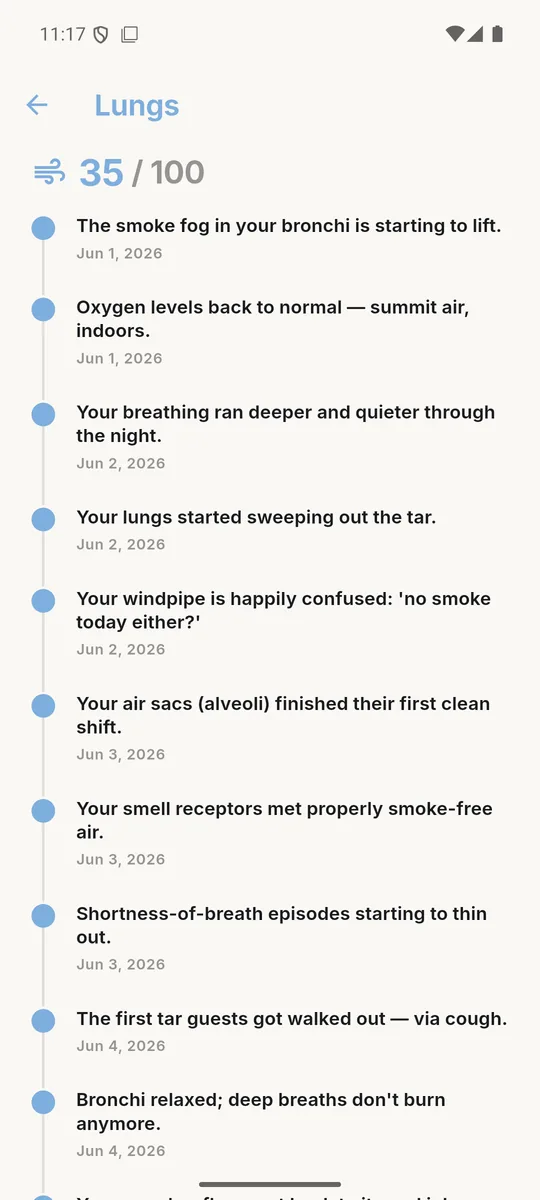
Six routes, 600 stops. Whatever is repairing in your body, you read it there.

You choose the view you are climbing — summit, forest, sea, or your own photo.
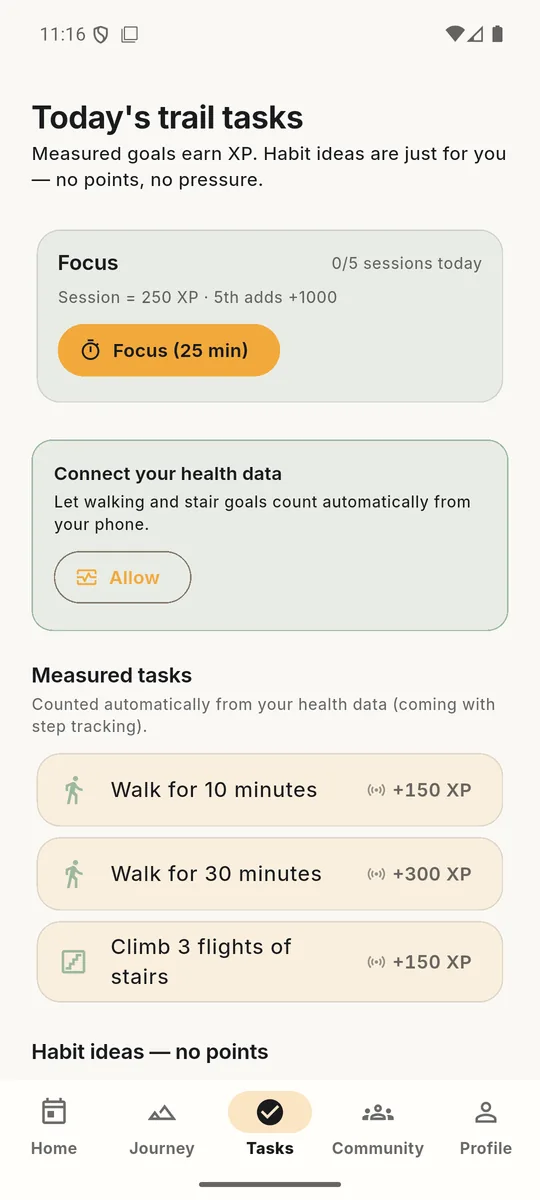
Small tasks every day. You are building a habit, not willpower.
Real screens from the app.
- Hear your own voice when a craving hits — the reason you quit, in your own words. You can add the voices of people you love, too.
- One tap for guided breathing and a distracting task — enough to fill those four minutes.
- 600 stops across six routes: read exactly what is repairing in your body today.
- Your numbers live on your device and keep counting offline — even on a plane.
- You pick the view you are climbing: summit, forest, sea, or your own photo.
- Interface, content and notifications in 14 languages.
You start free. The first day of the journey and the last are both yours.