How to Tell Your Partner, Family and Friends You Quit Smoking
July 29, 2026·7 min read
You quit smoking. Now what do you actually say to your partner, kids, family and smoking buddies—without drama, lectures or awkward silences?
You’ve decided to say it out loud: you quit smoking.
Now comes the tricky part: what do you actually say?
A lot of people get stuck right here. They either say nothing at all, or they say so much ki they end up saying more than they meant to. The difference is usually just one extra piece: saying what you need.
(Who to tell and where this sits in your 7‑day prep are in separate guides.)
Why “I quit” by itself isn’t enough
Because the other person has no idea what to do with that information.
Some people try to be supportive and check in every single day. Some stay completely silent so they “don’t pressure you.” Some awkwardly hide their cigarettes around you.
All three mean well. All three are random.
But in the 8‑step prep checklist, step 8 was exactly this: who you’ll reach out to when it gets hard. If you add what you want them to do, they don’t have to guess.
The formula is simple: situation + request + boundary.
“I quit today. Please don’t offer me any, and if I struggle I’ll text you. No need to ask every day.”
Your partner or the person you live with
This is the person who’ll carry the weight of that first week with you, so this is where you use the most detail.
Three things that really help to say:
Warn them about possible mood swings. “I might be cranky this first week, it’s not about you.” This one sentence shuts down a lot of unnecessary arguments before they start. Irritability is a real withdrawal symptom — reading the full list and how long they last together can help.
Ask for a specific kind of help. Vague “support” doesn’t work. Say something like “Let’s walk for 10 minutes in the evening” or “Don’t come out to the balcony with me.”
*Say what you don’t want.* “How long has it been now?” or “See, you’re cranky again” are usually meant well and land badly.
⚠️ If your partner smokes too, it’s a bit different: quitting together is powerful, but pushing rarely works. If you can’t push, set a minimum boundary: no smoking in the house or car.
The wording you use here really matters. “You should quit too” is a judgment and almost always backfires. “For my first two weeks, can we keep smoking out of the house?” is a request and is usually accepted — because you’re touching a time‑limited situation, not their identity.
After the two weeks are up, you might want to extend that boundary; that’s a new conversation. A forever rule is much easier to reject on day one.
When to tell people: before or after you quit?
People skip over this detail, but both options can work.
Telling them a few days before you quit makes planning easier: you can adjust your home setup, stop the casual “have one” offers early, and share your quit date.
Telling them after you quit can lower the pressure: “I’m going to quit” is something you can back out of; “I quit” is just stating a fact.
A practical middle path:
tell the person you live with before you quit
tell everyone else after you quit
With the first group, you share the prep. With the second, you skip having to explain every detail.
Your kids
Kids usually receive this news incredibly well — and they often become your strongest reminder.
Two things to watch:
Share a decision, not a lifetime promise. “I’ll never smoke again” is a heavy load; “I quit smoking, I didn’t smoke today” is true and manageable.
Don’t turn them into your watchdog. Asking your kid to police you can strain the relationship. Instead, share the win: “This month, the money we don’t spend on cigarettes is going toward this thing we’ll do together.”
Age changes the wording:
Younger kids (before school) don’t need the reasons. “I don’t smoke anymore” and the smell disappearing are already a big deal.
School‑age kids usually come with what they’ve heard at school and want confirmation; a simple, non‑dramatic “yes, that’s right” is enough.
Teenagers are the most sensitive group here. This talk can easily sound like a lecture, so keeping it as short as possible and letting them draw their own conclusions tends to work better.
Your family and close circle
Here you’ll see the same reaction a lot: well‑meaning doubt.
“Again? You tried last year too.”
The cleanest answer is the shortest: *“Yeah, I’m trying again. This time I’m doing this differently.”* No argument, no defending yourself, just one sentence and you’re done.
Having quit before and gone back is not a failure — most people who’ve quit for good have tried more than once. Keep this article where we go into that close by; not to convince others, but to remind yourself.
Your smoking buddies
This one can feel the most delicate, because they might hear it as: “I’m leaving the group.”
Try a three‑sentence approach:
Don’t make it personal. Not “I’m done hanging out with you,” but “I’ll still come out for breaks, I just won’t smoke.”
Shut down offers early. “Don’t hand me one, I’ll grab it out of habit.” It’s honest, and it doesn’t insult anyone.
Give yourself wiggle room the first week. Not standing in the smoking area for the first few days isn’t weakness, it’s strategy. Two weeks from now, the same spot will be much easier.
Quick replies for common reactions
Once you start telling people, a few responses are almost guaranteed. Having your reply ready keeps you out of defensive mode.
“Oh, we were going to quit too. What are you using?” → “It’s still early, I’m not recommending anything yet. If something really works for me, I’ll let you know.” Taking on the “expert” role is more weight than you need in week one.
“You’re going to gain weight.” → “Maybe. I’ll deal with that later.” No debate; this sentence is just there to close the topic. Weight is a real concern, but not a week‑one priority.
“One cigarette won’t hurt, it’s a special day.” → “That’s not how it works for me.” Short, non‑accusing, and doesn’t invite follow‑up. Long explanations only invite more convincing.
All three have one thing in common: they’re short. Long replies turn into discussions; short ones end the topic.
You don’t owe anyone an explanation
One last point — and for some people, it’s the most important.
You do not have to give a personal, detailed answer to “Why did you quit?” “Because I wanted to” is a complete sentence.
If sharing your reasons makes you feel stronger, share them. If it makes you feel like you have to justify yourself every time, you don’t have to. Your own reason is something you carry in your pocket, not something you have to put on the table.
The week after you tell people
You’ve said the words. What if people don’t behave the way you hoped?
Two things happen a lot.
First: they forget. Three days later, someone offers you a cigarette again. It’s not disrespect; it’s just that what’s huge for you is still small for them. A quick reminder is enough: “I told you I quit, you probably just forgot.”
Second: they overdo the support. They ask every day, bring it up at every meal. Again: good intentions, exhausting effect. One sentence usually fixes it: “It’s going well, you don’t have to ask — if there’s a problem, I’ll tell you.”
In both cases, the rule is the same: don’t stockpile your discomfort — say something that day. If you let it build up, by week two it can turn into a full argument, and the thing that loses in that argument is often your decision.
What you say has three parts: I quit · please do this · please don’t do that.
Tell one person those three pieces today. The rest tends to fall into place.
One more thing that helps: when someone asks, “So how long has it been?” you don’t have to do math or ask anyone. Plug your quit date into the counter on the right and your day count is right there on your screen — the one piece of proof you have, even if you don’t explain anything to anyone.
If you want to keep that same counter, your savings tracker for your kid, and your crisis‑moment tools in your pocket, the Tar2Star app is there for that.
This page is a photo. The app is the film.
These numbers show today. Tar2Star shows you a new one every morning — and stays with you when a craving hits.
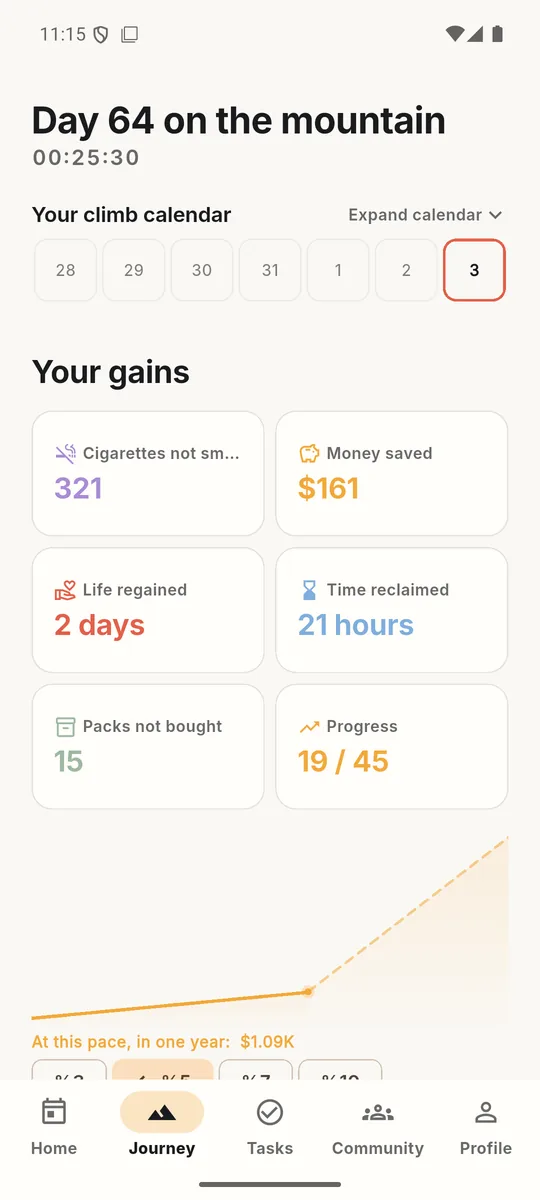
Your gains day by day: cigarettes not smoked, money saved, life reclaimed.
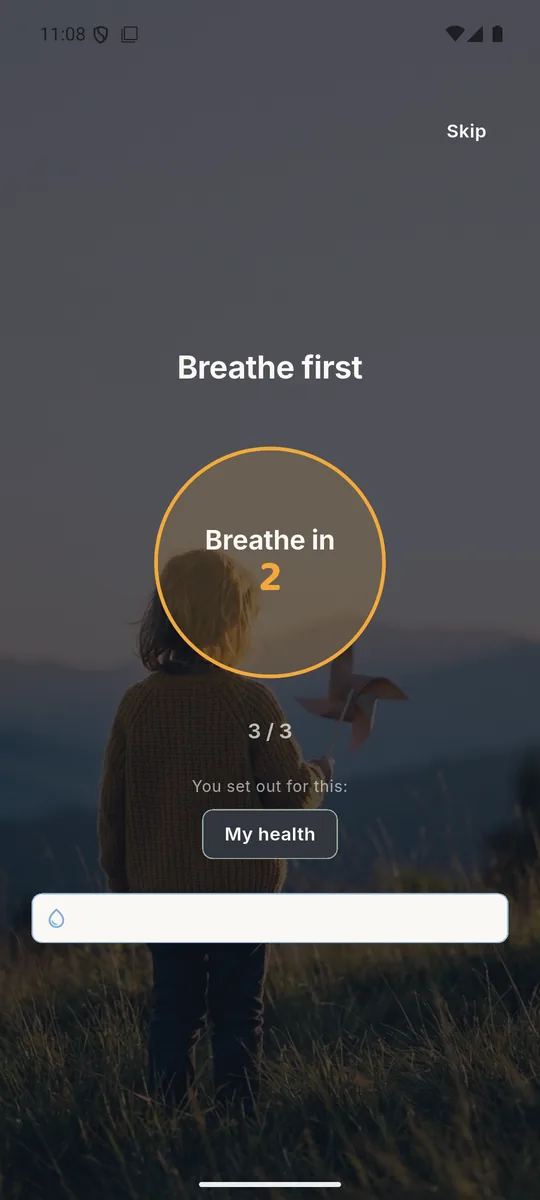
One tap when a craving hits: breathe first. A three-round guided breathing exercise.
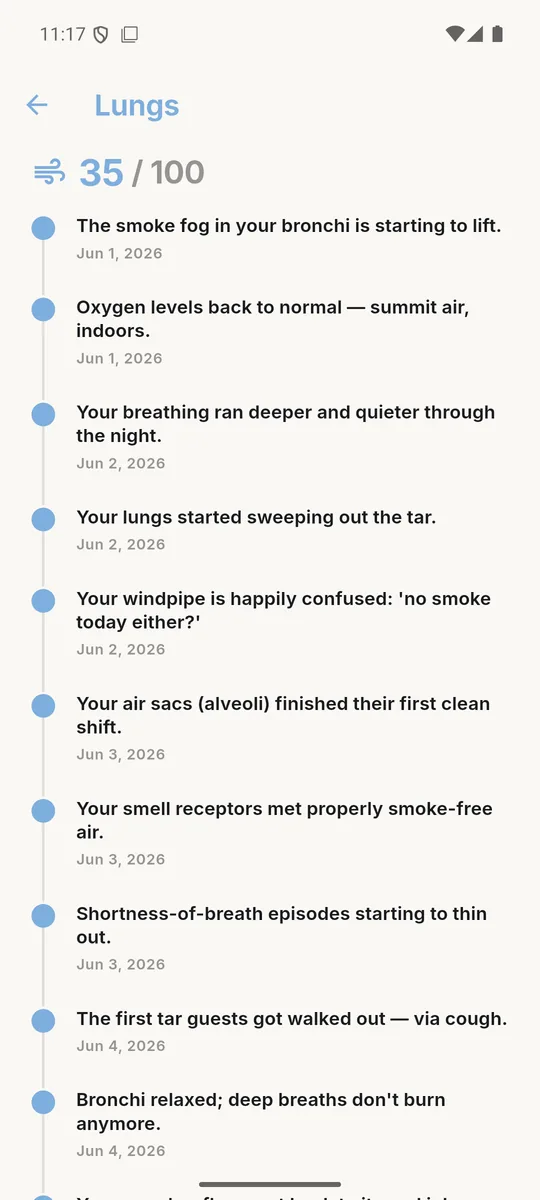
Six routes, 600 stops. Whatever is repairing in your body, you read it there.

You choose the view you are climbing — summit, forest, sea, or your own photo.
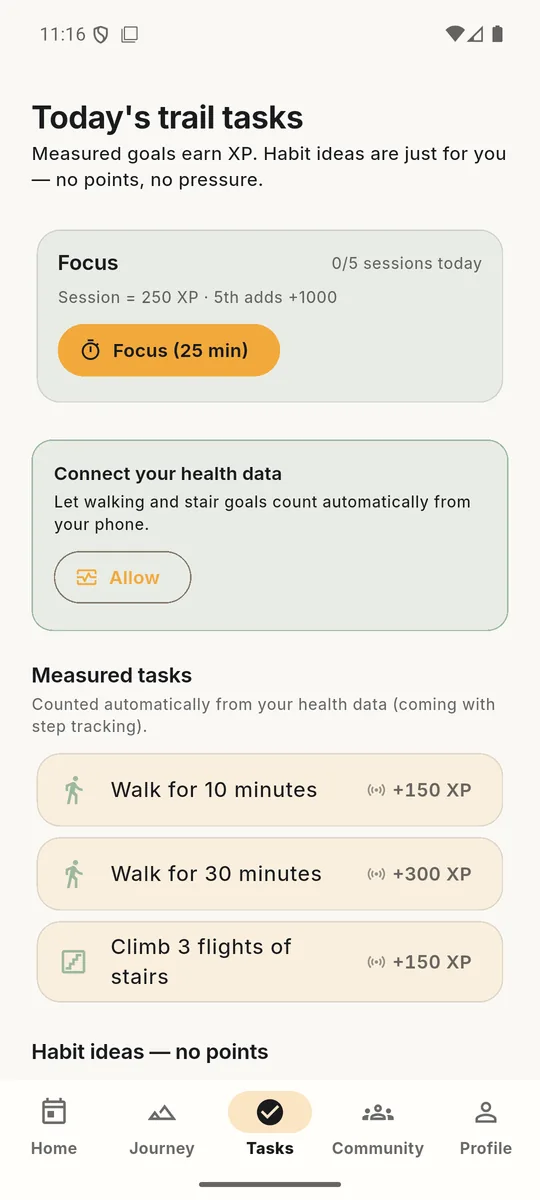
Small tasks every day. You are building a habit, not willpower.
Real screens from the app.
- Hear your own voice when a craving hits — the reason you quit, in your own words. You can add the voices of people you love, too.
- One tap for guided breathing and a distracting task — enough to fill those four minutes.
- 600 stops across six routes: read exactly what is repairing in your body today.
- Your numbers live on your device and keep counting offline — even on a plane.
- You pick the view you are climbing: summit, forest, sea, or your own photo.
- Interface, content and notifications in 14 languages.
You start free. The first day of the journey and the last are both yours.