Quitting smoking when you have kids: the two things that matter most
July 30, 2026·6 min read
If you have children, quitting smoking has two sides: today’s exposure and tomorrow’s example. What changes when you quit, and how to talk to your child about it.
Having kids makes smoking a two-layer issue: what they’re breathing today and what they’re learning for tomorrow. The second one is the most concrete version of the question: who you’re quitting for.
You need to look at them separately, because the levers you can pull are different.
Today’s exposure: why kids are hit harder
When kids share the same air as an adult who smokes, they’re affected more — and there are simple, physical reasons for that:
They breathe faster. Per pound of body weight, they pull in more air every minute — and with it, more particles.
Their lungs are still developing. Tissue that’s in the middle of growing is more vulnerable than tissue that’s already fully formed.
They live close to the floor. Carpets, couches, toys: the surfaces where residue settles are exactly where they spend their time.
Among the conditions most clearly linked to secondhand smoke in children are lower respiratory infections, more frequent asthma symptoms, and middle ear infections. These links are summarized in resources from the World Health Organization and the CDC.
⚠️ The aim here is not to make you feel guilty. Guilt doesn’t help with this, and can even backfire. The point is: exposure is something you can reduce starting today.
Residue: the surfaces they touch
Even after the smoke is gone, tar and nicotine residue stays on surfaces — this is called thirdhand smoke. It can stick around for months and doesn’t disappear completely just by opening windows.
Why this matters more for kids: their whole world is surfaces. They play on the carpet, bury their face in the couch, put their hands in their mouth.
That’s why clearing smoke from your home isn’t a symbolic gesture when there are children around. The three highest-impact targets: the car, the seat where you smoke the most, and textiles.
Tomorrow’s example: the strongest pattern
Here’s the part that tends to move parents the most.
Children who grow up with a parent who smokes are clearly more likely to smoke themselves later on than children of non‑smokers. This pattern has shown up again and again, across different countries and different years.
The mechanism isn’t mysterious: in that home, cigarettes are normal objects. Visible, accessible, everyday. A child doesn’t file them under “risk”; they file them under “what adults do.”
The flip side is just as real: watching a parent quit is also a powerful example. What the child sees then is “an adult doing something hard and sticking with it.”
James Baldwin captured this without ever mentioning cigarettes:
“Children have never been very good at listening to their elders, but they have never failed to imitate them.” — Nobody Knows My Name, 1961
In this context, that sentence means: if what you say and what you do are in a race, what you do wins. If “Don’t ever smoke” is spoken in the same room as your pack, the pack is what gets learned.
And the reverse is just as strong — which is why quitting becomes one of the longest‑lasting lessons you can give.
How to talk to your child about it
The details shift with age, but three rules work at every stage:
1. Don’t make grand promises; state today’s decision. “Never, ever again” is a heavy promise, and if it breaks it can damage trust. Instead: “I’ve quit smoking. I didn’t smoke today.”
2. Don’t turn it into a health lecture. “Smoking kills” can create anxiety in a younger child and pushback in a teenager. Concrete and everyday works better: “I don’t smell like smoke anymore, and I’m not out of breath on the stairs.”
3. Share the gains. “The money we’re not spending on cigarettes this month is going toward this thing we’ll do together.” Your child then sees the process as a gain, not a loss.
The most important rule: don’t turn your child into a guard
This is one of the most common — and most harmful — mistakes.
Giving jobs like “Keep an eye on your dad,” or “Tell me if you see her smoke” puts the child in the role of policing a parent. The results: anxiety for the child, shame for the parent, and a relationship that starts to revolve around surveillance.
There’s also a practical problem: the more someone feels controlled, the more they resist. That’s true for pressure from a partner; when it comes from a child, the fallout is even heavier.
The role you can offer your child is support, not control: “If you see me struggling, a hug from you would really help.”
If your child is a teenager
This is a different situation, because a teenager both watches and questions.
Two things tend to work:
Honesty. “I started, I got hooked, and quitting was hard” lands much more strongly than “Smoking is bad.” Lived experience carries more weight than advice.
Not hiding your own attempts. Needing several tries to quit is what the statistics show. Telling a teenager this also sends the message: “Hard things sometimes take more than one go.”
When your child asks: ready-made answers
Kids ask questions — often when you least expect it. Thinking through your answer in advance can keep you from getting defensive.
“Why do you smoke?” → “I started when I was younger and quitting turned out to be hard. I’m quitting now.” Honest, short, and not a lecture.
“Is smoking bad?” → “Yes, it harms your lungs. That’s why I’m quitting.” If they don’t ask for more detail, leave it there; scary stories tend to create anxiety, not insight.
“You said you quit, but you smoked again!” → “You’re right, I had one yesterday. Today I’m not smoking.” This is the key answer: it’s honest, and it teaches that a slip is not the end of the road. Denying it, on the other hand, damages trust — and they can smell it anyway.
“Can I try one?” → Instead of just laying down a ban, give information: “No. That’s exactly how I started, and then I couldn’t stop for years.” A flat “because I said so” can make it more appealing to a teenager; your own story doesn’t.
Common thread: answer briefly, then wait. Long explanations answer questions your child hasn’t asked and can make the whole topic feel heavier than it needs to be.
“I already don’t smoke around my child”
That’s a real start, and it does make a difference. But two pieces are still left: residue (see above) and example (the pack, lighter, and smell are still there and visible).
As an in‑between step, two rules give the biggest return: no smoking inside the home or in the car. They don’t replace quitting, but they do cut down exposure right away.
In a home with children, quitting has two sides: the air they’re breathing today, and the example you’re setting for tomorrow.
One concrete thing you can do today: take the cigarettes and lighter out of the car. Five minutes of effort, and you’ve changed one of the highest‑exposure spaces.
If you’d like to turn the money you’re not spending on cigarettes into something you’ll enjoy together, set your date in the savings counter on the right. And if you want tools for those tough minutes, the Tar2Star app was built exactly for those moments.
This page is a photo. The app is the film.
These numbers show today. Tar2Star shows you a new one every morning — and stays with you when a craving hits.
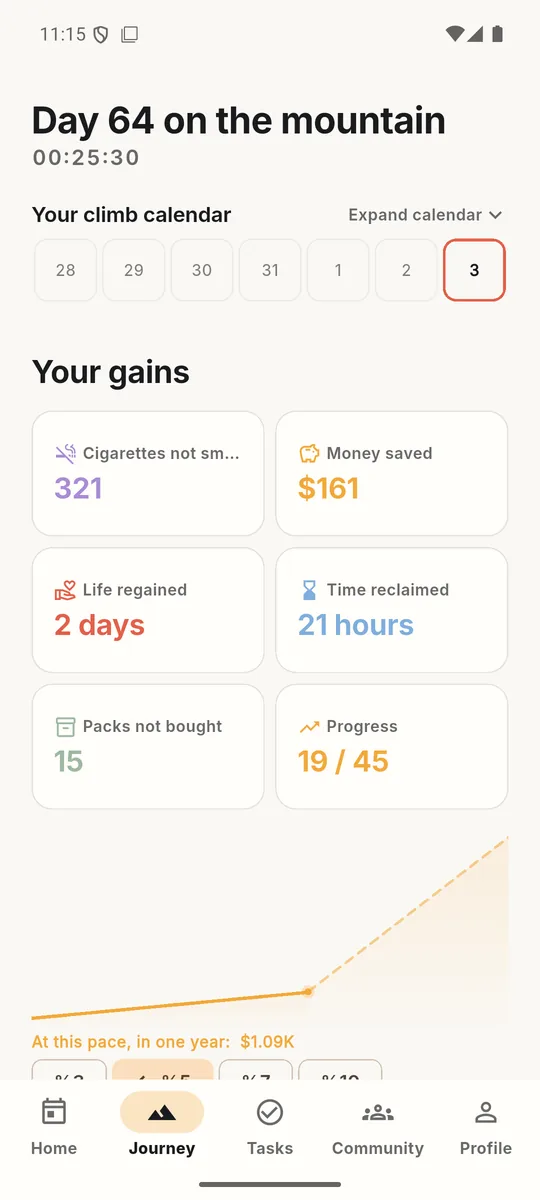
Your gains day by day: cigarettes not smoked, money saved, life reclaimed.
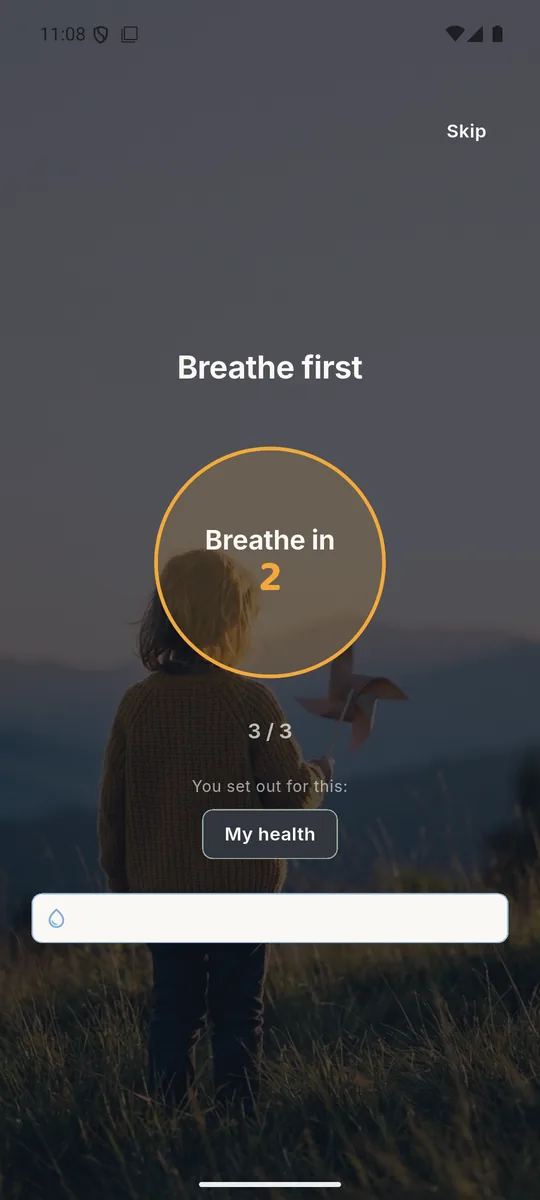
One tap when a craving hits: breathe first. A three-round guided breathing exercise.
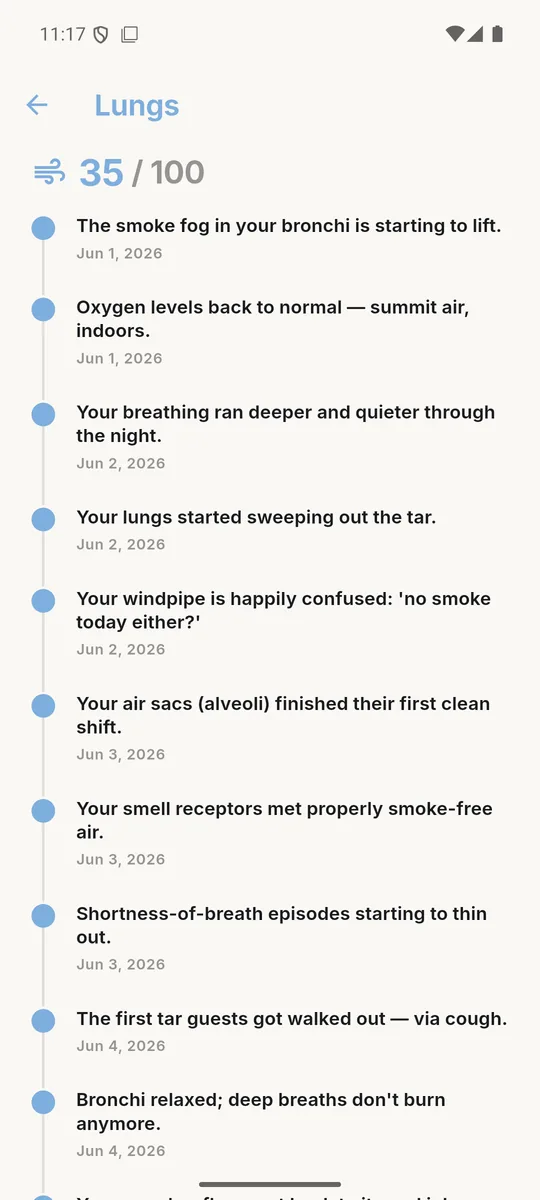
Six routes, 600 stops. Whatever is repairing in your body, you read it there.

You choose the view you are climbing — summit, forest, sea, or your own photo.
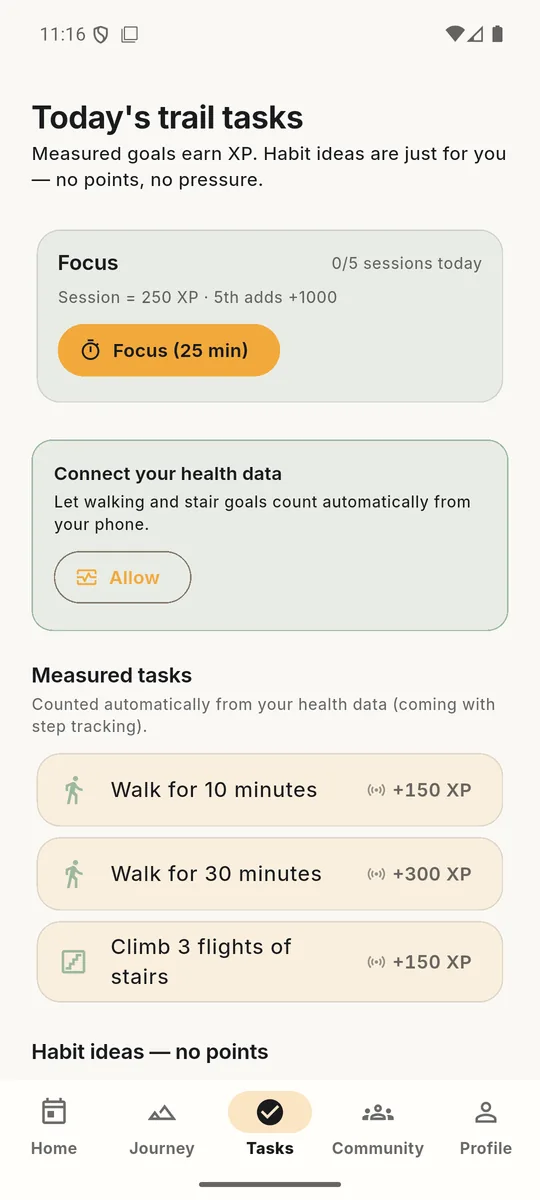
Small tasks every day. You are building a habit, not willpower.
Real screens from the app.
- Hear your own voice when a craving hits — the reason you quit, in your own words. You can add the voices of people you love, too.
- One tap for guided breathing and a distracting task — enough to fill those four minutes.
- 600 stops across six routes: read exactly what is repairing in your body today.
- Your numbers live on your device and keep counting offline — even on a plane.
- You pick the view you are climbing: summit, forest, sea, or your own photo.
- Interface, content and notifications in 14 languages.
You start free. The first day of the journey and the last are both yours.