What Should You Think While Smoking Your Last Cigarette?
July 29, 2026·7 min read
Turning your last cigarette into a big ritual often backfires. Here’s how to keep it simple, take two notes, and make the next morning much easier.
Last cigarette.
If you’ve looked this up online, you’ve probably seen all kinds of ideas: throw a party, take a photo, keep the butt in a jar, write a goodbye letter.
Most of that backfires. Let’s talk about why.
Why you shouldn’t turn your last cigarette into a ceremony
Because a ceremony makes the thing you’re quitting bigger.
When you say goodbye to an object, you’re giving it value. The moment you turn the sentence “this is my last cigarette” into a dramatic scene, your brain files it like this: I’m losing something really important.
Once your mind believes you’ve lost something precious, wanting it back is just a matter of time. On the evening of day three, when that scene pops up in your head, you don’t remember a pattern or a habit — you remember a memory. And memories are often more convincing than the addiction itself.
There’s a flipped version of the same mistake: trying to declare the last cigarette “disgusting.” Forced disgust doesn’t stick; a week later, if the smell seems nice again, you feel like you lied to yourself.
Then there’s the most common version: the never‑ending last cigarette. “Since it’s my last, I’ll have one more.” Then another. Then “I’ll just finish the pack.” Those six extra cigarettes don’t make the next morning easier — they make it harder, because they push your blood nicotine higher. The first hours become rougher, not smoother. A last cigarette is one cigarette; if there’s a second, the first one wasn’t the last.
So what should you do instead?
Make it ordinary.
Smoke that last cigarette exactly the way you usually do. Same place, same pace, nothing special. When it’s done, put it out and move on.
That’s not about being cold; it’s about being accurate: the last cigarette wasn’t special. It was just like the ones before it. What’s different is the decision you make after it.
Connect the meaning to you, not to the cigarette. The important moment isn’t the last cigarette you smoke — it’s the first cigarette you don’t smoke.
⚠️ “I’m saving my last cigarette for a special day” is just a distant cousin of the same trap. The cigarette you’re saving looks a lot like a quit plan with no real end date: it makes the finish line fuzzy.
In those five minutes, what should you actually think about?
Don’t chase feelings, take notes. Two questions are enough:
1. What did this cigarette really give me? The honest answer is usually: a break, a breath, something to do with my hands. In other words, most of what you got wasn’t about the cigarette — it was about the break, the breathing, the busy hands. All of those are possible without smoking.
2. What would happen twenty minutes from now? You’d want another one. A cigarette doesn’t cure its own craving; it creates its own problem. The urge you feel later comes from the cigarette you just finished.
Write those two answers down on paper. In a week, when you read them again, they’ll be much clearer.
Why these two questions: both of them shrink the cigarette, while a ceremony makes it bigger. The first breaks down what you “got” from smoking and shows that every piece is available elsewhere. The second looks forward in time and reminds you that the “calm” lasts maybe half an hour. Together, they turn the last cigarette from a loss into just another repeat — because that’s what it was.
“What if I already smoked my last cigarette?”
People ask this a lot — and it’s actually good news.
Most people don’t quit exactly the way they planned. They smoke one night, wake up the next morning and think, “I’m done.” Which means the last cigarette already happened, and it was completely ordinary — exactly what this article suggests.
You don’t need to go back and stage a ceremony. Start the date from yesterday; write the notes today. The real point of this whole text was this: the meaning isn’t in the last cigarette, it’s in the first cigarette you don’t smoke afterward. If you’re not smoking that first one today, you’ve already put things in the right order.
Timing: when should that last cigarette be?
Practical answer: the night before your quit day, right before you go to sleep.
Reason is simple. The 7–8 hours you spend asleep are the easiest hours of withdrawal you’ll ever have. By the time you wake up, your blood nicotine has already dropped and the first tough stretch is behind you. You start the morning with “12 hours done” on the clock.
If you flip it and smoke your last cigarette on the morning of your quit day, you spend the whole day in full withdrawal. The first‑hours plan already gives your morning enough to handle.
⚠️ One exception: if you work nights or your sleep schedule is upside down, “evening” shifts to match your own clock. The real rule isn’t the hour, it’s the order: have your last cigarette right before the longest block of time when you won’t be awake. Hours spent asleep are free progress.
The day before: two small tweaks that help a lot
These don’t change the last cigarette itself. They make the first 24 hours afterward easier.
Water and food. A hungry, dehydrated morning makes withdrawal feel stronger than it is. Low blood sugar restlessness feels almost the same as nicotine withdrawal, and most people can’t tell them apart. On your quit day, don’t skip breakfast.
Sleep. Staying up late the last night makes everything harder the next day. A tired brain has fewer resources for handling stress — this isn’t about willpower, it’s about fuel.
None of this is a “last cigarette ritual.” They’re just two adjustments that make tomorrow a little less punishing.
After the butt is out: a fifteen‑minute job
Once that last cigarette is done, don’t wait around. Do these three things right away:
Throw away the rest of the pack and your lighter. Everything you’ve got. Put the ashtray in the same bag.
Brush your teeth and wash your hands. Let the taste in your mouth end with today.
Write down the date. On a calendar, in your phone, in a tracker — anywhere. A date you don’t write down turns into a debate tomorrow.
Then go to bed. You’re done for the day.
What changes the next morning?
In the first 20 minutes, your heart rate and blood pressure start to drop. After 12 hours, carbon monoxide levels in your blood fall back to normal — so if your last cigarette was in the evening, this has already happened by the time you’re having breakfast.
The obvious changes take a bit longer: taste and smell usually sharpen around 48 hours in.
The first three days are the steepest part of the climb; we go into why they’re hard and how the hours pass in another article. Reading that now helps — because tomorrow you probably won’t feel like reading anything.
How you feel doesn’t follow the calendar exactly, and knowing that ahead of time helps. For most people, the first morning is easier than expected: the decision is fresh, motivation is high, your attention is on the new situation. The real bump often shows up on the afternoon of day two, not because your motivation vanished, but because the “newness” wore off.
So if the first morning feels surprisingly okay, that’s not an illusion — but it’s not a guarantee either. And the reverse is true: if the first morning feels rough, it doesn’t mean all the days after will be the same.
One‑sentence prep for the day after your last cigarette
Before you close this tab, there’s one last thing to do. It takes two minutes.
Write a note to yourself for tomorrow morning. Not a pep talk — a set of instructions. For example: “Get up, don’t stay in bed. Drink your coffee standing in the kitchen. Then go for a walk.”
Here’s why: tomorrow morning you won’t have to remake the decision; you’ll just have to follow the note. The first day without cigarettes isn’t a day for thinking, it’s a day for doing — and when the plan is written yesterday, it’s not up for negotiation today.
Your last cigarette isn’t a farewell. It’s a timestamp.
Smoke it like any other, write down two answers, throw away the pack, go to bed. The meaning will come from the first cigarette you don’t smoke the next morning.
If you enter your date in the counter on the right, it’ll already be ticking when you wake up. And if you want that same counter and crisis tools in your pocket, the Tar2Star app was built exactly for that.
This page is a photo. The app is the film.
These numbers show today. Tar2Star shows you a new one every morning — and stays with you when a craving hits.
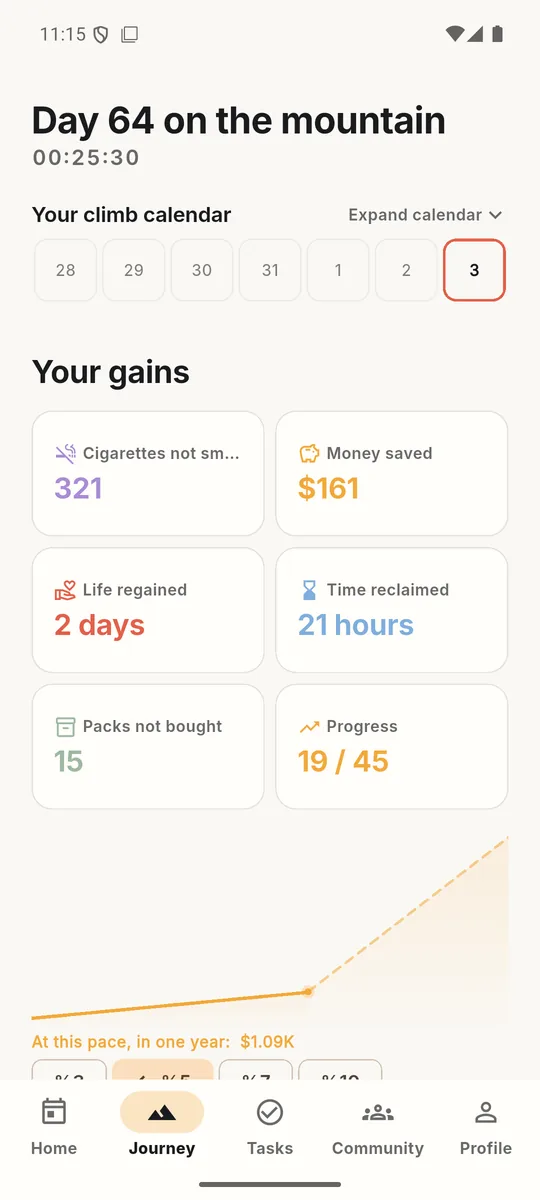
Your gains day by day: cigarettes not smoked, money saved, life reclaimed.
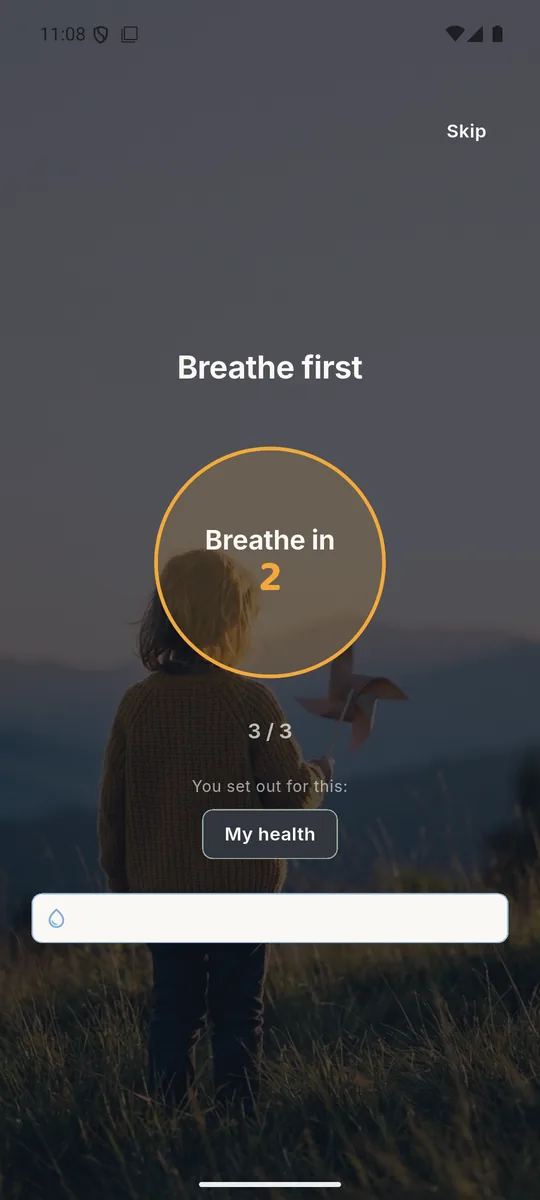
One tap when a craving hits: breathe first. A three-round guided breathing exercise.
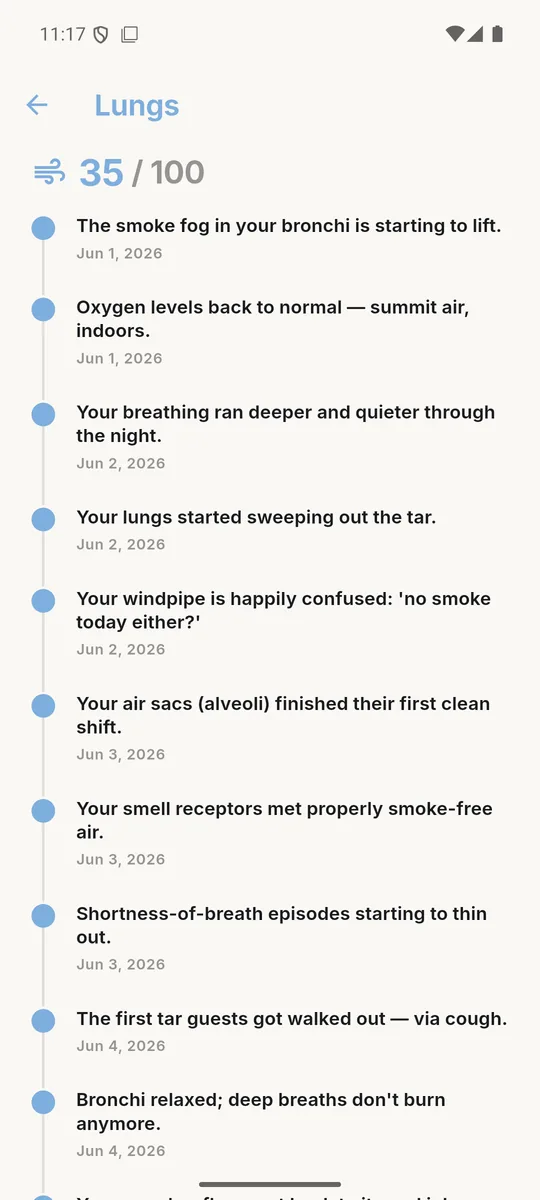
Six routes, 600 stops. Whatever is repairing in your body, you read it there.

You choose the view you are climbing — summit, forest, sea, or your own photo.
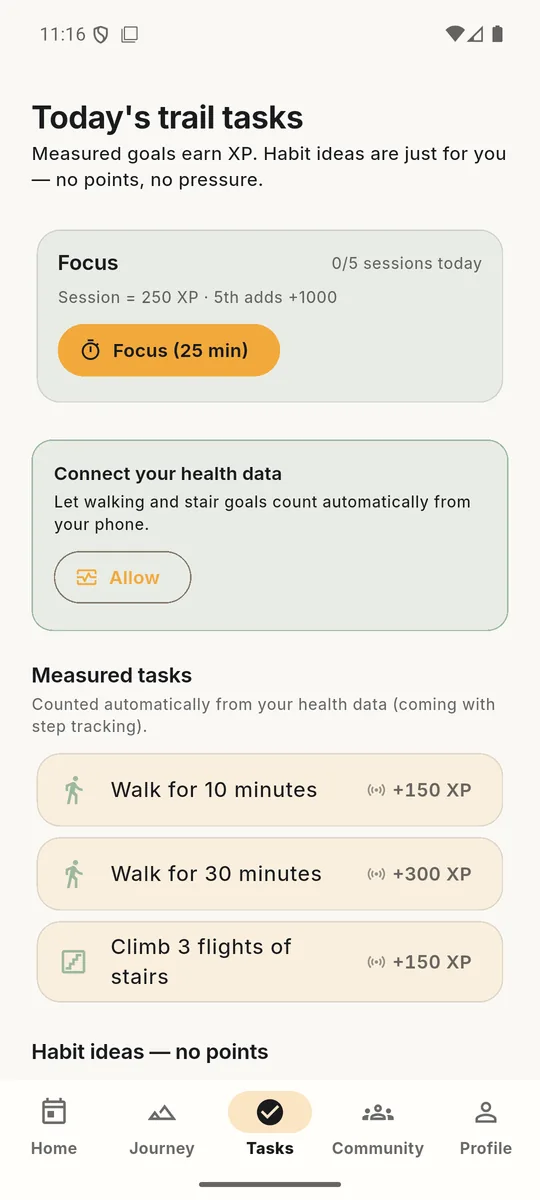
Small tasks every day. You are building a habit, not willpower.
Real screens from the app.
- Hear your own voice when a craving hits — the reason you quit, in your own words. You can add the voices of people you love, too.
- One tap for guided breathing and a distracting task — enough to fill those four minutes.
- 600 stops across six routes: read exactly what is repairing in your body today.
- Your numbers live on your device and keep counting offline — even on a plane.
- You pick the view you are climbing: summit, forest, sea, or your own photo.
- Interface, content and notifications in 14 languages.
You start free. The first day of the journey and the last are both yours.