Should You Tell People You’re Quitting Smoking – Or Keep It Quiet?
July 29, 2026·7 min read
Keep it secret or tell everyone? The real question is who to tell and why. A practical guide to choosing your “support circle” when you quit smoking.
“I’m not telling anyone. If I slip, I’ll just look foolish.”
“I’m telling everyone. That way I can’t back out.”
Both thoughts are common. Both have a point. And it’s usually easier than you think to see which one actually fits you.
But they’re also asking the wrong question. It’s not “should I tell people?”, it’s “who should I tell, and what for?” — because there’s really one main reason to tell anyone: so that on a rough night, you have at least one number you can text. (What to actually say is a separate piece; this one is about who.)
The real cost of staying completely quiet
Staying silent feels logical: no pressure, no questions, no “are you still smoke‑free?” check‑ins.
But it also comes with two big downsides.
You have no one you can ask for help. On the night when cravings spike, there’s nobody you can text, because nobody even knows you’re quitting. In the eight‑step prep checklist, the most common missing item was this: “if it gets hard, who will you tell?”
People keep treating you like “old you.” In the seven‑day prep checklist, there’s a “tell one person” step for exactly this reason. Otherwise coffee breaks still include “here, have one,” someone lights up in your car, “come out for a smoke” keeps coming. Every time, you’re carrying both the urge and the explanation on your own.
The real cost of telling everyone
Announcing it to everyone also sounds logical: you’ve made a promise, so backing out feels harder.
But that “announce to the world” strategy has two well‑known problems.
The result is more visible than the attempt. If you do have a cigarette, suddenly you’re explaining it to ten different people — and in that moment, quitting altogether feels easier than having all those conversations: “they all saw anyway, forget it.”
Quitting turns into a performance. The praise shows up in week one; the hard part shows up in week two. When the applause stops, if your only reason was other people’s reaction, you’re left with a gap.
⚠️ Social media announcements need extra care. Likes arrive faster than any benefit from quitting, and your motivation gets pushed outside — but the kind of reason that lasts usually comes from inside.
The third option most people do best with: a small circle
Not silence, not a public announcement. Two or three people.
The filter is simple: someone you could text when you’re struggling, who won’t turn it into a daily exam.
Most people find this trio works well:
The person you live with. They’ll notice anyway; if they don’t know what’s going on, the mood swings land on the relationship instead.
The co‑worker you usually smoke with. If you don’t tell them, you’ll still get the same invite five times a day.
A friend you can message when it’s rough. Their entire job is just to be there; they don’t even need to have advice.
Who not to pick matters as much as who you do pick. Three types of people are usually a bad fit for this, even if they care about you:
The daily checker. “Did you smoke today?” turns from support into surveillance by day three — and once someone feels watched, they start hiding slips. A hidden slip usually spirals more than one you can talk about.
The person who joked about your past attempts. They may not mean harm, but in your first tough moment, their old line is what will echo in your head.
Someone who tried to quit and couldn’t, and still feels bad about it. Your attempt reminds them of theirs; even if they want to support you, it can get heavy.
What to actually say: a three‑sentence script
You don’t owe anyone a long speech. This simple script is enough:
“I quit smoking today. Please don’t offer me any, and if I’m having a hard time, can I text you? You don’t have to check on me every day.”
You’re doing three things at once: stating the change, asking for a specific behavior, and closing the “daily question” door upfront. That last line matters most; “how’s it going?” is kindly meant, but every time it’s asked, you’re back at an exam desk.
What about work?
There’s one main rule here: telling your smoke‑break crew is not the same thing as announcing it to the whole office.
If you don’t tell the people you usually go out with, you’ll get that invite five times a day and have to say no five times a day. Five “no”s are more draining than one “I actually quit.”
Beyond that, you don’t owe anyone a general announcement. We’ve covered getting through the workday without smoke breaks in a separate guide.
Then there’s the “should I tell my manager?” question. The general rule: you don’t have to. The exception is if your job involves especially high‑focus tasks in the first few days — in that case, “I might be a bit scattered this week” can be better than seeming off with no context.
If you’ve quit before and started again
In this situation, silence feels tempting: “let me be sure this time, then I’ll tell people.”
Understandable — but it usually backfires. The thing that was missing last time was often support; removing that as well the second time is like walking the same road with even fewer tools.
A middle path works better: a low‑key sentence that doesn’t mention the past at all. Not “I’m trying again,” just “I quit today.” Your sentence doesn’t need to carry your history.
What will you say on the day you slip?
This is the least talked‑about part of “telling people,” and the one that helps the most.
Decide now what happens if you have a cigarette. In that moment, your brain will only show you two options: hide it, or declare the quit over. Both tend to end badly.
Write in a third option today: “I had one yesterday; I’m still quitting today.” Tell your person about this in advance — and add, “if I ever send you that, I don’t need a lecture.”
This tiny agreement solves two things at once: you don’t have to hide slips, and a slip becomes one line in the story, not the final page. The people who tell no one usually lose it at exactly this point — because there’s nobody on the other side of that “forget it” decision.
Why social media is a different calculation
Telling your close circle and posting online are not the same, and you’ll want to treat them differently.
A post is made once, but the “check‑in” window stays open forever. Three weeks later, someone comments “still going strong?” and that question is no longer support, it’s surveillance.
The reward timing also gets flipped: likes rush in the second you post, long before quitting itself feels good. Your brain gets the “job done” signal early, when the hard work hasn’t even started.
There is a middle ground if you still want to share: post the result, not the promise. Share day 30, not day 1. Then the post is a record, not a pledge — and records don’t need to be taken back.
Decision guide: which option fits you?
Three common situations, three different “right answers”:
If you live with someone — telling them is almost non‑negotiable. The mood swings will show anyway; if they don’t know the reason, the relationship carries the blame.
If you’ve never tried to quit before — a small circle of 2–3 people is the safest bet. Not too much pressure, not complete loneliness.
If you’ve announced a quit before and then started again — keep your circle smaller this time, but don’t shrink it to zero. What hurt last time was how wide the announcement was, not the fact that you told anyone at all.
All three have one thing in common: at least one person. Zero is never the best answer.
In the end, it comes down to one core question: on the night it gets hard, who will you message?
If you have a name in mind, you’ve told enough people. If you don’t, tell one person today — you don’t need more than that.
If you enter your quit date into the counter on the right, you’ll see your smoke‑free days add up; sometimes the best support is a number you don’t have to explain to anyone. And if you want that same counter — plus crisis tools — in your pocket, the Tar2Star app was built exactly for that.
This page is a photo. The app is the film.
These numbers show today. Tar2Star shows you a new one every morning — and stays with you when a craving hits.
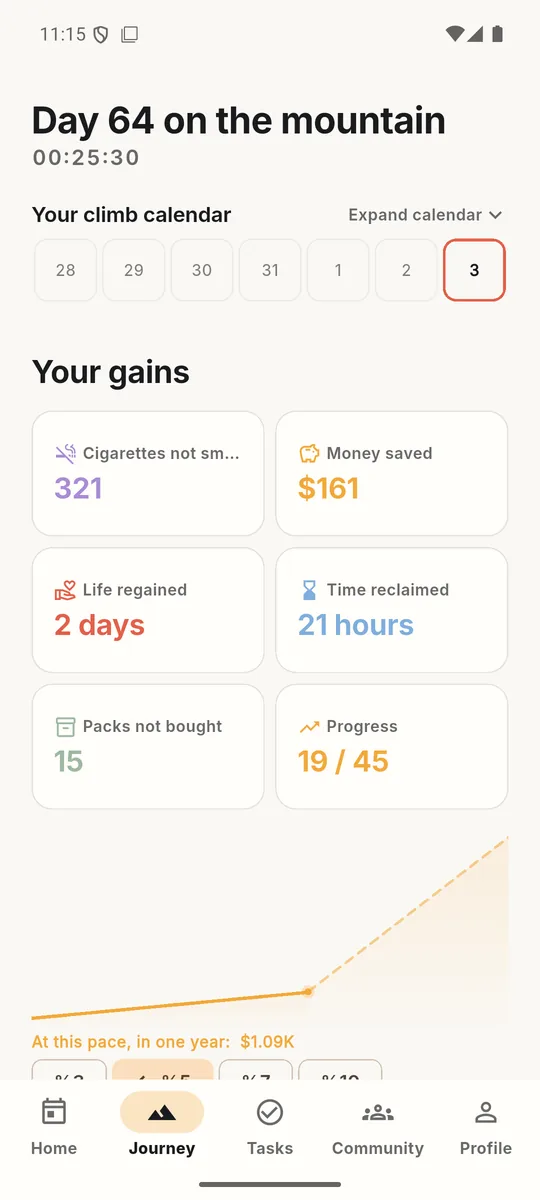
Your gains day by day: cigarettes not smoked, money saved, life reclaimed.
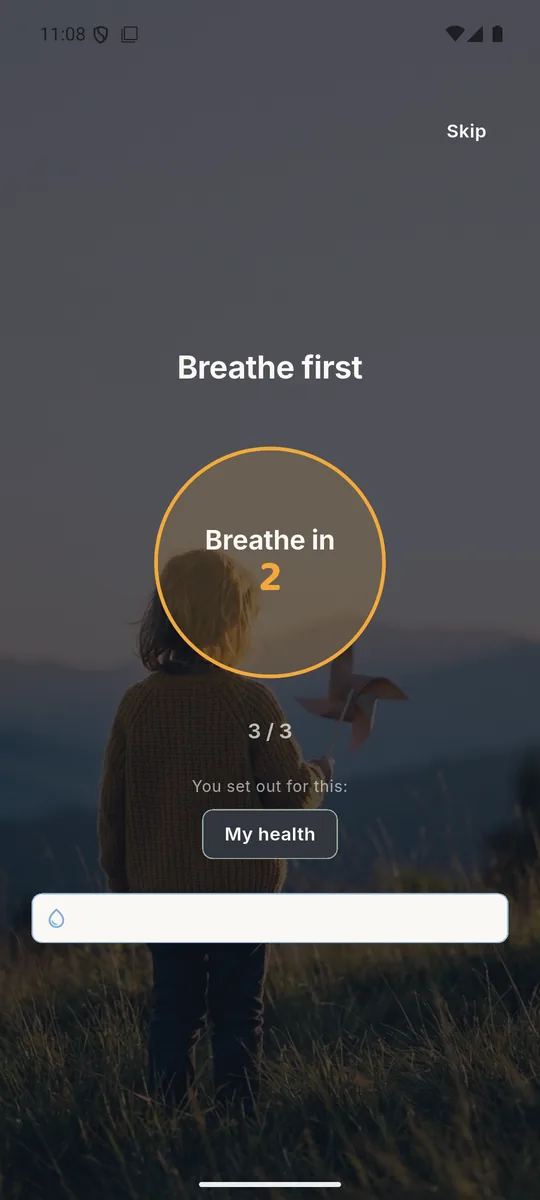
One tap when a craving hits: breathe first. A three-round guided breathing exercise.
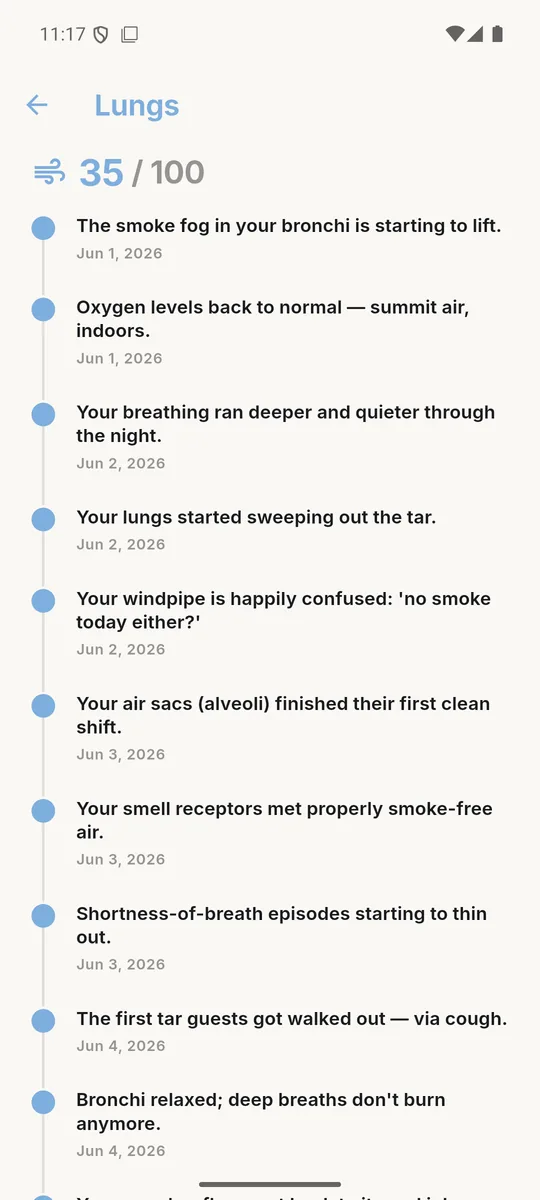
Six routes, 600 stops. Whatever is repairing in your body, you read it there.

You choose the view you are climbing — summit, forest, sea, or your own photo.
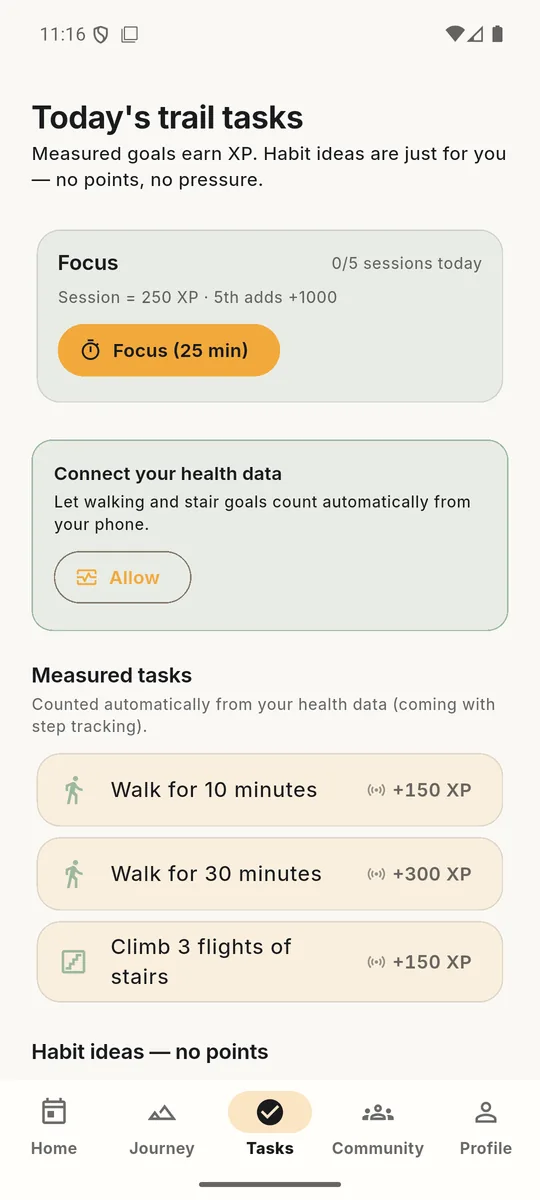
Small tasks every day. You are building a habit, not willpower.
Real screens from the app.
- Hear your own voice when a craving hits — the reason you quit, in your own words. You can add the voices of people you love, too.
- One tap for guided breathing and a distracting task — enough to fill those four minutes.
- 600 stops across six routes: read exactly what is repairing in your body today.
- Your numbers live on your device and keep counting offline — even on a plane.
- You pick the view you are climbing: summit, forest, sea, or your own photo.
- Interface, content and notifications in 14 languages.
You start free. The first day of the journey and the last are both yours.