Does Quitting Smoking for Someone Else Actually Work?
July 30, 2026·7 min read
Quitting because your partner or doctor wants you to can work—if birthing that external push into your own reasons within the first three weeks.
"My partner keeps pushing, so I’m quitting."
Plenty of people start this way. Some really do quit. But this route has its own trap—and knowing that trap can seriously change your chances of success.
Why does it work at the start?
Because outside pressure is a real force. It makes you set a date, makes you answerable, shrinks the space for "I’ll do it later."
A lot of people who couldn’t get moving on their own finally start because of that push. So "quitting for someone else" is not something to dismiss — the spark can come from outside.
The problem shows up in week two.
What happens in week two?
Week one ends, the praise slows down, withdrawal keeps going. And right then your mind runs a little calculation: who am I going through this for?
If the answer is "someone else," the effort starts to feel like a bill you’re sending to them. Once that bill is issued, two reactions are common:
1. The “you owe me” feeling. "I did this for you." After a while, that sentence starts weighing on the relationship.
2. Rebellion. This one is sneakier. If the decision feels like it belonged to someone else, breaking it can feel like taking your freedom back. Nobody says "I’m smoking just to spite you," but the behavior is almost exactly that.
⚠️ That rebellion usually shows up after an argument. The cigarette that comes right after "you’re always on my case anyway" is often less about craving and more about sending a message.
What happens when the pressure ramps up?
The opposite of what most people expect: the more control, the more resistance.
"Did you smoke today?" on repeat, sniffing clothes, checking pockets — all of it well‑meant, all of it backfiring. Because it turns the relationship into monitor vs. monitored, and the monitored person looks for an escape hatch.
That’s why it helps to set limits when you talk about quitting: in the script for how to tell people you’ve quit, the line "you don’t have to ask me every day" is there exactly for this.
How do you turn an external reason into an internal one?
This is the main job of this whole piece. It happens in three steps, and they need to happen in the first two weeks.
*1. Notice what you gain.* Breathing, sleep, taste, money, smell, stairs. None of these depend on what anyone else wants; they’re happening in your own body. In the first two weeks you’ll notice at least one — write that one down.
2. Rewrite the reason. Your day‑one sentence might be "my partner wanted me to." Your week‑two sentence needs to sound more like: "I want to wake up without coughing." Same decision, different owner.
3. Look at what’s adding up. By week three, the strongest anchor tends to be a number you don’t want to lose: days smoke‑free, cigarettes not smoked, money saved. That number is yours — it doesn’t depend on anyone’s request.
A three‑week conversion timeline
Turning an external reason into an internal one has a timeline, and it’s short — about three weeks. If it’s missed, people usually notice around week four — and that week is one of the hardest times to fix it.
Week 1 — just record. Whatever you notice in your body, write it down: sleep, breathing, morning cough, taste. You’re not trying to write a big speech yet, just notes. Even a single sentence is enough.
Week 2 — change the sentence. Rewrite your reason and make sure it doesn’t lean on anyone else. Quick test: if nobody knew this reason, would it still be true for me? "I don’t want my partner to be upset" doesn’t pass that test; "I’m not coughing in the mornings" does.
Week 3 — look at the totals. By now you’ve got a number: days, cigarettes not smoked, money sitting in your account instead of in ashtrays. That number doesn’t depend on anyone else and often becomes the first thing you really don’t want to give up.
⚠️ If, at the end of week three, your only reason is still "someone else," that’s a warning sign — not a reason to quit quitting, but a reason to spend ten minutes on the reason exercise.
Is it different when it’s your doctor telling you to quit?
Partly. A medical warning (before surgery, after a diagnosis) is an external but impersonal reason — it’s information, not a personal demand. So that rebellion reaction is usually less intense.
But the same shift still needs to happen: "the doctor told me to" also needs to turn, over time, into "my breathing got better and I want that."
In the quitting at 60 article we go into the practical side of this; medication changes especially should always be discussed with your clinician.
For the person doing the pushing: what helps, what doesn’t
This part is not for the one quitting, but for the one who wants them to quit. Often, that person is reading this too.
Three common tactics that don’t help — even though they all come from good intentions:
The frequency question. Even "Did you smoke?" once a day turns into surveillance. And once someone feels watched, every slip is something to hide. A hidden slip usually ends worse than one you can talk about.
Lecturing on health. They already know. Lack of information was never the main barrier.
Rewards and punishments. "If you quit, I’ll buy you X" turns the decision into a transaction — and transactions can be cancelled.
And three things that do help — almost boringly simple:
Simplify the environment. No cigarettes and no ashtrays at home beats any number of "did you smoke" conversations.
Offer different ways to spend that time. "Want to go for a walk tonight?" does more than "don’t smoke."
When they slip, don’t turn it into a big talk. If they have one cigarette and you keep quiet, it often stops at that one. A fight about it is what usually opens the next pack.
⚠️ And the hardest part: the decision has to be theirs. The more you own it, the less they do. It’s unfair, but that’s how it tends to work.
When your partner still smokes
This is one of the toughest setups, and it calls for some honesty.
Quitting together is the strongest option — you’re sharing the same struggle, and there’s nothing in the house triggering you. But forcing the other person doesn’t work; pulling someone along who isn’t ready often ends with both people going back.
If you can’t make them quit with you, set a minimum boundary: no smoking in the house or the car. Those two spaces directly shape how hard this is for you, and it’s a very reasonable ask.
“I’m only quitting for them, I don’t want this at all”
If that sentence is completely honest, it’s actually useful to know — it shows you exactly where things are fragile.
The answer is not to give up. It’s to spend ten minutes finding your own reasons. If you can’t find any yet, keep going anyway, but keep your growing numbers visible — sometimes, when no clear reason shows up, the numbers stand in for it.
Quitting for someone else isn’t a bad way to start. It’s just a bad way to end.
This week, your only task: write down one change you’ve noticed in your own body. Ownership of the reason starts to shift with that one sentence.
To see the days and money you’re stacking up, drop your quit date into the counter on the right — that number doesn’t care what anyone else wants; it’s yours. And if you want to keep it in your pocket, the Tar2Star app was built exactly for that.
This page is a photo. The app is the film.
These numbers show today. Tar2Star shows you a new one every morning — and stays with you when a craving hits.
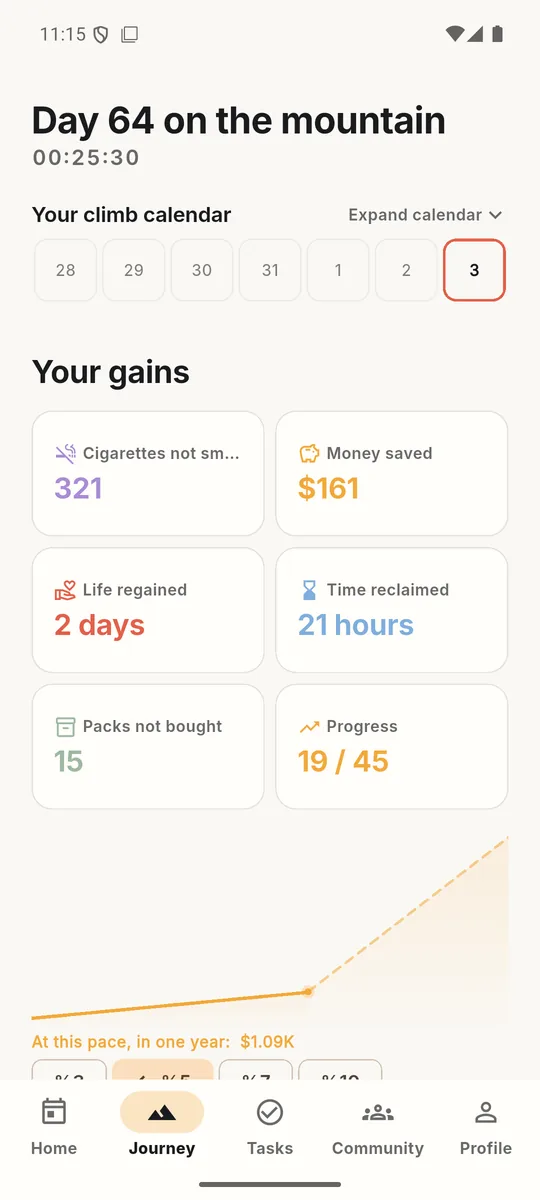
Your gains day by day: cigarettes not smoked, money saved, life reclaimed.
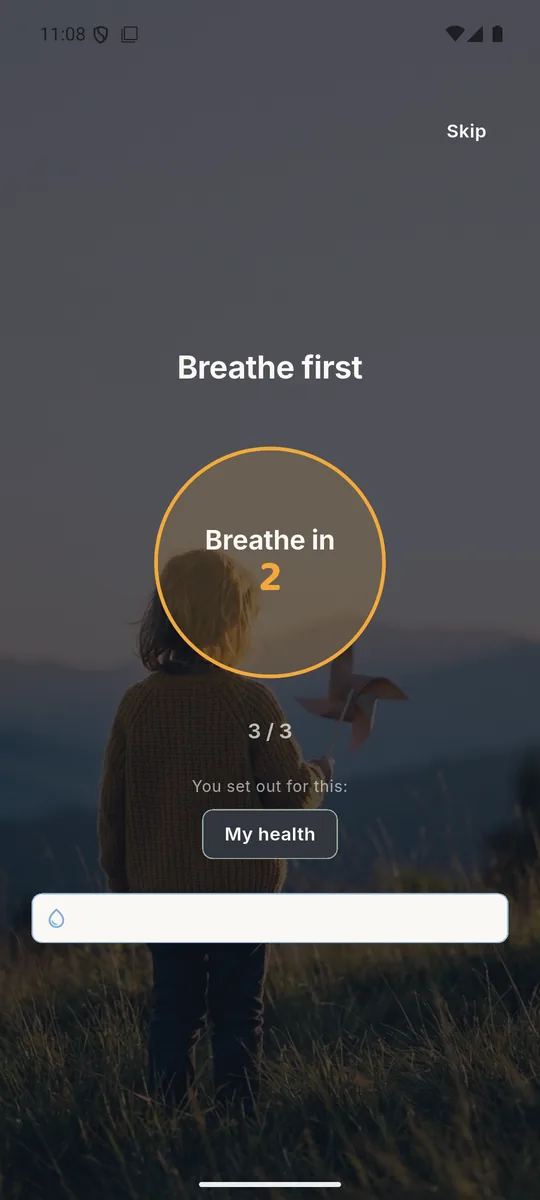
One tap when a craving hits: breathe first. A three-round guided breathing exercise.
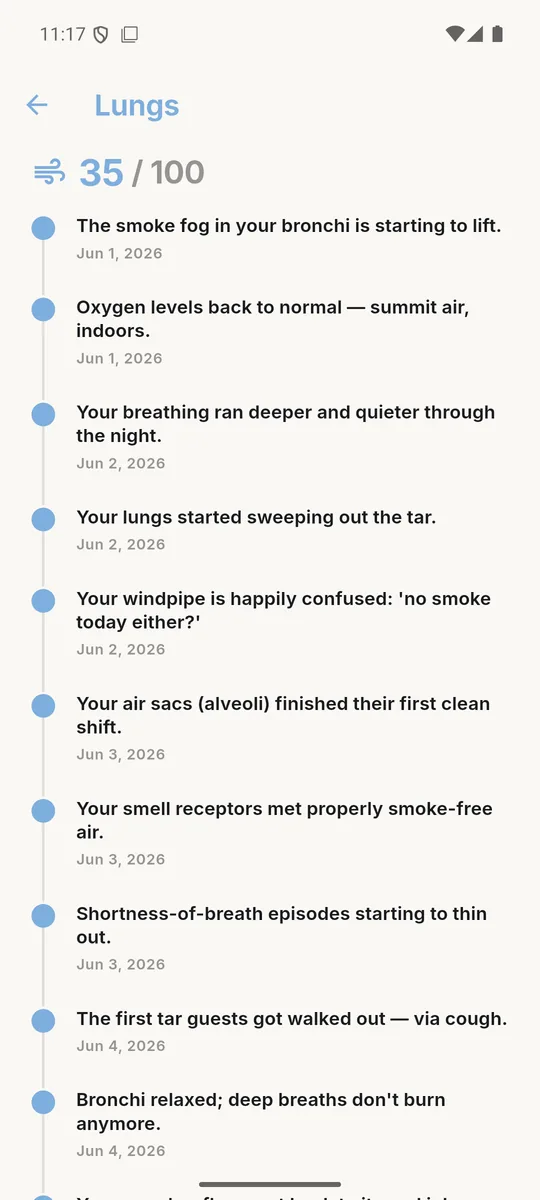
Six routes, 600 stops. Whatever is repairing in your body, you read it there.

You choose the view you are climbing — summit, forest, sea, or your own photo.
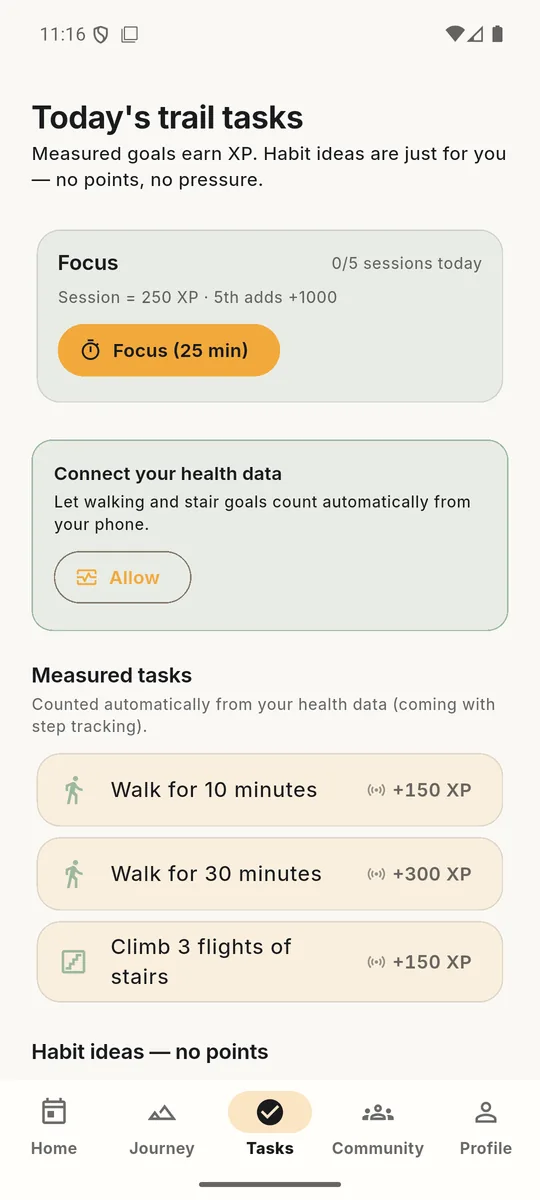
Small tasks every day. You are building a habit, not willpower.
Real screens from the app.
- Hear your own voice when a craving hits — the reason you quit, in your own words. You can add the voices of people you love, too.
- One tap for guided breathing and a distracting task — enough to fill those four minutes.
- 600 stops across six routes: read exactly what is repairing in your body today.
- Your numbers live on your device and keep counting offline — even on a plane.
- You pick the view you are climbing: summit, forest, sea, or your own photo.
- Interface, content and notifications in 14 languages.
You start free. The first day of the journey and the last are both yours.