Your 7‑Day Quit Smoking Countdown
July 29, 2026·7 min read
You picked your quit date. Here’s a 7‑day, no‑drama checklist to get there prepared: cravings, money, triggers, first morning and backup plans.
You picked a quit date. What happens between now and then?
Most people do… nothing. They circle a day on the calendar, wake up that morning, and throw the entire job at “willpower.”
This list is the alternative. Total time: a few hours, spread over seven days.
Why spread it out: cramming everything into the night before does two things at once — half the tasks stay unfinished, and that last evening gets unnecessarily heavy. Spacing it over a week means you wake up on quit day tired of cigarettes, not tired from prep.
7 days to go: collect your numbers and reasons
Keep a smoking log for one full day. Before each cigarette, note the time, where you are, and a need score from 1–3. How to keep it and why it’s the first step is in a separate article.
Write your anchor sentence. The three‑question exercise takes about ten minutes and ends with one clear sentence about why you’re quitting. Put it on your phone lock screen.
Calculate your daily cost. Pack price × packs per day × 365. Write the number down; you’ll look at it again in a week.
5 days to go: plan for your crisis moments
The 3‑point cigarettes in your log are your tough moments. Most people have three or four: morning coffee, after work, in the car, on the phone.
Write one short sentence for each. A good response has two traits: specific and small.
“I’ll drink my coffee at the table, not on the balcony.”
“There’ll be no lighter in the car, but there will be gum.”
“After work I’ll walk two bus stops.”
⚠️ “I’ll resist” is not a plan. A craving wave lasts about four minutes; your plan’s job is to fill those four minutes, not your entire life.
To see the difference between a good plan and a weak one, a few more examples:
❌ “I won’t smoke with my morning coffee.” → That’s a ban, not a plan. It doesn’t say what you will do.
✅ “I’ll have my morning coffee standing at the kitchen counter.” → Location changes, the ritual breaks.
❌ “After work I’ll just power through.” → What exactly will you do with those four minutes?
✅ “After work I’ll put my headphones on and walk two stops.” → Your hands and brain are busy.
The formula is: every response has to contain a verb. If it doesn’t, it’s a wish, not a plan.
4 days to go: solve week‑one obstacles in advance
This day wasn’t on most lists, and it’s the one people skip the most.
Make an alcohol plan. If you’ve got a party or night out in the first week, decide now: you’re not going, or you’ll leave early, or you’ll go but won’t drink that night. Alcohol lowers your decision barrier, and slips in week one most often happen there.
Review your coffee intake. After you quit, your body clears caffeine more slowly; the same amount of coffee can mean more palpitations and insomnia. Cutting one cup in the first week can quietly solve some of the “withdrawal” symptoms you’d otherwise blame on quitting.
Pick an escape route. Choose a physical place to go when it feels rough: not the balcony — the stairwell, a corner store, a nearby park. When the place is decided, going there doesn’t require a fresh decision.
3 days to go: prep your environment
Decide who you’ll tell. One person is enough, but pick someone. In the first week, you should already know whose number you’ll text when it gets hard.
If you’ll use nicotine replacement, get it today. Patch, gum, lozenge — don’t be the person hunting for a pharmacy on quit‑day morning. Ask your pharmacist or clinician which one fits you; if you light your first cigarette within 5 minutes of waking, definitely ask this.
Check your calendar. If your quit date lands on a wedding, long road trip, or a heavy drinking night, shift the date by a day or two. How to choose a date can help here.
1 day to go: clean your home and car
This one deserves its own article and we’ll write that tomorrow; today’s short version:
Home, car, work bag, jacket pockets: no packs, lighters, or ashtrays left behind.
Don’t just store ashtrays — throw them out. “I’ll keep them for guests” is a backup plan in disguise.
Air out the car, wash the seat covers.
Move the chair from your usual smoking corner.
The goal is functional, not symbolic: every one of these objects is a trigger. If the trigger isn’t in sight, the chain reaction doesn’t even start.
Quit‑day morning: the first hour
The first hour sets the tone for the whole day. Three moves:
Get up as soon as you wake. Lying in bed is the first link in the morning‑cigarette ritual.
Change your breakfast routine. If you usually have coffee, have tea today, or drink your coffee in a different room. Shift the ground under the ritual.
Read your anchor sentence. You wrote it to read, not to overthink.
Then log your date somewhere and let the counter start. Within the first 20 minutes, heart rate and blood pressure begin to drop; reading what happens hour by hour often feels encouraging on that day.
For the rest of the first hour there’s just one rule: leave the house. Walk, grab groceries, wander your neighborhood — where you go doesn’t matter. Spending that first hour at home means every trigger is sitting in the same room with you.
The three most skipped tasks in the countdown
Even people who follow the list usually miss these three, then bump into them in week one.
1. Finding the backup pack. Almost everyone has one: behind a drawer, in the glove compartment, in an old coat pocket. The pack you “totally forgot about” tends to magically appear on the evening of day three. Hunt it down today.
2. Thinking about how you pay. The “I’ll grab a pack” reflex at the counter is wired together with getting change. Not carrying cash in week one adds a small but real bit of friction.
3. Telling your smoking buddies. If you don’t tell them, that “come out for a smoke” invite will land on day one — and saying no is much harder than never being asked. We talk about smoking friendships in a separate article.
Less than two days left: the compressed version
If you’re reading the 7‑day list thinking “I’ve only got three days,” you can compress it. Four tasks are non‑negotiable:
Log one day — even a single day is enough to see your chains.
Write three sentences for three hard moments — sentences with verbs.
Dump the objects — packs, lighters, ashtrays; give it fifteen minutes.
Tell one person — just one.
The rest (deep‑cleaning fabrics, a full house tour, detailed nicotine‑aid research) can move into the week after quit day. You’ll need something to keep your hands busy that week anyway.
Can’t fit the list into a week?
Fit it. Once “prep” drags on past two weeks, it stops being prep and quietly turns into postponing.
Quitting with a few unchecked items is better than waiting for a perfect checklist. This list is not an entrance exam, it’s a helper — the eight‑item readiness check is built on the same idea.
Seven days, six headings, a few hours of work.
Start wherever you are on the timeline today; the rest of the countdown list will more or less arrange itself.
If you enter your date in the counter on the right, it will track your countdown, and later the days and money you’ve saved. And if you want to carry the same list and your crisis plan in your pocket, the Tar2Star app was built exactly for that.
This page is a photo. The app is the film.
These numbers show today. Tar2Star shows you a new one every morning — and stays with you when a craving hits.
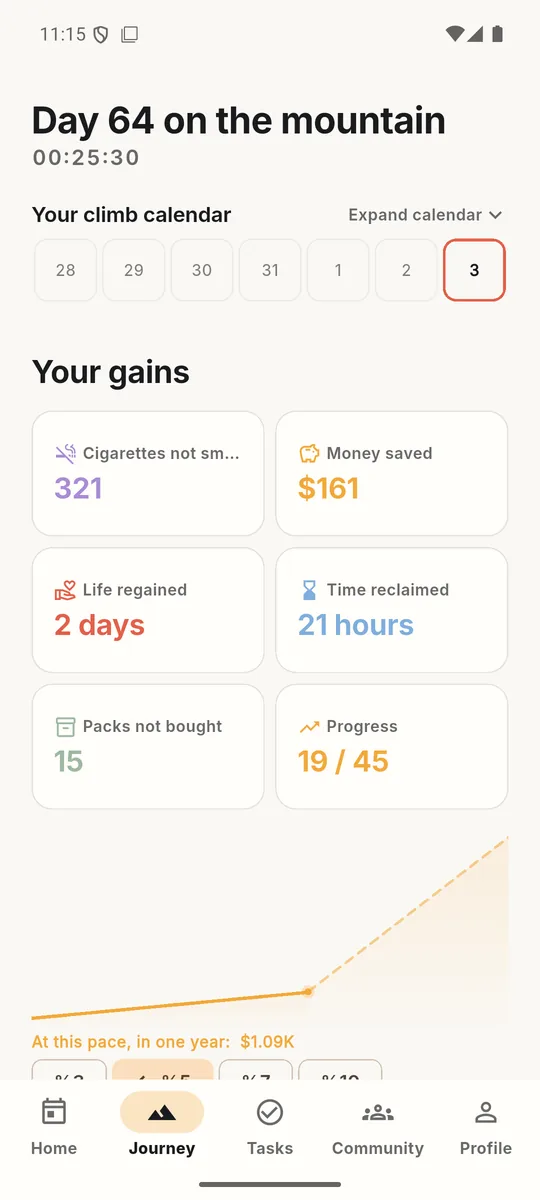
Your gains day by day: cigarettes not smoked, money saved, life reclaimed.
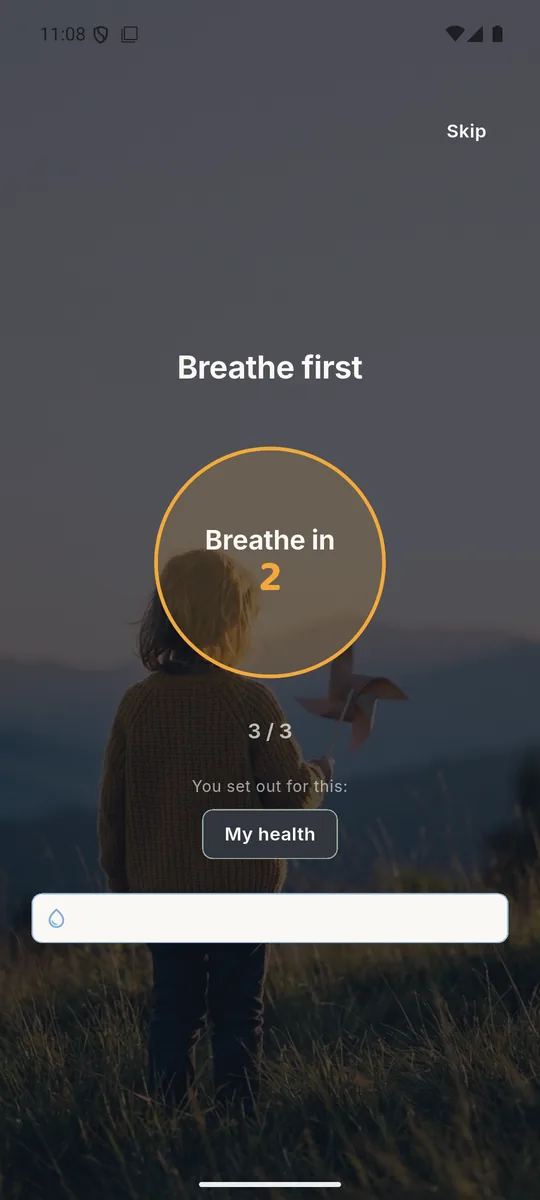
One tap when a craving hits: breathe first. A three-round guided breathing exercise.
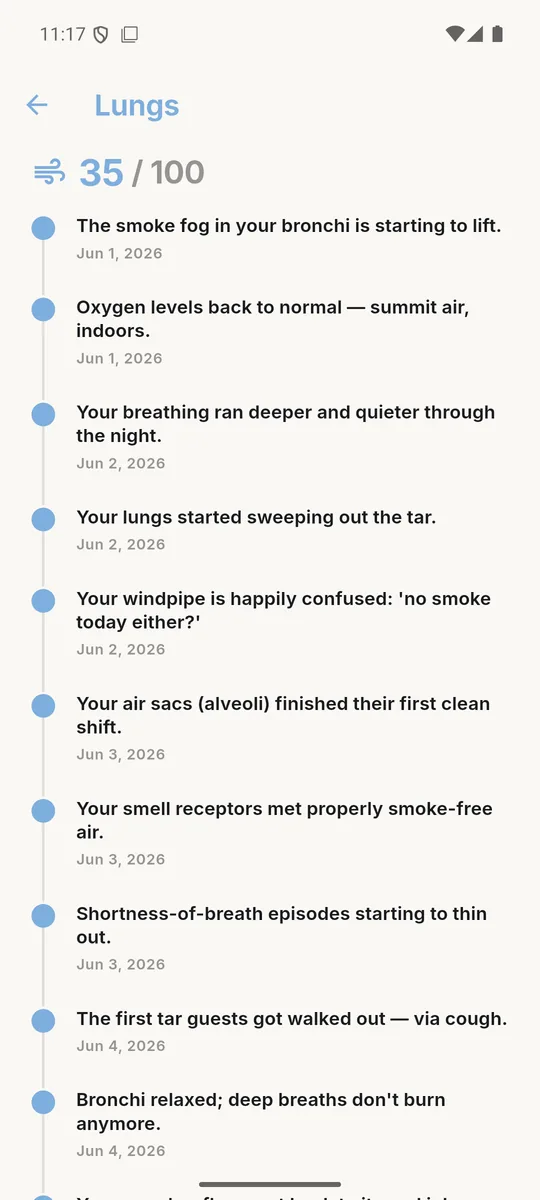
Six routes, 600 stops. Whatever is repairing in your body, you read it there.

You choose the view you are climbing — summit, forest, sea, or your own photo.
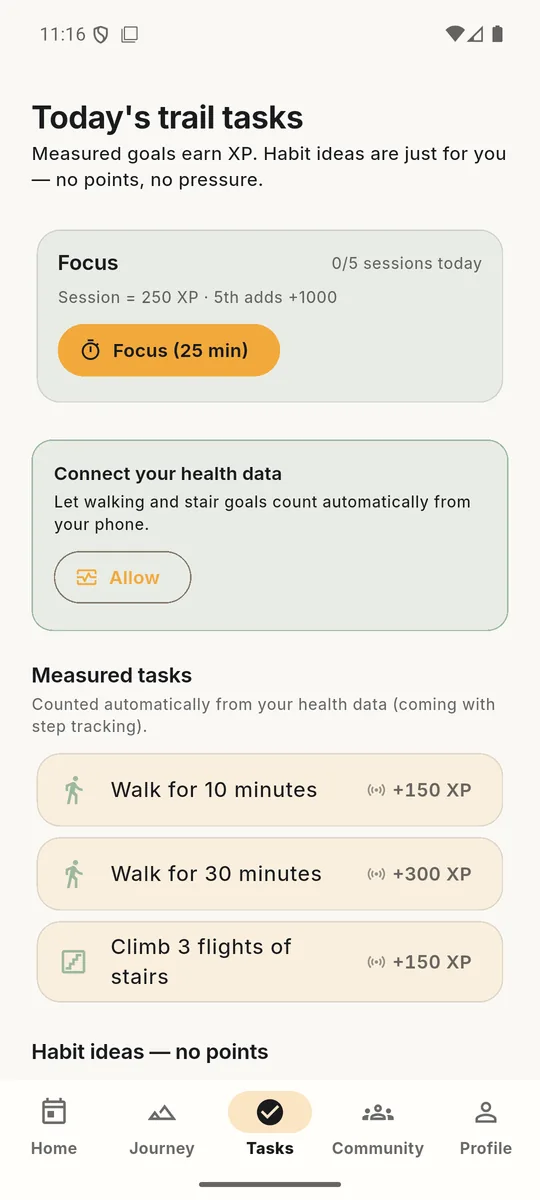
Small tasks every day. You are building a habit, not willpower.
Real screens from the app.
- Hear your own voice when a craving hits — the reason you quit, in your own words. You can add the voices of people you love, too.
- One tap for guided breathing and a distracting task — enough to fill those four minutes.
- 600 stops across six routes: read exactly what is repairing in your body today.
- Your numbers live on your device and keep counting offline — even on a plane.
- You pick the view you are climbing: summit, forest, sea, or your own photo.
- Interface, content and notifications in 14 languages.
You start free. The first day of the journey and the last are both yours.