Quitting in Your 20s: What’s Your Real Edge?
July 29, 2026·6 min read
Quitting smoking in your 20s isn’t just “because you’re young.” As habits and triggers pile up every year, the real advantage is how simple it still is now.
The biggest advantage of quitting in your 20s is not what most people think.
People assume: “A young body bounces back better.” That’s partly true, but your real edge is somewhere else — and that edge fades a little every year.
The real edge: your habit web is still thin
Over the years, smoking stops being a single behavior and turns into a web.
After twenty years of smoking, cigarettes are usually wired into: morning coffee, the car, work breaks, phone calls, after meals, alcohol, stress, boredom, celebrations, before bed. Each one is its own trigger — and each one has to be unwired separately.
In your 20s, that list is usually much shorter: going out, alcohol, maybe boredom. Three or four connections.
So you simply have fewer knots to untie. When you map your chain in a notebook, you’ll see it in front of you — the list comes out short.
That advantage is temporary. Every year, new links get added and the web tightens.
You can almost watch how those links form: a new job means a new break area and a new smoke buddy. Buying a car adds a “cigarette in the car” link. A rough breakup adds a “stressful evening” link. The web doesn’t grow by magic — every new piece of life tends to tie on one more knot.
In practice that means: at 25 you may have three links to undo; at 35 it might be eight. The same decision gets more expensive every year, and the extra cost isn’t in health, it’s in difficulty.
Second advantage: how much you get back
The repair side is real too, and here age matters a lot: the earlier you quit, the more years you gain. We broke down the numbers by quit age; the short version is that quitting before 40 changes almost the whole picture.
But let’s be honest: in your 20s, that argument is usually not convincing. A 60‑year‑old lung doesn’t exactly sit in the front row of your day‑to‑day decisions.
So the most useful reasons for this age group live somewhere else.
Reasons that actually work in your 20s
Your reason needs to be **concrete and from this week**. For this age group, the ones that land best are:
Money. A pack a day turns into a serious yearly number. Put your pack price into the counter on the right, and seeing that annual total once does more than most health slides — because you instantly know what else that money could be.
Sports and stamina. Running, football, the gym — the difference in breathing can be measured in weeks.
Skin, teeth, smell. Nobody says it out loud, but at this age these are some of the most powerful reasons.
Control. “Not having to worry if I’m out of cigarettes.”
These beat “heart attack risk” because you can verify all of them this month.
There’s a reason money works so well in your 20s: income is usually limited and spending is visible. Turning your yearly cigarette cost into something specific (a year of gym, a trip, a driver’s license, a laptop) pulls the number out of the abstract and turns it into a choice. The counter on the right does that math using your prices.
Then there’s time — almost never mentioned. Fifteen cigarettes a day is about 75 minutes. That’s roughly 450 hours a year — about twenty‑nine full days awake. In your 20s, time feels like the one thing you have endless amounts of, and that’s exactly what’s being spent.
Trap 1: “It’s harmless while I’m young”
There is a logic behind this belief: no symptoms, breathing feels fine, lab results normal.
But two things are separate: not having symptoms and not having effects. In your 20s, the effects usually don’t show up in daily life yet; that doesn’t mean they’re not there.
One more piece: the most concrete damage in these years isn’t to your lungs, it’s the habit getting deeper. Today’s cost isn’t your current health; it’s how much harder it will be to quit later. Every year, the web tightens.
Trap 2: “I’ll just quit at 30”
The most common — and most expensive — sentence.
The problem is that this sentence doesn’t contain an actual date. The person who turns 30 says the same thing about 35 — because the sentence is built for postponing. We wrote separately about why this loop never ends.
A quick test: is your quit date written on a calendar? If it isn’t written, it isn’t a plan — it’s a wish.
⚠️ There’s also the math: saying “I’ll quit at 30” means about 7,300 cigarettes for each year in between. Delaying five years adds up to about 36,000 cigarettes. That number doesn’t live in some “future someday”; it’s inside the next five years.
“I only smoke when I’m out with friends”
This is the classic line in your 20s, and it deserves its own article — but two notes for now:
Social smoking can still build dependence. Because it’s less frequent, it’s harder to spot; the measure isn’t how many you smoke, it’s whether you feel you have to smoke.
But this is also where your advantage is. In a social smoker, the habit web is at its thinnest. Take out a single link and you’re done — and that link is usually alcohol.
In practice: skipping alcohol for the first two or three weeks is almost enough on its own for this group.
Trap 3: “It’s too hard to say no when I’m out”
For this age group, the real barrier isn’t a health chart; it’s that one moment at the table.
The easier side of this: no one is waiting for your life story — you are. Long explanations turn the table into a debate; a short answer closes the topic.
❌ “I quit because of my health and it’s been this many days and…” → invites an argument.
✅ “I’m good.” → usually ends it.
Two more bits of prep help a lot: keep your hands busy (a glass, snacks — an empty hand is an open invite) and stay away from alcohol those first three weeks. For this age group, that second one is often the single most effective tweak.
⚠️ There’s also the “I won’t tell anyone, I’ll just quit quietly” instinct. For social smokers this backfires: if you don’t say anything, you get offered a cigarette at every hangout and you’re forced to decide all over again, every time. We broke down who to tell in a separate piece; in this group, two or three people is usually enough.
Where do you start?
In your 20s, preparation is shorter because the web you’re untangling is still small:
Track one full day — how many cigarettes, where, with whom. The list will be short.
Set a date — no more than two weeks out.
Clear out alcohol for those first three weeks.
Do the money math — the yearly total is the strongest anchor at this age.
The full checklist is in the 8‑step prep guide, but in your 20s these four usually cover most of it.
In your 20s, your biggest advantage isn’t your lungs, it’s your calendar: the number of knots you still have to untie is small.
That advantage shrinks every year. The only move today is to pick a date and write it down.
If you want to keep the same calculators and crisis‑moment tools in your pocket, the Tar2Star app was built exactly for that.
This page is a photo. The app is the film.
These numbers show today. Tar2Star shows you a new one every morning — and stays with you when a craving hits.
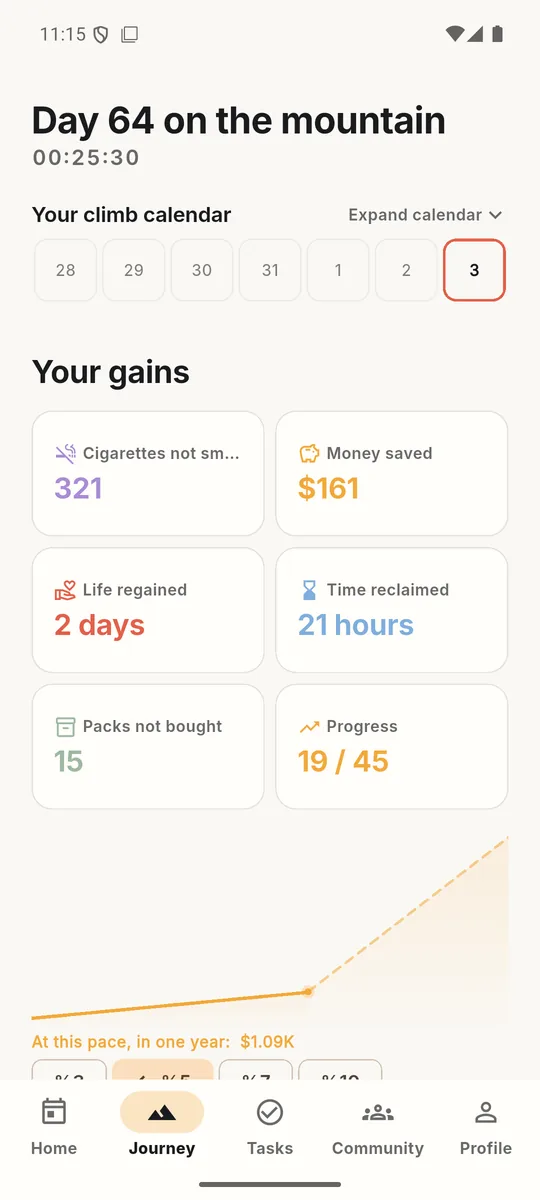
Your gains day by day: cigarettes not smoked, money saved, life reclaimed.
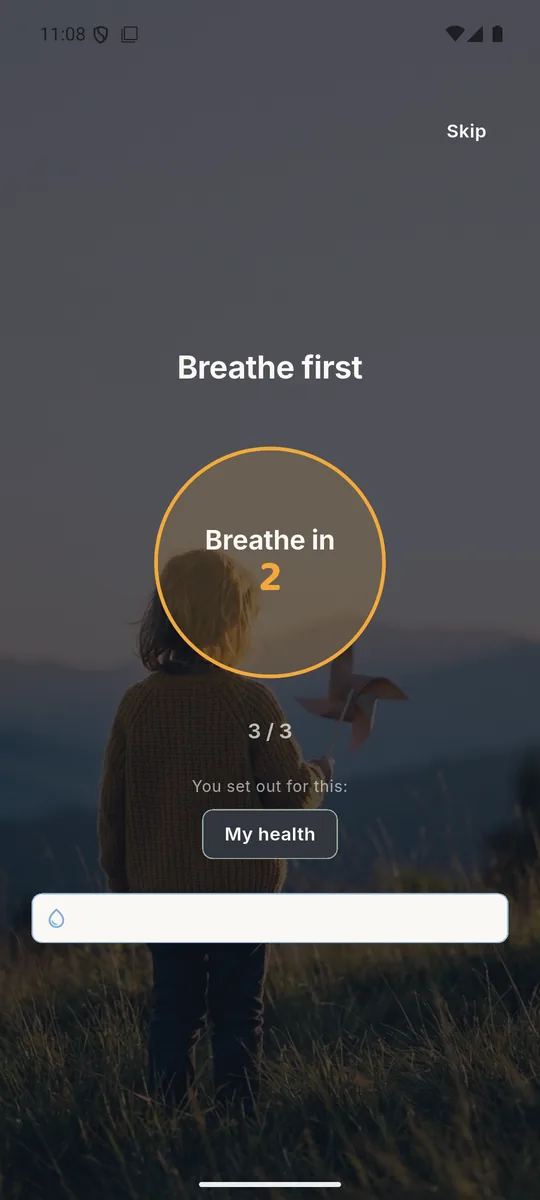
One tap when a craving hits: breathe first. A three-round guided breathing exercise.
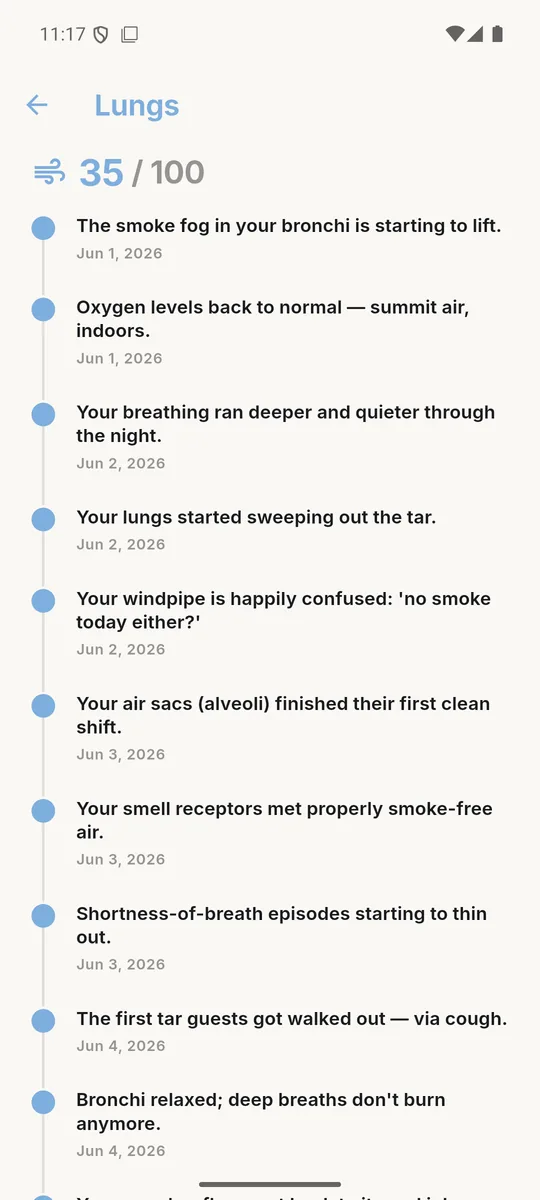
Six routes, 600 stops. Whatever is repairing in your body, you read it there.

You choose the view you are climbing — summit, forest, sea, or your own photo.
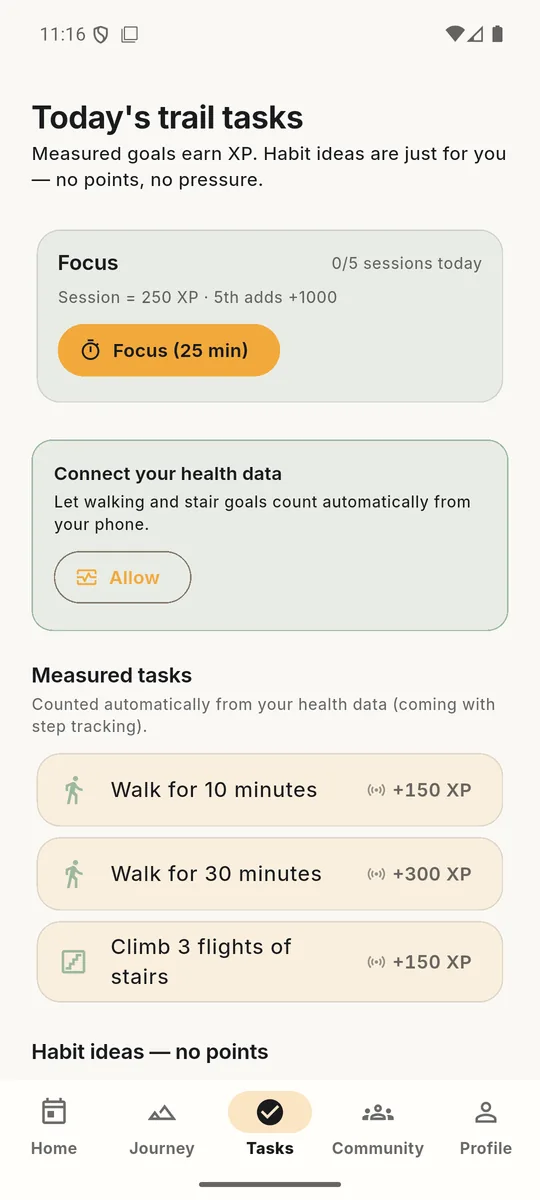
Small tasks every day. You are building a habit, not willpower.
Real screens from the app.
- Hear your own voice when a craving hits — the reason you quit, in your own words. You can add the voices of people you love, too.
- One tap for guided breathing and a distracting task — enough to fill those four minutes.
- 600 stops across six routes: read exactly what is repairing in your body today.
- Your numbers live on your device and keep counting offline — even on a plane.
- You pick the view you are climbing: summit, forest, sea, or your own photo.
- Interface, content and notifications in 14 languages.
You start free. The first day of the journey and the last are both yours.