10 excuses that delay quitting smoking (and what’s actually true)
July 30, 2026·7 min read
The 10 sentences that quietly postpone quitting smoking, where they’re partly right, where they go wrong, and what to tell yourself instead.
Procrastinating on quitting isn’t random. It’s almost always one of the same 10 sentences.
This guide puts those sentences side by side. For each one there are three parts: what it’s saying, where it has a point, and what the real answer is.
1. “I’ll wait until things calm down”
Where it has a point: Quitting during a very intense period really is harder.
Where it goes wrong: This sentence never comes with a date. As soon as “this phase” ends, the next one starts.
Reality check: Does the thing you’re waiting for have an actual end date on a calendar? If yes, write down the Friday after that date. If not, it’s just a delay. More on that here.
2. “I’m too stressed, now’s not the time”
Where it has a point: Quitting under heavy stress is tough, and if you’ve had a major shock, waiting a few weeks can be reasonable.
Where it goes wrong: Everyday stress is the normal state of life. And the idea that smoking “reduces” stress mostly comes from this: the cigarette is easing the tension that nicotine itself created.
Reality check: People who quit report that after the first weeks, their overall tension drops. More on that here. The most concrete reply to this sentence is a number: put your quit date into the counter on the right and watch how many days go by.
3. “Let me lose some weight first”
Where it has a point: An average weight gain of about 4–5 kilos is commonly reported.
Where it goes wrong: The order is backwards. Quitting improves breathing and stamina within weeks, which makes being active easier.
Reality check: First cigarettes, then weight. More on that here.
4. “I’ll quit by cutting down slowly”
Where it has a point: Fewer cigarettes is always better than more.
Where it goes wrong: The sentence has no clear goal, no number, no date. And cutting down tends to turn the remaining cigarettes into “rewards.”
Reality check: Does your cutting‑down plan have a final date on a calendar? If not, you’re not really cutting down; you’re just smoking more carefully. More on that here.
5. “At my age, what difference does it make?”
Where it has a point: Past exposure can’t be erased.
Where it goes wrong: This is the sunk cost fallacy — what’s already spent doesn’t make the future meaningless. And the real timeline isn’t in years but in weeks: breathing, coughing, and sleep can all change within weeks.
Reality check: How do you want to spend the next five years? More on that here.
6. “The damage is done anyway”
Where it has a point: Some damage can’t be reversed.
Where it goes wrong: Some of it can improve, and even where it can’t, quitting slows down how fast things progress. Once you have a diagnosis, the main issue isn’t prevention anymore, it’s the course of the illness.
Reality check: The prevention door may be closed, but the “what happens from here” door is still open. More on that here.
7. “Nothing will happen to me, I’ve got strong genes”
Where it has a point: Individual differences are real.
Where it goes wrong: You can’t measure your own risk, and you only find out the result 20–30 years later. Even in the “best case” scenario, what you’re left with is the same pattern of smoking.
Reality check: This isn’t a prediction; it’s a blind bet that settles in 30 years. More on that here.
8. “My grandpa smoked till 90”
Where it has a point: That person really did exist.
Where it goes wrong: It’s survivorship bias. The stories we hear are pre‑filtered: nobody uses “my grandpa died at 45 and I’m still smoking” as an argument.
Reality check: The existence of exceptions doesn’t mean there’s no rule. More on that here.
9. “I only smoke a few a day”
Where it has a point: Fewer is better than more, and quitting is likely easier for you.
Where it goes wrong: For heart and blood vessel risks, no safe lower limit can be clearly shown. And the real problem: the number doesn’t stay fixed — it tends to creep upward.
Reality check: Will it really be the same number five years from now? More on that here.
10. “I’ve tried so many times, I just can’t quit”
Where it has a point: The attempts really didn’t work out.
Where it goes wrong: In something where the average number of attempts is estimated between 6 and 30, four tries is actually on the low side. “I just can’t quit” turns an observation into an identity.
Reality check: “It hasn’t worked so far” and “it will never work for me” are not the same sentence. More on that here.
The common pattern
All ten sentences share the same two traits:
They start from a true observation. That’s why they’re convincing. None of them is absurd.
They jump from that observation to the wrong conclusion. And the conclusion is always the same: not today.
That’s why arguing with these sentences doesn’t help much — the observation part is right. What does help is separating the two: “That’s true. But is it a reason not to quit today?”
⚠️ And seeing this helps most of all: these sentences aren’t doing a calculation, they’re asking for permission. Once you notice that, their persuasive power drops sharply.
Who’s actually saying the sentence?
There’s a second thing these ten sentences have in common that’s easy to miss: they’re all in the first person, but none of them is a real decision.
“Once this phase is over” isn’t a decision, it’s a pause. “I’ll lose weight first” isn’t a plan, it’s a reorder. “Nothing will happen to me” isn’t a forecast, it’s a bet.
Recognizing a real decision sentence is simple: it has a date in it. “I’m quitting on June 14” can’t really be debated; “I’m thinking about quitting” can be debated forever.
⚠️ That’s why the shortest useful response to these ten sentences isn’t a counter‑argument — it’s a date. That’s item one in the quit agreement.
When someone else says it
Most of these sentences also show up at a table, from someone else’s mouth — and there, they serve a different purpose: the other person is defending themself.
When you say you want to quit, it can feel uncomfortable for someone who still smokes. A line like “my grandpa smoked till 90” isn’t really trying to convince you; it’s trying to protect their choice.
Knowing this makes the conversation shorter. The most effective reply doesn’t attack the argument at all:
❌ “But the data clearly show that…” → the table goes back into debate.
✅ “Maybe. I’m still quitting.” → there’s usually nothing to add.
We wrote separately about how to tell people you’ve quit; for these ten sentences, one simple reply is enough.
Two sentences that didn’t make the list
These ten are the most common, but two more have become widespread in the last few years.
“I switched to vaping, I’m cutting down.” Where it has a point: some approaches do see it as a transition tool. Where it goes wrong: again, there’s no end date. When does this “cutting down” end? Reality check: does your switch have a final date on a calendar, or is this not a quit plan at all, just a product swap?
“I’m down to almost nothing, I’ll stop on my own soon.” Where it has a point: your daily number may really have dropped. Where it goes wrong: the remaining cigarettes are usually the most “sticky” ones, and they don’t disappear on their own. We wrote separately about why cutting down tends to stall there. Reality check: how many weeks have you been on that same number?
How do you know you’re using one of these sentences?
A simple test: do you feel relieved after you say it?
A real plan doesn’t relax you much, because it contains things you’ll need to do. A “permission sentence” does relax you, because it takes the work off the table.
That little wave of relief is the common signature of all twelve sentences — and the moment you spot it, their power drops.
Ten sentences, one structure: true observation + wrong conclusion.
One thing you can do today: mark which of these you use the most. The answer is written right above.
If you want to keep those answers within reach the next time one of these lines pops into your head, the Tar2Star app keeps the counter and “crisis moment” tools in your pocket.
This page is a photo. The app is the film.
These numbers show today. Tar2Star shows you a new one every morning — and stays with you when a craving hits.
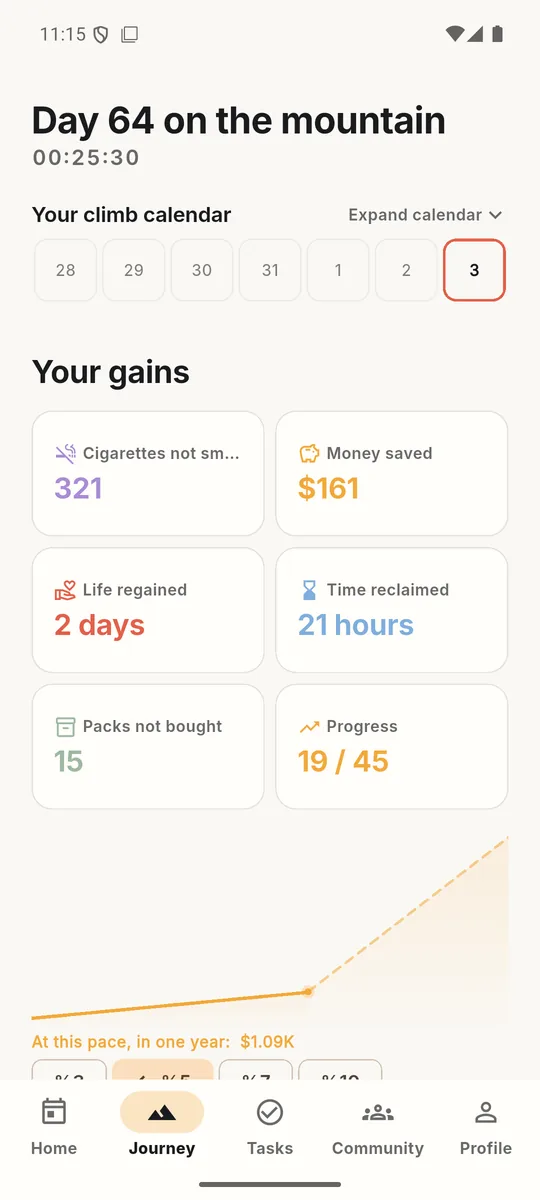
Your gains day by day: cigarettes not smoked, money saved, life reclaimed.
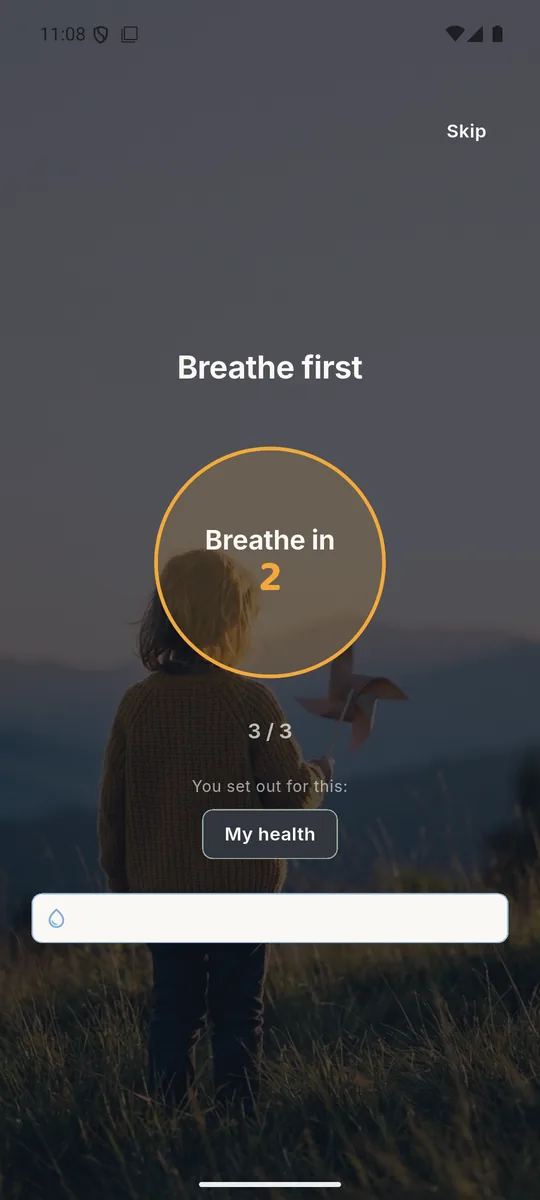
One tap when a craving hits: breathe first. A three-round guided breathing exercise.
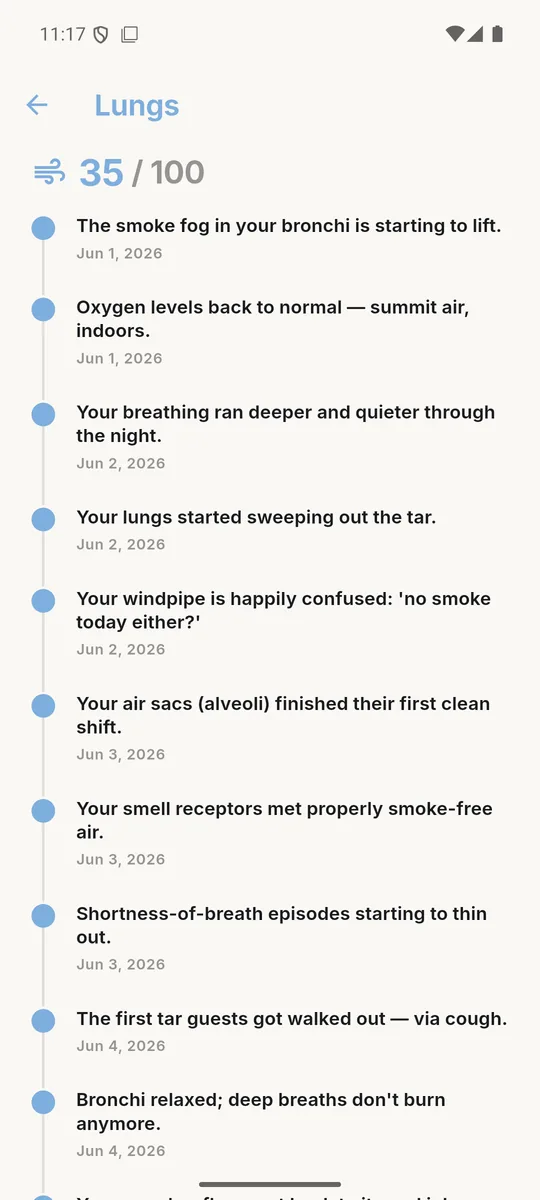
Six routes, 600 stops. Whatever is repairing in your body, you read it there.

You choose the view you are climbing — summit, forest, sea, or your own photo.
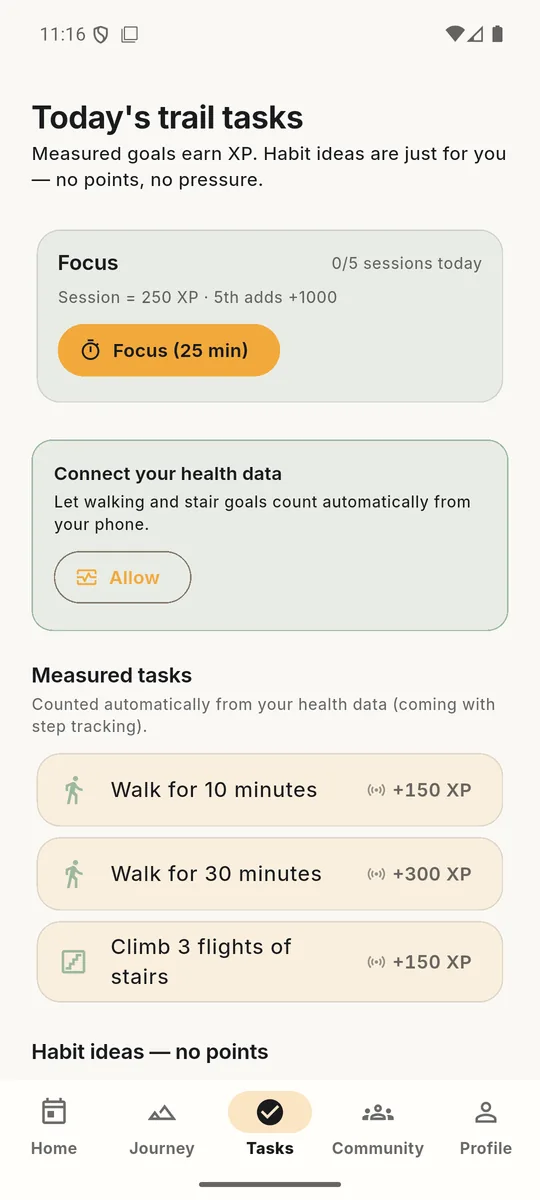
Small tasks every day. You are building a habit, not willpower.
Real screens from the app.
- Hear your own voice when a craving hits — the reason you quit, in your own words. You can add the voices of people you love, too.
- One tap for guided breathing and a distracting task — enough to fill those four minutes.
- 600 stops across six routes: read exactly what is repairing in your body today.
- Your numbers live on your device and keep counting offline — even on a plane.
- You pick the view you are climbing: summit, forest, sea, or your own photo.
- Interface, content and notifications in 14 languages.
You start free. The first day of the journey and the last are both yours.