Quit day morning: your first 60‑minute game plan
July 29, 2026·7 min read
Quit day’s hardest part is the first hour. Here’s a simple, no-decisions 60‑minute plan to get past the morning cigarette and set the tone for the whole day.
The most critical part of quit day is the first hour.
Here’s why: that first morning cigarette is the most automatic one. You don’t really decide to smoke it — it just feels like “waking up.” And if you don’t break that first link, the whole day can feel like it’s already “broken.”
The plan below covers your first 60 minutes.
Why the morning cigarette feels like the hardest one
You haven’t smoked all night, so your blood nicotine is at its lowest. Your body reads this as “something’s missing” and starts sending that signal while it’s still trying to wake you up.
That’s why the toughest question on dependence scales is: how soon after waking up do you smoke your first cigarette? We already asked this in the 8‑point readiness checklist; today your own answer becomes useful.
If your usual answer is “within 5 minutes,” this first hour can feel intense. If it’s “around an hour,” mornings might actually be the easiest part of your day.
There’s a second reason too, and it’s less obvious: the morning cigarette is not just another link — it’s the first link in the chain.
Once you smoke in the morning, your brain quietly files the day as a “smoking day.” If you get through the morning without one, the rest of the day runs on a different track. So the reward for this first hour isn’t just “one less cigarette”; it’s the tone of the entire day.
Build this plan tonight, just follow it tomorrow morning
The most important feature of this plan: tomorrow morning it should require zero decision‑making.
When you wake up, withdrawal is at its peak. That version of your brain is not great at answering “what should I do now?” That’s why all 60 minutes below get written out the night before — and in the morning, you just follow them.
Three practical things to set up tonight:
A full glass of water in plain sight. If you stand in the kitchen thinking, you’re already too close to your usual chain.
Your anchor sentence on your phone lock screen. You shouldn’t need to go hunting for it.
Your walking clothes ready. “What should I wear?” is still a decision. Clothes laid out = decision removed.
Your first 60 minutes, minute by minute
Minutes 0–2: get out of bed. Don’t linger. For a lot of people, the morning ritual starts in bed: wake up, lie there a bit, get up, light up. That first link isn’t the cigarette — it’s the “lying there.” So: get up, open the curtains, crack a window.
Minutes 2–5: drink a glass of water. Water before coffee. It changes the taste in your mouth and keeps your hands busy. It looks too simple, but every extra “new link” you insert into your morning chain helps.
Minutes 5–15: shake up your breakfast setup. If you usually drink coffee, swap to tea today — or have your coffee in a different room, in a different mug. The goal isn’t to quit coffee. The goal is to loosen the coffee = cigarette connection.
This is temporary. In about two weeks you can go back to your old coffee routine; by then that link will already be weaker.
Minutes 15–20: read your anchor sentence. The single sentence you wrote using the 3‑question exercise. You didn’t write it to sit and ponder; you wrote it so you can just read it, because a craving spike is a bad time for deep thinking.
Minutes 20–30: set the date, start your counter. Make sure the counter is somewhere you can actually see it. On day one, even “it’s been 20 minutes” is a win — and seeing that win written down raises the stakes for the rest of the day.
Minutes 30–45: walk. Fifteen minutes is enough. A short morning walk does two jobs at once: your hands and mind are occupied, and this is usually the first moment you notice your breathing feels a little clearer.
Minutes 45–60: meet the first wave. It will show up. Being prepared beats hoping it won’t. Each wave usually lasts around 3–5 minutes; you already know why it’s that short.
Fill those few minutes: drink water, splash your face, text someone, switch the task in front of you.
⚠️ When a wave hits, skip the thought “if it’s this bad in the first hour, the whole day will be like this.” It won’t. Even on day one, waves get less frequent — and day two brings a different kind of difficulty anyway. Same journey, different hill.
Three things not to do this morning
Don’t step on the scale. Not today. Worrying about weight is not a day‑one job.
Don’t play the “how long can I last?” game. Today’s time frame is one day. Tomorrow belongs to tomorrow.
Don’t walk straight into smoking spaces first thing. The break area at work, the usual morning chat spot, the friend who smokes in the car — all of these can wait. There’s zero benefit in stress‑testing your willpower in the first hour of the first day.
If you’re heading to work: the 10 minutes before you leave
Most of this first hour is at home, but part of it will be on the way in. Car and public transit bring different kinds of triggers.
If you’re driving: you already removed your lighter and ashtray yesterday. Today add this: crack the window a bit and listen to talk, not music — a podcast, talk radio, an audiobook.
Reason: with music, your mind can drift, and a drifting mind drifts straight to “a cigarette would be nice.” With talking, your mental space is already occupied.
If you’re on public transit: have something in your pocket for your hands (gum, a toothpick, something small) and, if you can, stand away from the “smoking corner” at the stop.
That waiting time can easily become the most vulnerable 5 minutes of day one — nothing to do, empty hands, people smoking around you.
In both cases, do the same thing when you arrive at work: go straight to your desk, skip the smoking area. The morning hello can be one day late.
What if the plan falls apart?
It might — and that doesn’t mean the plan is useless.
You sleep in, your kid wakes up, your phone rings, and the 60‑minute flow falls apart. If that happens, don’t rewind to the beginning. Just pick up at the next item. Missed the walk? Move it to your lunch break. Forgot the water? Drink it now.
This isn’t an exam; it’s scaffolding. Its job is to reduce the number of decisions you have to make in the morning. If you follow even two of the steps, that’s already two fewer decisions.
⚠️ There is only one real breaking point: smoking that morning cigarette. Every other step can slide or shift; this one can’t, because it’s what defines the day.
What happens after the first hour?
The toughest peak isn’t magically gone, but the first link is broken. You’ll probably face three or four more waves during the day; they all follow the same script: they rise, peak, and pass.
When you go to bed, you’ll have something measurable: a full day. Reading about what happens in your body during the first 24 hours tends to land even better at that point — numbers can be more convincing than “willpower.”
This is tomorrow morning’s plan. Read it tonight and save it somewhere; you won’t have time or patience to read the whole thing first thing in the morning.
Sixty minutes, six steps, one glass of water.
Set your date in the counter on the right so those first minutes are already ticking when you wake up. And if you want your crisis tools and your counter in your pocket, the Tar2Star app is built exactly for these hours. ---
This page is a photo. The app is the film.
These numbers show today. Tar2Star shows you a new one every morning — and stays with you when a craving hits.
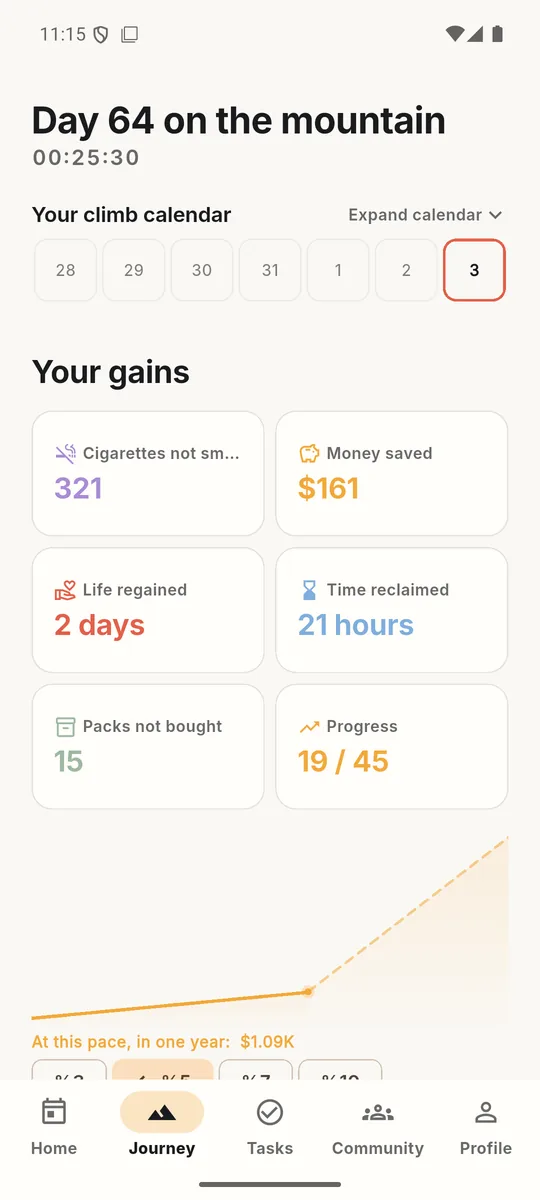
Your gains day by day: cigarettes not smoked, money saved, life reclaimed.
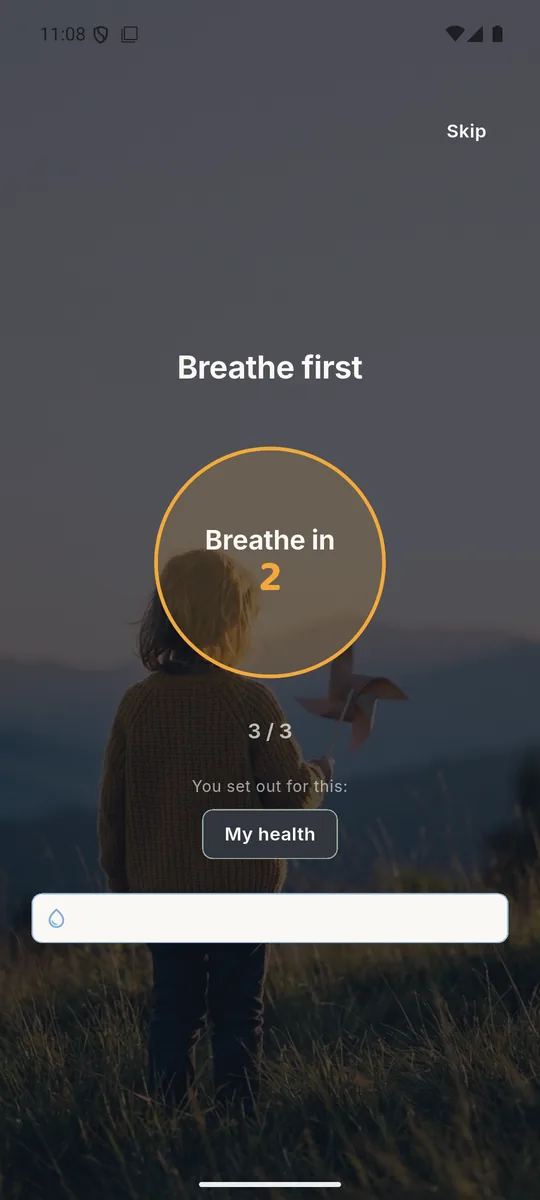
One tap when a craving hits: breathe first. A three-round guided breathing exercise.
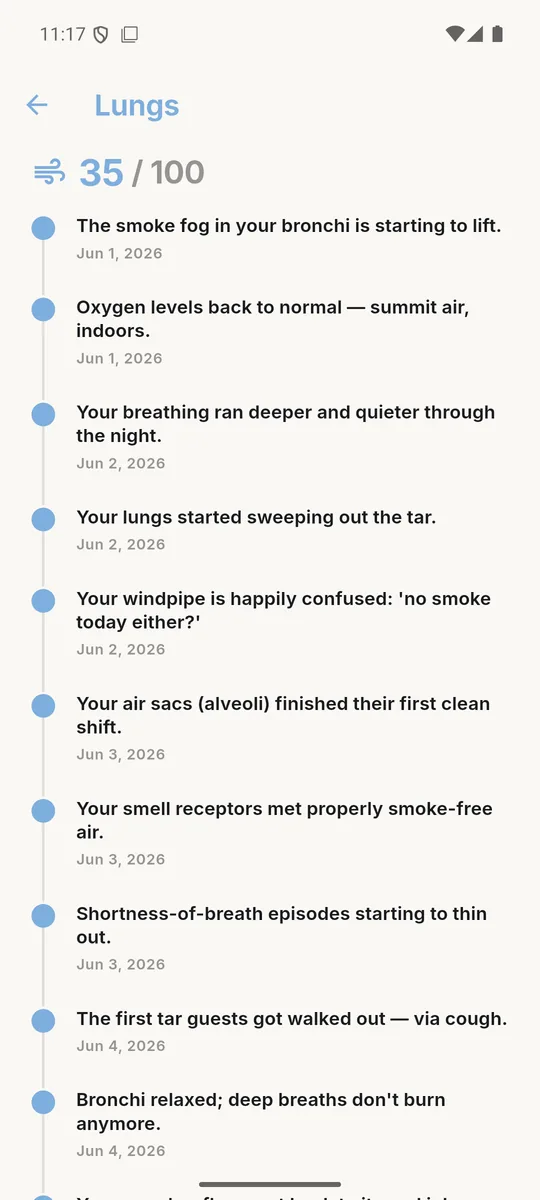
Six routes, 600 stops. Whatever is repairing in your body, you read it there.

You choose the view you are climbing — summit, forest, sea, or your own photo.
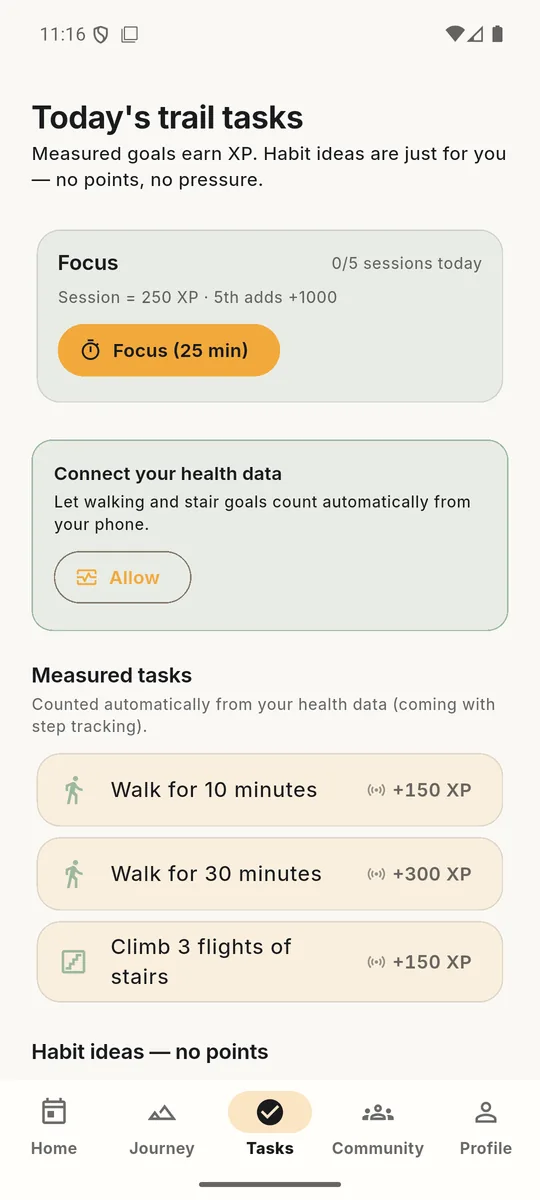
Small tasks every day. You are building a habit, not willpower.
Real screens from the app.
- Hear your own voice when a craving hits — the reason you quit, in your own words. You can add the voices of people you love, too.
- One tap for guided breathing and a distracting task — enough to fill those four minutes.
- 600 stops across six routes: read exactly what is repairing in your body today.
- Your numbers live on your device and keep counting offline — even on a plane.
- You pick the view you are climbing: summit, forest, sea, or your own photo.
- Interface, content and notifications in 14 languages.
You start free. The first day of the journey and the last are both yours.