The First 72 Hours After Quitting Smoking: Why It Feels So Hard (And What’s Actually Happening)
July 29, 2026·4 min read
The first 72 hours after quitting smoking are the steepest part of the climb. Here’s what happens in your body hour by hour, and how to get through it.
The first 72 hours after you quit smoking are the steepest part of the climb.
The upside: the steepest part is also the shortest part. And once you know what’s happening in your body, those three days become less about “willpower” and more about following a map.
Why are the first 72 hours the hardest?
Because that’s how long it takes nicotine to leave your body.
Nicotine’s half-life in your blood is about two hours. Roughly every two hours after your last cigarette, the level drops by half. For someone who smokes regularly, that means the brain gets an internal “low level” alert more than ten times a day—a steady stream of “we’re running low” signals.
When you quit, the alarms don’t stop; they just don’t get answered. Your brain expects nicotine, doesn’t get it, and reports that as restlessness, irritability, and trouble focusing.
Measurable nicotine is gone from your system within about 72 hours. Those three days are essentially the time it takes for the alarms to quiet down.
What happens hour by hour?
First 4 hours. Usually, not much feels different. Some people notice a slight edge or feeling “on alert.”
4–12 hours. The first clear waves of craving show up. Carbon monoxide in your blood starts to fall; by about 12 hours it’s back to normal, and oxygen delivery to your cells improves. Some people get a mild headache in this window—that’s a normal response to getting more oxygen.
12–24 hours. Cravings come more often. Sleep can be disrupted. Irritability is usually most noticeable in this stretch.
24–48 hours. Your sense of taste and smell start to sharpen. At the same time, withdrawal ramps up. We’ve broken down why the second day feels tougher than the first in a separate post—because that jump surprises a lot of people.
48–72 hours. Withdrawal peaks and then starts to ease off. Your bronchial tubes begin to relax and breathing feels a bit easier. By the end of day three, there is no measurable nicotine left.
This timeline lines up with data from the World Health Organization and the CDC; we laid out the full calendar in another guide.
What will I feel?
Most common experiences, in roughly decreasing order:
Cravings (in waves, lasting a few minutes at a time)
Irritability, low tolerance for stress
Trouble concentrating
Sleep disruption
Headache
Increased appetite
Cough (as your lungs start clearing)
⚠️ All of these are temporary and each has its own timeline. You can find a full list of withdrawal symptoms and how long they last in a separate article.
The key idea: these symptoms are not a malfunction; they’re signs of repair. Your body is setting up a new balance.
How to get through those three days
Think of these three days as something you plan, not something you “tough out” by sheer will.
1. Know how long a craving lasts. A single craving usually lasts about 3–5 minutes. It comes in like a wave, rises, and passes. Understanding why it fades in just a few minutes makes those minutes feel more manageable.
2. Keep your hands busy. When your hands are empty, the old motion of reaching for a cigarette shows up on autopilot. Pen, water bottle, keychain—anything works.
3. Drink water. Often and plenty. It gives your mouth something to do and helps your body flush out nicotine.
4. Pause your triggers (just for now). Coffee, alcohol, and places where people smoke. Park them for three days. You can bring them back later.
5. Go to bed early. You don’t get cravings while you’re asleep. Turning in early during these three days isn’t “giving up”; it’s a strategy.
When it feels like “I can’t do this”
That feeling will show up. For many people, it hits on the evening of day two.
In that moment, one idea is worth keeping close: the feeling is temporary; the decision is long-term. A craving wave lasts a few minutes. Getting through that wave is a much smaller job than restarting the whole process from day one.
There’s also this: if you’ve reached the 72-hour mark, the nicotine in your body is gone. After that, what you’re working with is not physical dependence but habit—and habits shift more slowly than chemistry, but they’re also more manageable. We explore that in the mind’s voice stage of the journey.
Three days. Not ninety-six hours—seventy-two.
Count them down; time you’re actively counting tends to move faster. The counter on the right side of the screen exists for exactly that—to show you where you are, hour by hour.
If you want something concrete in your hand during a rough moment, the Tar2Star app opens a breathing exercise and quick distraction tasks with a single tap—built to carry you through those three-to-five-minute waves. ---
This page is a photo. The app is the film.
These numbers show today. Tar2Star shows you a new one every morning — and stays with you when a craving hits.
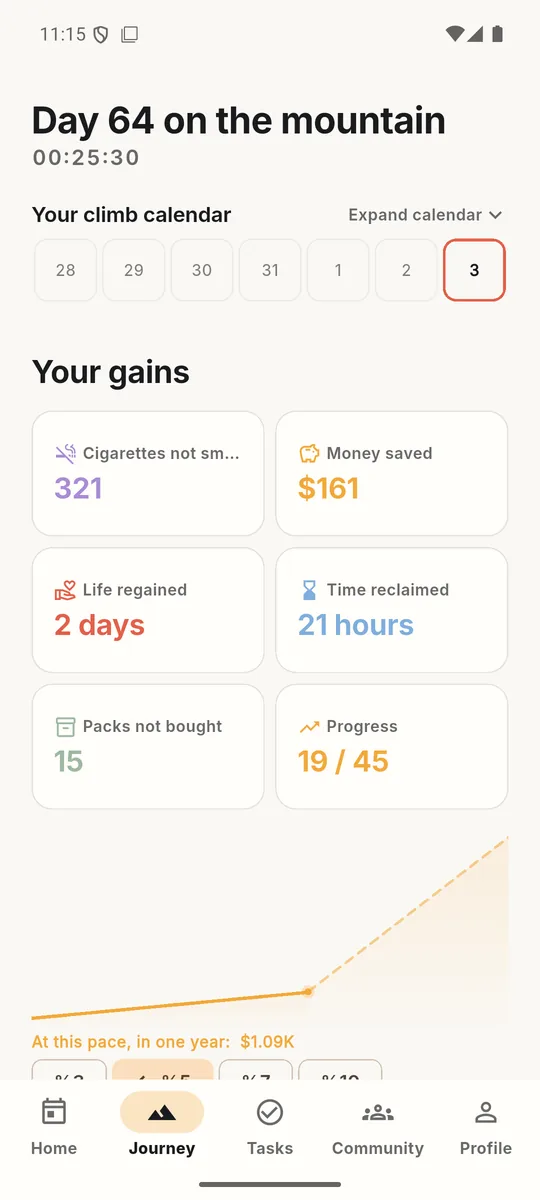
Your gains day by day: cigarettes not smoked, money saved, life reclaimed.
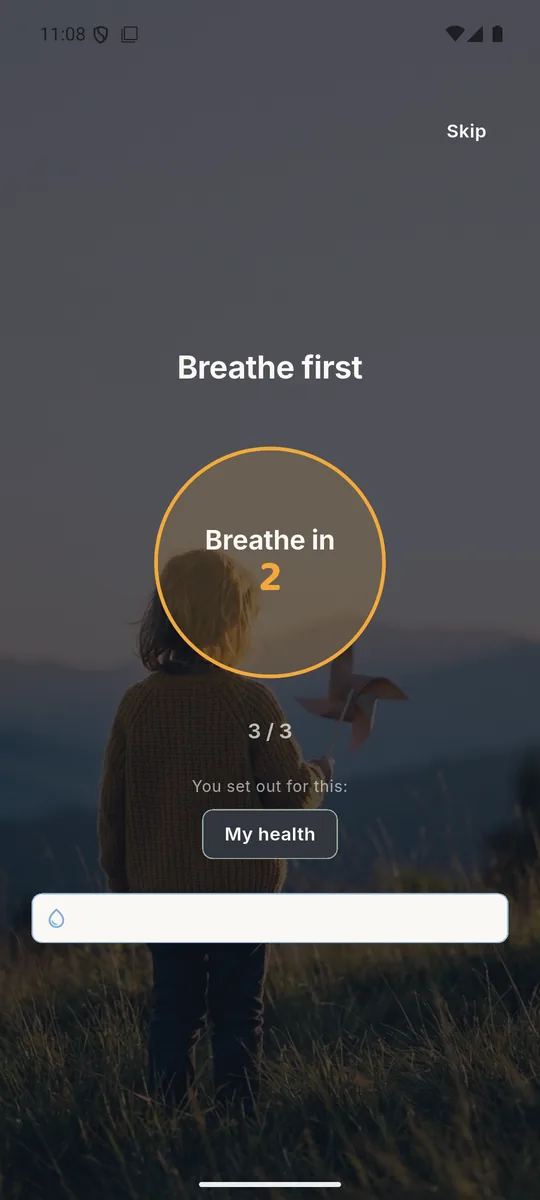
One tap when a craving hits: breathe first. A three-round guided breathing exercise.
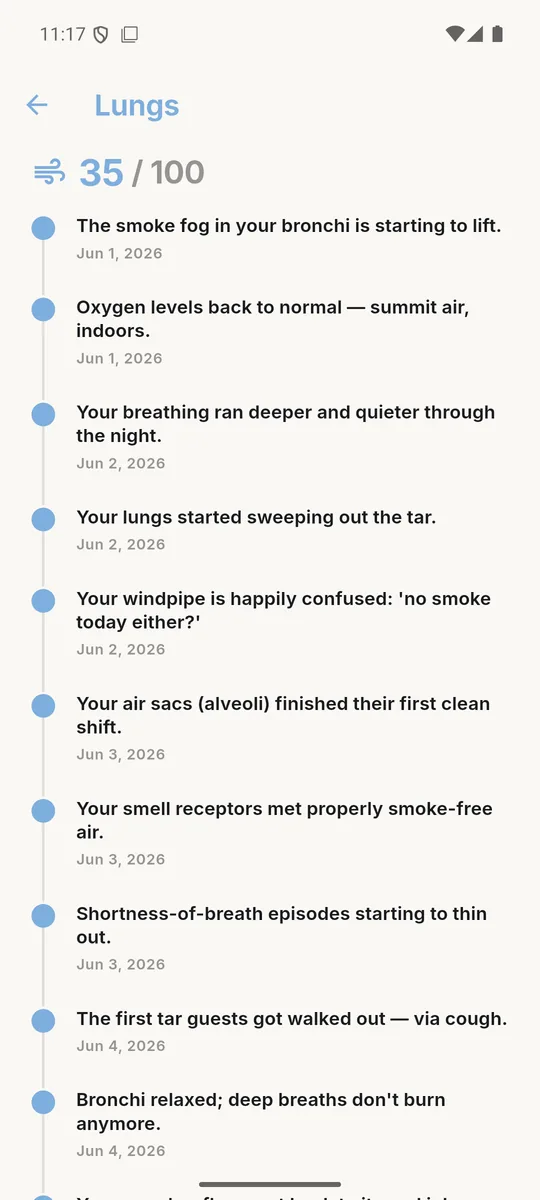
Six routes, 600 stops. Whatever is repairing in your body, you read it there.

You choose the view you are climbing — summit, forest, sea, or your own photo.
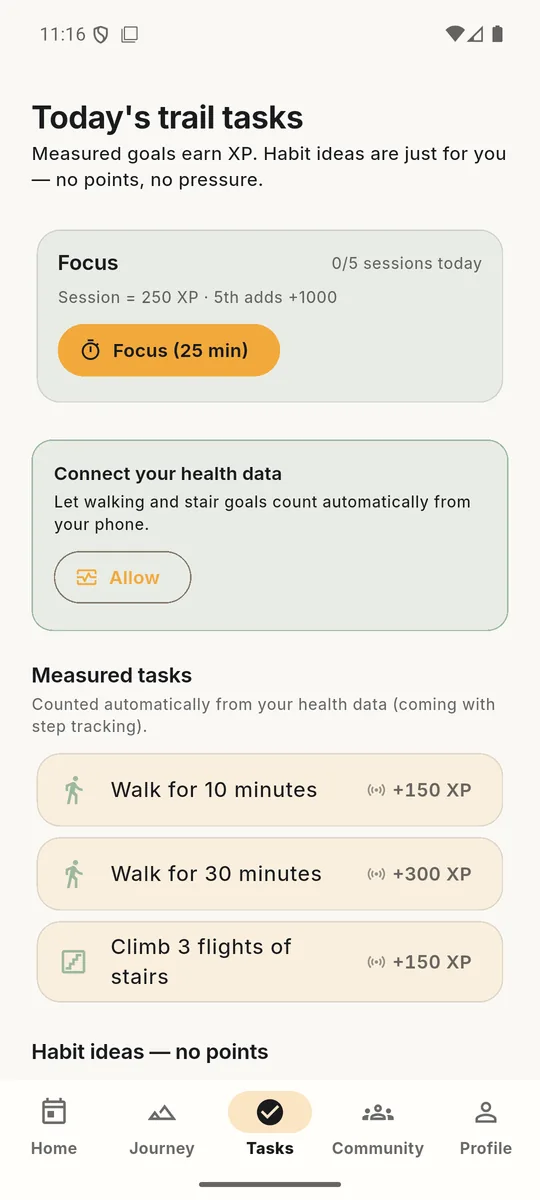
Small tasks every day. You are building a habit, not willpower.
Real screens from the app.
- Hear your own voice when a craving hits — the reason you quit, in your own words. You can add the voices of people you love, too.
- One tap for guided breathing and a distracting task — enough to fill those four minutes.
- 600 stops across six routes: read exactly what is repairing in your body today.
- Your numbers live on your device and keep counting offline — even on a plane.
- You pick the view you are climbing: summit, forest, sea, or your own photo.
- Interface, content and notifications in 14 languages.
You start free. The first day of the journey and the last are both yours.