Family history of lung cancer: what it means for your risk (and what you can still change)
July 30, 2026·7 min read
Having lung cancer in the family raises your risk, but it’s not destiny. How much it goes up, what screening looks like, and what still changes the odds.
For someone who smokes and has lung cancer in the family, this question cuts both ways.
One side is straightforward: yes, family history does raise your risk. The part most people misread is the rest: it doesn’t mean your future is already written — if anything, this is the group where quitting shifts the numbers the most.
There’s a twin to this mistake, and it’s more popular because it feels comforting: “my grandpa smoked till 90”.
How much does lung cancer in the family raise risk?
Studies consistently find that people with a first‑degree relative (parent, sibling, child) who had lung cancer have a higher risk themselves. Estimates vary, but they tend to cluster around about double the risk.
Where that extra risk comes from is a mix of things:
Genetic susceptibility — individual differences in the enzymes that process carcinogens and in DNA repair
Shared environment — growing up in the same home, secondhand smoke in childhood
Shared habits — kids of people who smoke are much more likely to smoke themselves
That last one matters: part of what we call “family history” isn’t genetics at all; it’s learned behavior.
Smoking and susceptibility: risks don’t add up, they multiply
This is the main point of the whole article.
Susceptibility and smoking are not two separate risks you just stack side by side. Susceptibility means that for the same level of exposure, you take more damage.
Smoking raises everyone’s risk; if you’re susceptible, it raises it more steeply. The same steep curve shows up even in people who only smoke three cigarettes a day: the risk curve is steepest right near zero.
Flip that around and here’s the good news: quitting gives the biggest benefit to this group. When you remove the multiplier, the person who had the biggest multiplier gains the most.
In everyday language: a person who smokes and has a family history does not have the same risk as a person who smokes without that history — but they’re both holding the same lever. And the lever has a stronger effect in the one who’s more susceptible.
“It runs in my family but nobody smoked”
This is more common than people think and deserves its own box.
Lung cancer has causes beyond cigarettes: radon gas, occupational exposures (asbestos, certain chemicals), air pollution, and secondhand smoke. So the case in your family isn’t always smoking‑related.
That doesn’t cancel anything out; if anything, it reverses it: if a non‑smoking cause was involved, you’re adding smoking on top of that. Susceptibility plus exposure — again, it’s a multiplication.
⚠️ Radon is especially easy to miss: it’s odorless, colorless, and can build up indoors in some areas. In people who smoke, radon exposure has been reported to have a stronger effect — again, the two don’t simply add, they multiply. Your local health department can tell you whether testing is recommended in your area.
The “if it’s genetic it’ll happen anyway” trap
People say this a lot, and it packs two mistakes into one sentence.
First mistake: susceptibility is a probability shift, not a destiny. Most people with a family history of lung cancer never develop it.
Second, and more important: about 80–90% of lung cancer cases are linked to smoking. Put the unchangeable factor (genetics) next to the changeable one (smoking), and the lever you actually hold is the changeable one.
You can’t remove genetic susceptibility. You can remove exposure. Why “trusting your genes” is a bad bet is a topic we unpack separately.
Lung cancer screening: who qualifies?
For people who smoke and have a family history, this is the practical part to know.
In some countries, people in a certain age range with a certain amount of smoking history are offered low‑dose CT scans to screen for lung cancer. Catching it early can make a clear difference to treatment options and outcomes.
One example is the current U.S. criteria: ages 50–80, a smoking history of 20 pack‑years or more, and either currently smoking or having quit within the past 15 years. (Pack‑years are simple: one pack a day × one year = 1 pack‑year; two packs a day × 10 years = 20 pack‑years.) Criteria differ by country and guideline; for a general overview you can check the CDC. Your clinician is the one who can tell you if screening fits you — the sentence to bring to the visit is:
“I smoke and I have lung cancer in my family. Do I qualify for screening?”
⚠️ Screening is not a substitute for quitting. Screening’s job is to find disease early; quitting’s job is to lower the odds of getting it. They’re not interchangeable.
⚠️ A second, less‑known point: screening has its own costs — false positives, extra tests, anxiety. That’s why it’s offered to specific higher‑risk groups, not everyone. “Should I get one too?” and “Is this appropriate for me?” are different questions; the second is the one your clinician can answer.
“How do I calculate how much I’ve smoked?”
Pack‑years are the common unit for both screening criteria and talking about risk. Doing the math takes two minutes.
Formula: packs per day × number of years smoked.
1 pack a day × 20 years = 20 pack‑years
½ pack a day × 30 years = 15 pack‑years
1.5 packs a day × 20 years = 30 pack‑years
Knowing this number speeds up your visit: it’s one of the first things your clinician will ask, and “I don’t know, it’s been a long time” doesn’t help anyone.
⚠️ When you calculate it, include only the years you actually smoked: if you quit for two years and then started again, don’t count those two smoke‑free years. Making the number bigger or smaller than it is doesn’t help you or your clinician.
If you’ve lost someone
Quitting can feel especially tangled here, because smoking can be both the cause of the loss and the thing you reach for to cope with it.
The honest part: that conflict is real, and turning it into self‑blame doesn’t solve it. Guilt acts more like fuel than a brake in this area.
A more workable frame: set quitting up as a decision that belongs to you, not as a debt to the past. Otherwise every rough moment in quitting means re‑opening grief, and that’s hard to keep doing.
If you have a child: you’re one link in the chain
This is the side of family history people talk about the least.
You’re not only a receiver of family history; for your child, you’re also a source. In two ways: shared genetics (not changeable) and shared behavior (changeable).
A child seeing a parent quit is still seeing an example. We unpack this more in detail in the piece on quitting when you have kids.
What do you say to your sibling?
In families where lung cancer has shown up, there’s often more than one person who smokes — and this conversation often never happens because it feels like “lecturing.”
A frame that tends to work better is information, not a sermon:
“I asked my doctor if I qualify for screening; these are the criteria. You’ve got the same family history — might be worth asking.”
That sentence doesn’t accuse anyone; it suggests an action, and it’s not easy to brush off.
⚠️ What doesn’t help is turning it into a numbers battle: “your risk is twice as high” mostly triggers defensiveness, not a screening appointment. With family history, a small, concrete ask beats a big, technically correct statistic.
Should I get a genetic test?
This is coming up more often as commercial genetic tests become common.
Short answer: there’s no routine genetic test recommended just to assess lung cancer risk, and most direct‑to‑consumer tests aren’t designed for real‑world medical decision‑making. If a result says “low risk,” it can give false reassurance; if it says “high risk,” the action step is the same either way — quitting smoking.
If both possible results point to the same next step, the test itself isn’t necessary to make the decision.
Family history raises the risk. It doesn’t lock in the outcome. The lever in your hand is smoking.
Two concrete moves from today: pick a quit date, and ask your clinician whether you qualify for lung cancer screening.
If you’d like to watch your smoke‑free days add up from that date, you can plug it into the counter on the right. For the minute‑by‑minute rough patches, the Tar2Star app was built exactly for those moments.
This page is a photo. The app is the film.
These numbers show today. Tar2Star shows you a new one every morning — and stays with you when a craving hits.
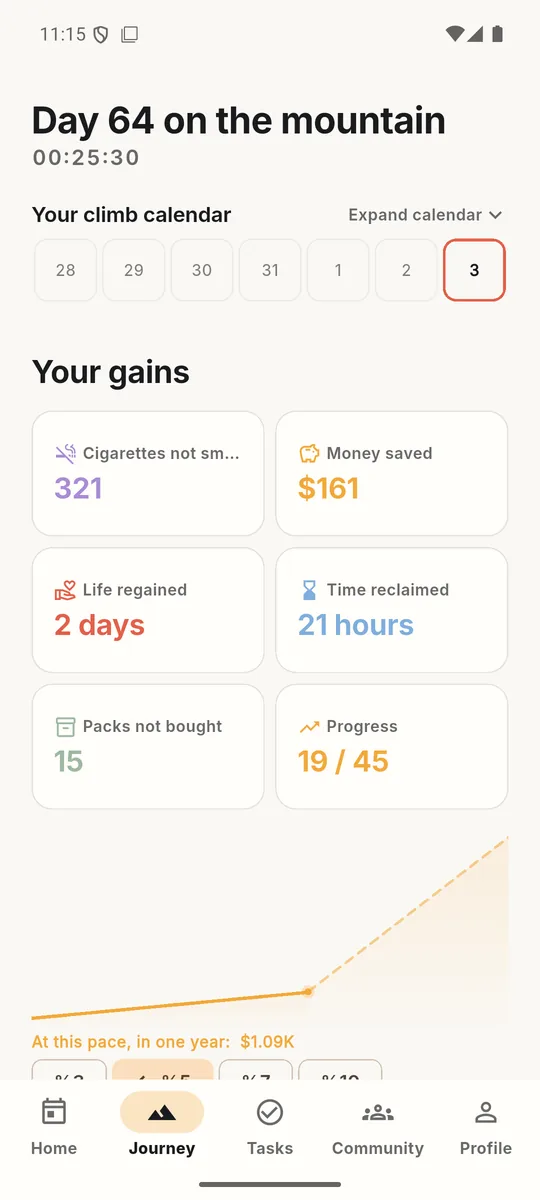
Your gains day by day: cigarettes not smoked, money saved, life reclaimed.
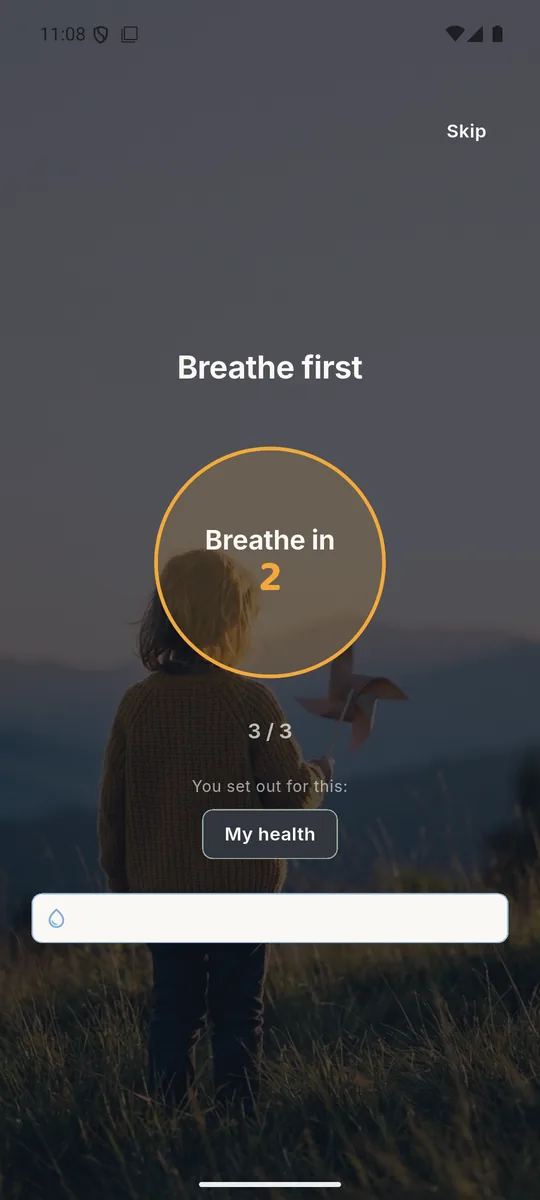
One tap when a craving hits: breathe first. A three-round guided breathing exercise.
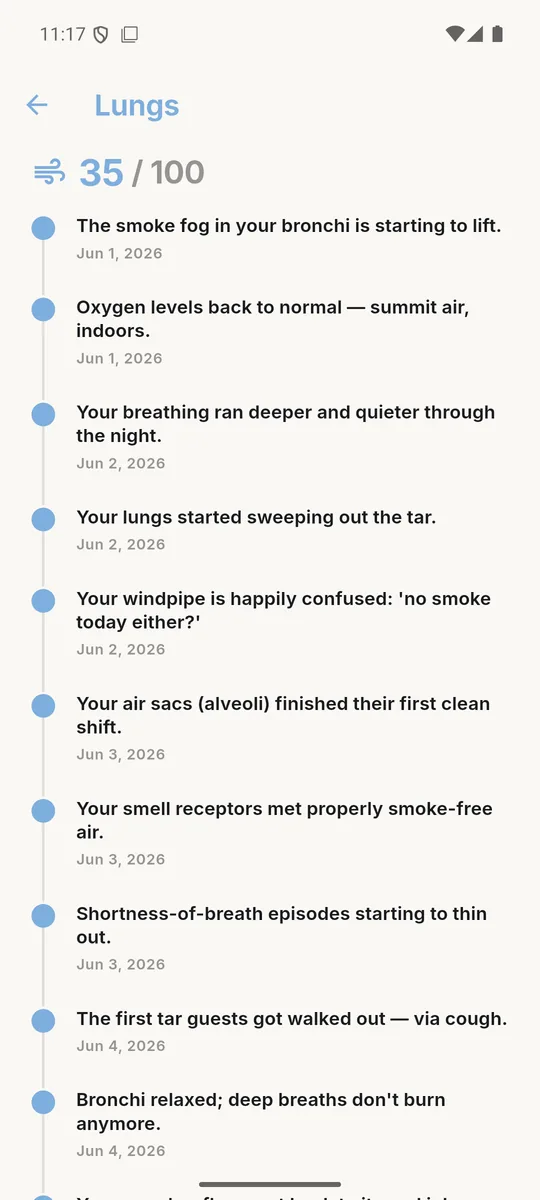
Six routes, 600 stops. Whatever is repairing in your body, you read it there.

You choose the view you are climbing — summit, forest, sea, or your own photo.
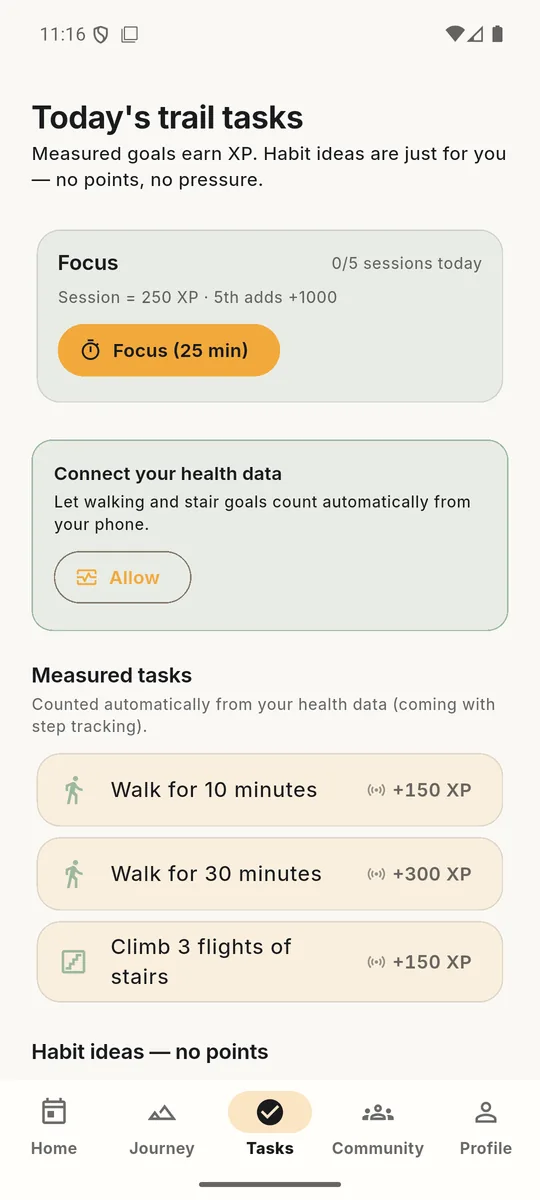
Small tasks every day. You are building a habit, not willpower.
Real screens from the app.
- Hear your own voice when a craving hits — the reason you quit, in your own words. You can add the voices of people you love, too.
- One tap for guided breathing and a distracting task — enough to fill those four minutes.
- 600 stops across six routes: read exactly what is repairing in your body today.
- Your numbers live on your device and keep counting offline — even on a plane.
- You pick the view you are climbing: summit, forest, sea, or your own photo.
- Interface, content and notifications in 14 languages.
You start free. The first day of the journey and the last are both yours.