Relapsed before? How to make this quit attempt actually different
July 29, 2026·7 min read
You’ve quit before and gone back. The difference this time isn’t “more willpower” – it’s one clear plan for the exact point where you slipped last time.
“This time I’m really serious.”
Most people who’ve gone back to smoking say that line—and they mean it. The problem is, it’s not a plan. It’s a wish.
A real plan starts in one place:
Exactly where did things fall apart last time?
Start with a one‑question review
Grab a piece of paper and write this down:
On your last quit attempt, where did you smoke your first cigarette, who were you with, and what time was it?
Those three details tell you almost everything you need. Instead of a vague “I’ll be more careful,” you get one specific moment and one specific safeguard.
In most cases, your answer will match one of the five scenarios below.
Why such a narrow question? Because “I’ll be more determined this time” tries to defend every point at once and ends up defending none of them. Most relapses start at a single point. If you can name that point, the load you have to carry shrinks to a single sentence.
Scenario 1: A night out with drinks
This is the most common one, and there’s nothing shameful about it—alcohol lowers your guard and is strongly linked with smoking in a lot of people’s brains.
What’s different this time: Go alcohol‑free for the first two to three weeks. That one change is the most powerful thing you can do in this scenario.
If you have a social event you truly can’t skip: leave early, keep your hands busy, and make sure at least one person at the table knows what you’re doing. We wrote more about handling social situations.
Scenario 2: One really bad day
An argument, bad news, a work crisis. Cue the thought: “After today, I deserve it.”
What’s different this time: Your “bad day plan” has to be written before the bad day, because nobody calmly writes plans in the middle of a meltdown. Two short lines are enough:
If I have a bad day, the first thing I’ll do: (walk / shower / text this person)
If I have a bad day, what I will not do: go to the store and buy cigarettes
⚠️ The trap here is the belief that smoking lowers stress. What it actually does is quiet the withdrawal tension that cigarettes created in the first place—for a little while. We broke down that loop in detail.
Scenario 3: “Just one”
This doesn’t show up in a crisis. It shows up in a relaxed moment. Usually second or third week, when things seem to be going smoothly.
What’s different this time: You need your answer to that sentence ready before it shows up, because when it does, it sounds completely reasonable.
Ready‑made reply: “One cigarette doesn’t turn the craving off—it turns it back on.” And that’s what actually happens: on‑and‑off rewards are the hardest habit to shut down.
Also, keep a tiny log: write down the day and time when that “just one” thought shows up. A craving you write down but don’t act on is a craving that passes.
Scenario 4: Weight, sleep, mood
“I’ve gained weight.” “I can’t sleep.” “I’m angry all the time.” Then you start questioning whether quitting was even a good health decision.
What’s different this time: These symptoms have time limits, and knowing them in advance protects your decision. We put a full list of withdrawal symptoms and how long they last in a separate article—and it’s better to read it on day one, not halfway through week one.
With stronger nicotine dependence, these symptoms can be hard to carry on willpower alone. In this scenario, nicotine patches/gum or behavioral support lines really can make a difference—talk to your pharmacist or doctor.
Scenario 5: Out of the blue, around month three
This is the least talked about—and the most confusing—scenario: no crisis, no bad day, no alcohol. Life is fine, and then one day you just have a cigarette.
The reason is usually this: once the danger feels over, your defenses switch off.
In the first weeks, you’re prepared, you have a plan, you’re careful. By month three you’re thinking “I’ve quit,” and that thought alone lowers your guard. If smoking no longer feels like a threat, then “just one” doesn’t feel like a risk.
What’s different this time: Write one sentence for your third month in advance and put it somewhere you’ll see it.
“The day I feel safest is the day I’ll be most careful.”
Also, put a one‑line reminder in your calendar for three months out—you’ll probably forget about it until it pops up, and that’s the point.
⚠️ In this scenario, “just one” really can stay at just one, and that’s exactly why it’s risky: because nothing bad happens right away, the second one gets easier. The real cost doesn’t show up that day—it shows up three weeks later when the cravings are back.
Next: What are you ADDING this time?
Review shows you what was missing; a plan adds something. On your last attempt, you were probably missing at least one of these:
A date on the calendar — not “soon.” A specific day. We break down how to choose it in another article.
One person — someone you can message when it gets hard. This is the most commonly missing piece in people who slip back.
A crisis plan — three short, concrete lines for your three hardest moments.
Support — if your dependence is strong, options like medication/patches/gum.
You don’t need all four. But if you had none of them last time, you’ll want at least two this time.
Which two? Your last scenario tells you:
Scenarios 1 and 2: crisis plan
Scenario 3: ready answer to “just one”
Scenario 4: extra support
Scenario 5: that three‑month reminder
In other words, you don’t add things at random; you add them exactly where you fell.
If you slip at the same spot again
It can happen. And if it does, the lesson is not “I can’t do this.”
Slipping at the same spot twice means the safeguard you put there was too weak—not that you are. When a safeguard is too weak, you strengthen it. If two alcohol‑free weeks weren’t enough, you make it four. If “I’ll leave the party early” didn’t work, next time it might be “I’m not going to that party.”
There’s another possibility: you’re looking at the wrong thing. The time and place of that first cigarette can hide the real trigger.
For example, “after work” might actually be “when I’m hungry.” Writing down those same three details (time, place, what you ate and how you slept that day) across two or three attempts can reveal a pattern.
The fear of “What if I fail again?”
That fear is what keeps a lot of people from even starting, and it deserves an honest answer: yes, you might slip again.
But you also know now that the number of attempts isn’t a failure score. This attempt doesn’t have to be perfect. It only has to be one step better equipped than the last one.
⚠️ One more thing: when you talk about this quit attempt with people around you, you don’t have to say “I’m quitting again.”
“I quit today” is a complete sentence. It doesn’t have to carry your whole history.
What makes this attempt different isn’t more determination. It’s one concrete safeguard placed at the exact point where you slipped last time.
Write that point in one sentence, then write the safeguard across from it. That’s your entire plan.
If you add your date to the counter on the right, the days from this attempt will start adding up too. And if you want tools you can actually pull out in tough moments, the Tar2Star app is built exactly for those points on the climb from Tar → Star.
This page is a photo. The app is the film.
These numbers show today. Tar2Star shows you a new one every morning — and stays with you when a craving hits.
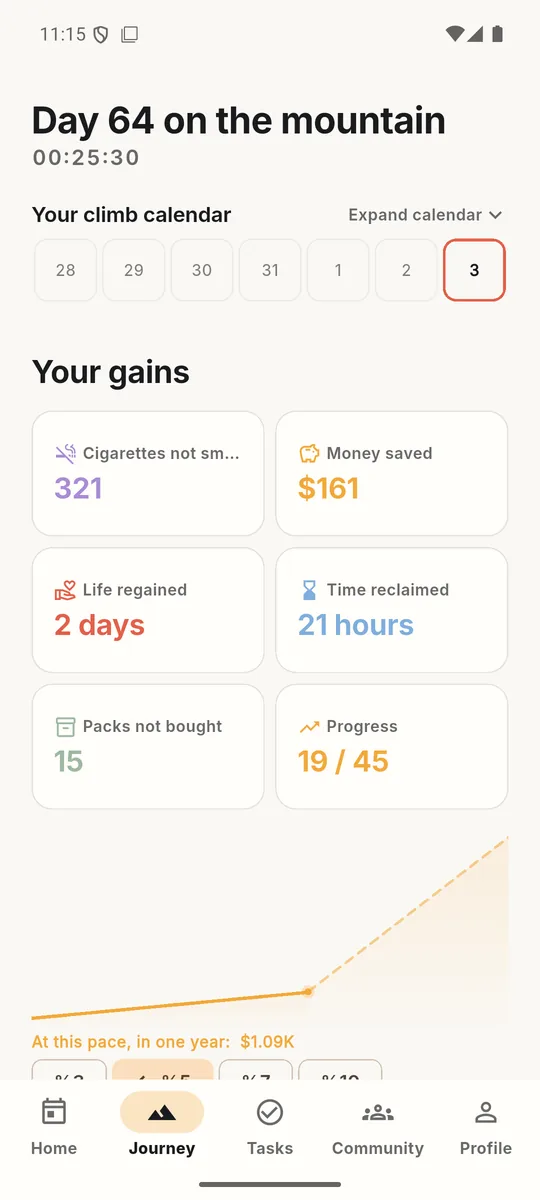
Your gains day by day: cigarettes not smoked, money saved, life reclaimed.
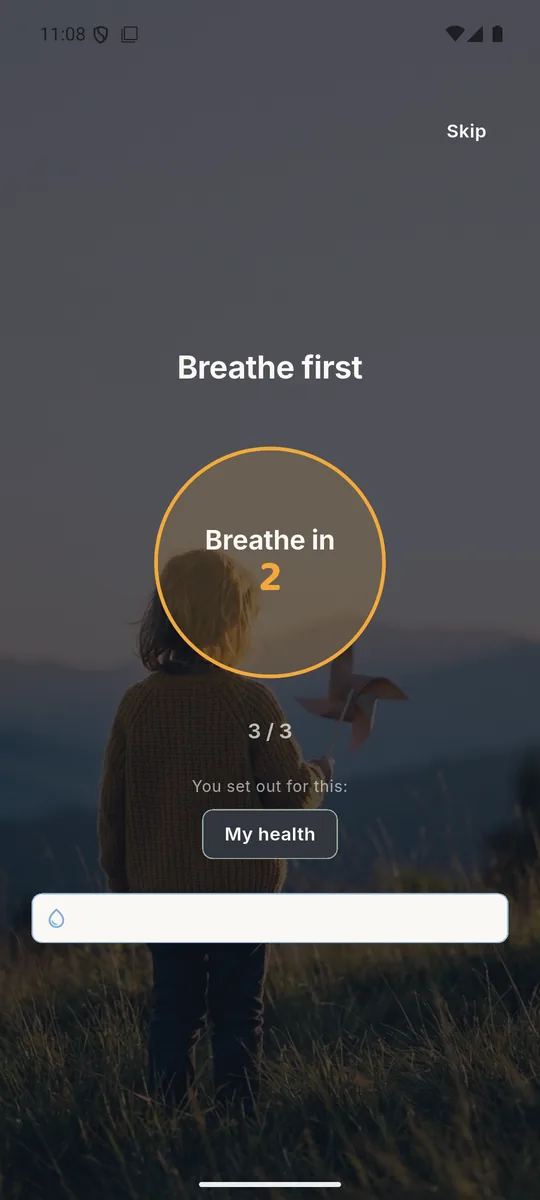
One tap when a craving hits: breathe first. A three-round guided breathing exercise.
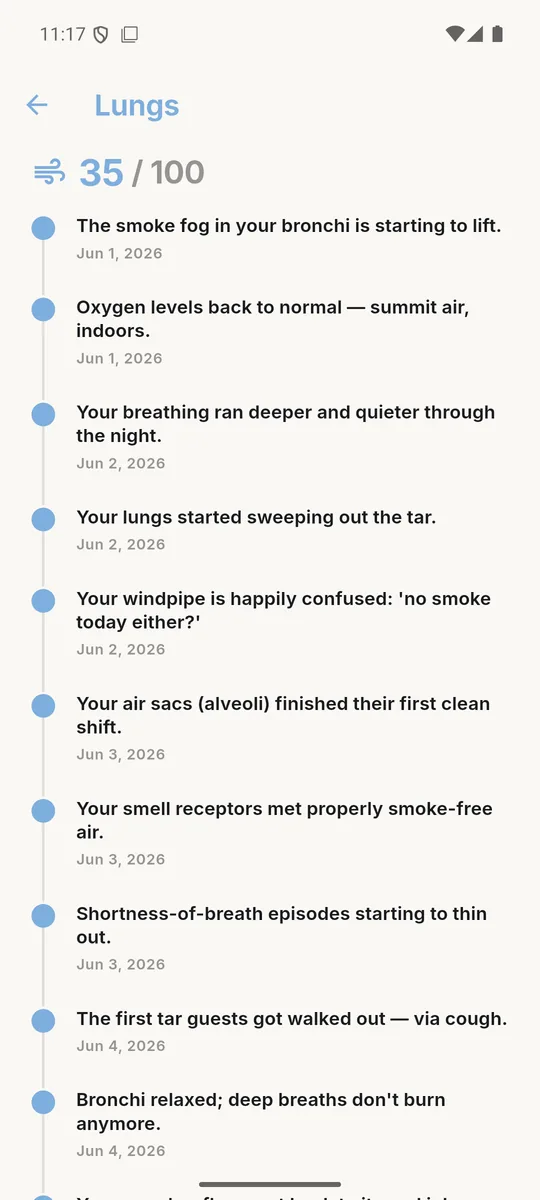
Six routes, 600 stops. Whatever is repairing in your body, you read it there.

You choose the view you are climbing — summit, forest, sea, or your own photo.
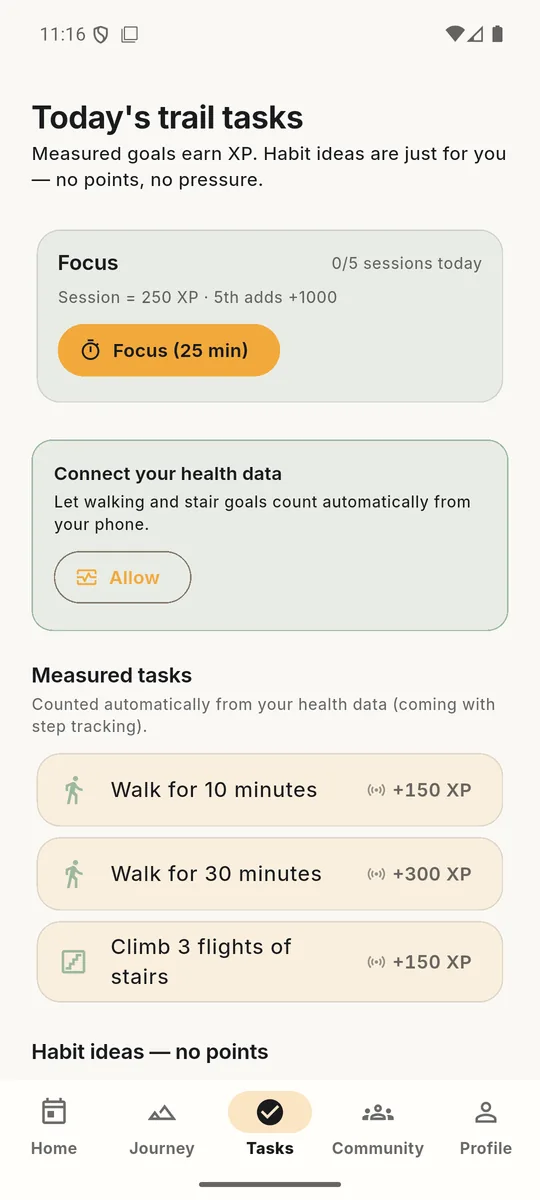
Small tasks every day. You are building a habit, not willpower.
Real screens from the app.
- Hear your own voice when a craving hits — the reason you quit, in your own words. You can add the voices of people you love, too.
- One tap for guided breathing and a distracting task — enough to fill those four minutes.
- 600 stops across six routes: read exactly what is repairing in your body today.
- Your numbers live on your device and keep counting offline — even on a plane.
- You pick the view you are climbing: summit, forest, sea, or your own photo.
- Interface, content and notifications in 14 languages.
You start free. The first day of the journey and the last are both yours.