Pregnancy and smoking: the strongest reason to quit
July 30, 2026·6 min read
Pregnant and still smoking? Her week without cigarettes counts. What really changes in your body, what doctors look at, and how to avoid relapsing after birth.
--- Pregnancy is one of the few times in life when quit rates shoot up. What millions of people can’t manage for years, some women do the day that test turns positive.
This guide is here to make that stretch easier — not scarier. There’s already plenty of fear around this topic, and we know fear doesn’t really help people quit.
Why does smoking matter so much in pregnancy?
Cigarette smoke affects the baby through two main routes: nicotine and carbon monoxide.
Nicotine makes blood vessels narrower.
Carbon monoxide lowers your blood’s ability to carry oxygen.
Together, they cut down the flow of oxygen and nutrients getting to your baby.
The best-documented outcomes are low birth weight, premature birth, and problems with the placenta. After birth, secondhand smoke exposure is linked with a higher risk of sudden infant death syndrome (SIDS). These are findings summarized by the World Health Organization and the CDC.
But the main message of this article is not that list. The real point is this:
Every week without smoking counts
One of the most common thoughts is: “I’ve already been smoking for three months, the damage is done.”
That’s a sunk-cost thought, and we wrote about the same trap for later ages. In pregnancy it’s especially off, because your baby’s fastest growth happens in the last three months.
So quitting in the second or even third trimester still makes a measurable difference to birth weight. Quitting earlier is better; but there is no magical “too late” line.
On the carbon monoxide side, gains are even faster: about 12 hours after the last cigarette, your blood levels return to normal. If you stop today, your baby gets more oxygen by tomorrow.
Stepping out of the guilt loop
Right now, the biggest barrier usually isn’t lack of information. It’s guilt.
The loop often looks like this: you smoke → you feel guilty → guilt adds stress → you reach for another cigarette → you feel even more guilty.
In that loop, guilt is fuel, not a brake. Comments from people around you (sometimes kind, sometimes not) can make the loop spin faster.
The only way out is to face forward from today. There is nothing you can do about a cigarette you smoked yesterday. There is a lot you can do about a cigarette you don’t smoke tomorrow.
⚠️ You don’t owe anyone an explanation. You don’t have to answer the question “So when did you quit?” — what you tell people, if anything, is entirely up to you.
Why can pregnancy make quitting easier?
There are three very concrete reasons:
The reason is right in front of you. A reason that works isn’t some abstract idea, it’s something you can feel this week. In pregnancy, your reason shows up again at every appointment.
The date picks itself. For most people, the hardest step is putting a date on the calendar. In pregnancy, the date has a way of becoming “today”.
Your body is helping. Nausea and changes in taste during pregnancy make the smell and taste of cigarettes downright awful for many people. That window is real, and you can use it.
Can I use nicotine patches or gum while pregnant?
There isn’t a simple “yes” or “no” here — this is a medical decision.
The general frame is this: in pregnancy, the first choice is to quit without any medication. If that isn’t working, health professionals weigh the pros and cons of nicotine replacement versus continuing to smoke; because cigarette smoke carries not just nicotine, but carbon monoxide and hundreds of other substances.
Prescription medications (like varenicline or bupropion) need a separate discussion in pregnancy.
Your move is simple: tell your midwife or OB/GYN. A sentence like “I’m trying to quit and I’m struggling — is there any support that’s safe for me?” is enough. That conversation is there for help, not judgment.
The most overlooked part: after the birth
This is the chapter that’s missing from a lot of handouts, but it’s crucial in real life.
A large share of people who quit during pregnancy start again in the months after birth. It’s understandable: your main reason (the baby inside you) doesn’t feel the same, you’re exhausted, sleep is broken, stress is high.
Three things help here:
Update your reason before the birth. “For my baby” still applies after delivery — secondhand smoke still affects your baby. But it helps to spell that out before you’re in the middle of newborn chaos.
Detox your home and car now. Make room-by-room cleanup part of your pre-baby prep; once the baby is home, you won’t have much time or energy.
Add a reason that’s yours. A reason that only hangs on the baby loses its anchor once pregnancy is over. Whose reason it is matters a lot here.
What does the first week usually feel like?
For many people who quit during pregnancy, the first week goes more smoothly than they expected — and knowing that can help.
Why? Two forces are pulling in the same direction: your reason is visible all the time, and nausea/taste changes may already have made smoking unpleasant. That combination of motivation + body chemistry is a window you don’t really get at any other point in life.
The tougher spots often show up somewhere else:
Coffee. It’s one of the strongest smoking “pairings”, and you’re usually cutting back on caffeine anyway. You don’t have to overhaul both at once — just drinking your coffee in a different room is often enough to break the link.
Social situations. A group of friends who smoke, or a partner who smokes, is one of the most common pressure points. One short sentence is enough: “I’m not smoking right now, don’t offer me one.” You don’t owe anyone a full explanation.
Tiredness. Poor sleep and low blood sugar can feel a lot like nicotine withdrawal, and it’s easy to mix them up. Not skipping meals is one of the least-known but most effective tricks in that first week.
If your partner smokes
This really deserves its own article — and we wrote one specifically for dads-to-be. In short: smoke in the home affects you and the baby, and it lowers your chances of staying smoke-free.
Your minimum boundary: no smoking in the home or car. The ideal: quitting together.
Breastfeeding and smoking
The questions don’t stop when the pregnancy does, and this part is often skipped.
Nicotine passes into breast milk and can affect your baby’s sleep patterns; and smoke in the home is still direct exposure to secondhand smoke. So the breastfeeding period isn’t when your reasons to quit disappear — it’s when they change shape.
In practice, three things usually get discussed, and each needs a decision with your health professional: whether any nicotine replacement is compatible with breastfeeding, if you are smoking then how to time feeds and cigarettes, and how to keep the home smoke-free.
One more thing matters a lot: around the third month after birth is when people who quit during pregnancy are most likely to start again. The best protection is having updated your reason before the birth.
You’re not “too late” to quit in pregnancy. Stopping this week is better than stopping next week; next week is still better than not stopping at all.
For today, there are just two steps: pick a date (today is allowed) and tell your midwife or doctor.
If you’d like to see the hours add up from that date, you can enter it in the counter on the right — even the first 12 hours bring measurable gains. And if you want tools ready for tough moments, the Tar2Star app was built exactly for those minutes. ---
This page is a photo. The app is the film.
These numbers show today. Tar2Star shows you a new one every morning — and stays with you when a craving hits.
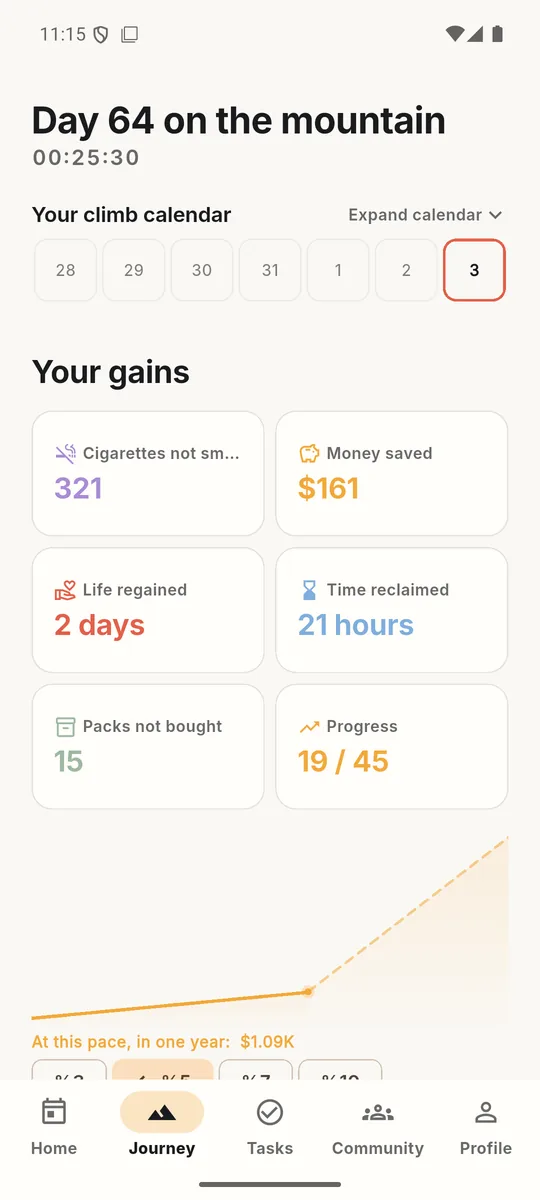
Your gains day by day: cigarettes not smoked, money saved, life reclaimed.
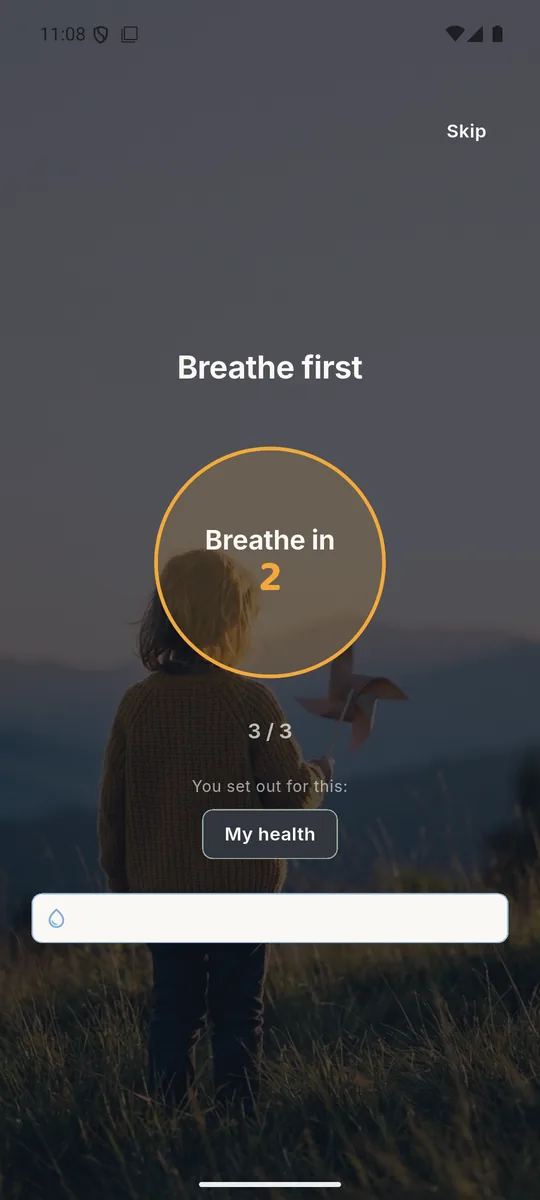
One tap when a craving hits: breathe first. A three-round guided breathing exercise.
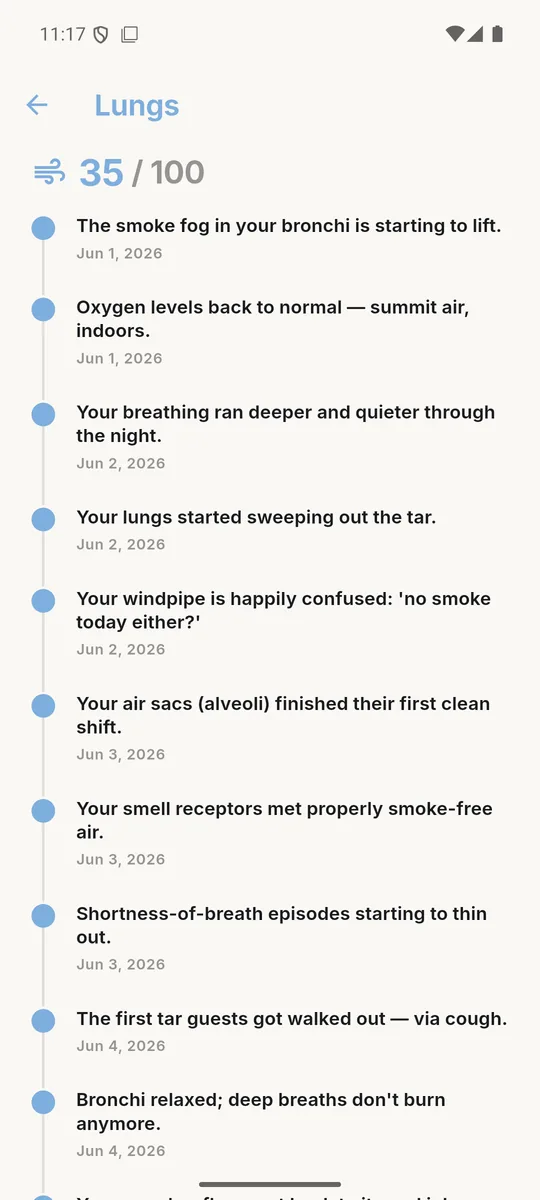
Six routes, 600 stops. Whatever is repairing in your body, you read it there.

You choose the view you are climbing — summit, forest, sea, or your own photo.
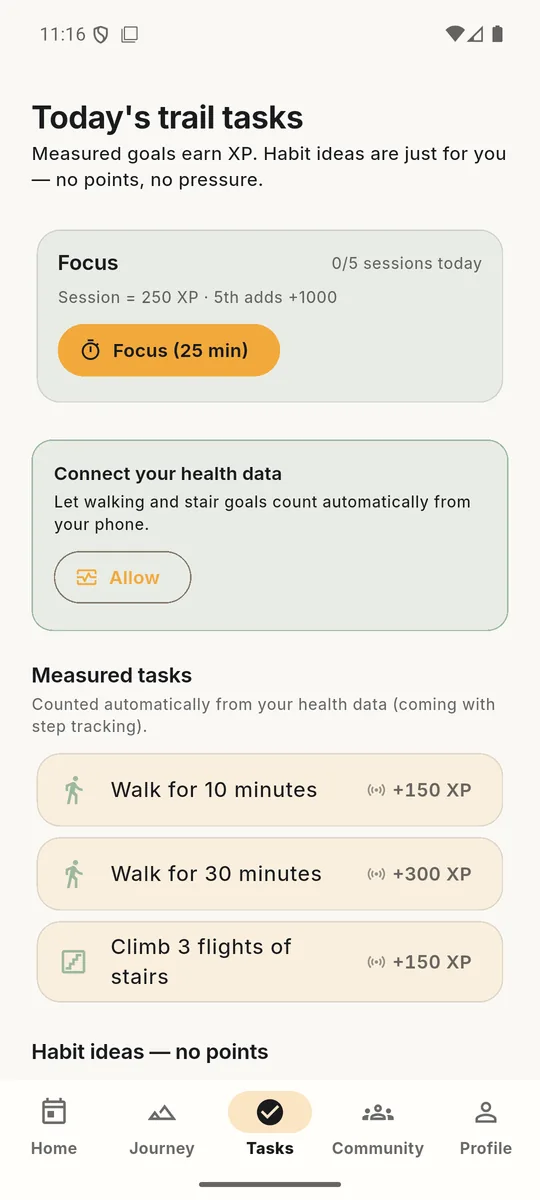
Small tasks every day. You are building a habit, not willpower.
Real screens from the app.
- Hear your own voice when a craving hits — the reason you quit, in your own words. You can add the voices of people you love, too.
- One tap for guided breathing and a distracting task — enough to fill those four minutes.
- 600 stops across six routes: read exactly what is repairing in your body today.
- Your numbers live on your device and keep counting offline — even on a plane.
- You pick the view you are climbing: summit, forest, sea, or your own photo.
- Interface, content and notifications in 14 languages.
You start free. The first day of the journey and the last are both yours.