10 small tactics to survive your first smoke‑free day
July 29, 2026·6 min read
Your first smoke‑free day isn’t about willpower, it’s about tactics. Here are 10 tiny moves (all under 2 minutes) to get you through today.
The first day isn’t a willpower day. It’s a tactics day.
These aren’t grand life strategies. They’re tiny moves that take a few minutes and help in the exact moment you need them. You don’t have to use all ten — pick three that feel doable and keep them in your pocket.
Why tactics? Because today you’re not fighting nicotine as a substance, you’re fighting autopilot. William James, who pulled habit into the center of psychology, put it this way:
“In the acquisition of a new habit, or the leaving off of an old one, we must take care to launch ourselves with as strong and decided an initiative as possible.” (In the acquisition of a new habit, or the leaving off of an old one, we must take care to launch ourselves with as strong and decided an initiative as possible. — William James, The Principles of Psychology, 1890)
James singles out the first day for a reason: when you’re breaking a habit, the very first exception is the most expensive one. These ten tactics exist for one job — helping you not give that exception today.
1. Shrink the day into chunks
“One whole day smoke‑free” sounds big. “Until lunch” is smaller.
Then: lunch to late afternoon, late afternoon to evening. By the time evening shows up, the day’s already done. Small targets carry the big target.
2. Count the craving wave, don’t fight it
When an urge hits, glance at the time and start counting minutes. On average it lasts three to five minutes; you already know why it passes so fast.
Counting does two things: it makes time measurable and it pulls your attention from the urge to the number. The “this will never end” feeling can’t really stick when you’re literally watching it fade on a clock.
3. Keep your mouth busy
Gum, sugar‑free mints, a toothpick, a cinnamon stick, ice water. The object doesn’t matter as much as not leaving your mouth idle.
Part of smoking is a mouth routine. Filling that part with something else today lets you take one slice of the load without wrestling directly with nicotine.
4. Keep your hands busy
Pen, paper clip, keychain, stress ball, a nut in your pocket. Your hands will go looking for a cigarette; give them something else to look for.
Don’t underestimate this one: a huge chunk of the learned side of smoking lives in your hands. Opening the pack, sliding one out, holding it, flicking ash, stubbing it — a sequence you’ve repeated twenty times a day. Today your hands will search for that sequence, and when they come up empty, the restlessness won’t be vague in your body; you’ll feel it right in your fingers.
Something you can grip firmly (a keychain, a nut) works better than something soft; a bit of resistance holds your attention more.
5. Overdo the water
Drink more water than you usually do today. It changes the taste in your mouth, gives you an excuse for a “break,” and reaching for a glass takes the place of reaching for a pack.
6. Change the scene
When a wave hits, change the room you’re in. If you’re on the balcony, step inside; if you’re at your desk, stand up; if you’re in the car, crack the window.
Most triggers are tied to place. When the place changes, the chain snaps — which is exactly why clearing cigarettes out of your home was part of getting ready.
7. Find a 2‑minute task
Dishes, trash, clearing a table, a short walk, a flight of stairs. Having a tiny task ready for when a wave hits fills those four minutes — and you end up with something done at the end.
8. Hit pause on coffee and alcohol today
These two are the classic cigarette partners. You don’t have to give up coffee forever, but today drink it in a different spot, in a different cup.
⚠️ Alcohol needs its own line: in the first days, alcohol is the single factor most likely to knock your decision off track. Keeping the first week alcohol‑free is one of the most practical pieces of advice people give.
9. Tell one person
One message in the morning: “I’m quitting today.” You don’t even need a reply — the point isn’t them, it’s getting the sentence out into the world.
When things get rough, that same person is who you’ll text. You already checked this item off in the seven‑day prep list.
10. Check your numbers at night
When the day ends, look at your counter: hours smoke‑free, cigarettes not smoked, money saved.
Those little numbers turn into something you won’t want to lose when you wake up tomorrow. This isn’t the only thing you built on day one, but it’s the most visible.
Behavior science has a name for this: once you have a streak going, breaking it feels harder than never starting. A one‑day streak is a thin anchor, but it’s infinitely stronger than zero — and it’s the only thing you’re guaranteed to hold on the morning of day two.
If tactics fail: a three‑step emergency plan
The ten tactics are for small and medium waves. Sometimes a big one crashes in — argument, bad news, sudden stress. That moment needs its own plan, and having three steps works well.
Step 1 — place (30 seconds). Physically leave where you are. Out the door, out of the room, out of the building. Don’t think it through, just walk.
Step 2 — body (2 minutes). Splash your face with cold water, or if you’re outside, take slow, deep breaths: in for four seconds, out for six, six times. Lengthening the exhale really does calm the body; that’s not a pep talk, it’s something you can measure on the circulation side.
Step 3 — person (5 minutes). Call someone. It doesn’t have to be a “let me tell you about my cravings” call; any out‑loud conversation makes riding out the peak of the wave much easier than doing it alone.
⚠️ Use the three steps in order, and most of the time you’ll be done by the first one. The order itself helps: you don’t have to decide what to do; you just follow the script.
Take notes today for tomorrow
At the end of the day, spend two minutes writing down three things:
How many strong waves did you get? The number is for comparing with tomorrow.
What time was the toughest one? Tomorrow you’ll put a plan right into that hour.
Which tactic actually worked? Start with that one tomorrow.
These three lines are your prep for day two. And since day two often feels tougher than day one, three notes from today make a real difference tomorrow.
Two things not to do today
The “just one” deal. Behind that sentence sits the next full pack. A single cigarette doesn’t shut the urge down; it rebuilds the reward loop.
Weighing, measuring, testing yourself. Today is not a measurement day. Weight, workouts, diet — those belong to next week.
Ten tactics, none of them longer than two minutes.
Pick three and use them today. When you check your counter tonight, day one will be over — and reading about why day two is a different kind of challenge will be solid prep for tomorrow.
If you want to keep your counter and crisis tools on you, the Tar2Star app was built exactly for these minutes, with breathing exercises and small “distraction” tasks for when the wave hits.
This page is a photo. The app is the film.
These numbers show today. Tar2Star shows you a new one every morning — and stays with you when a craving hits.
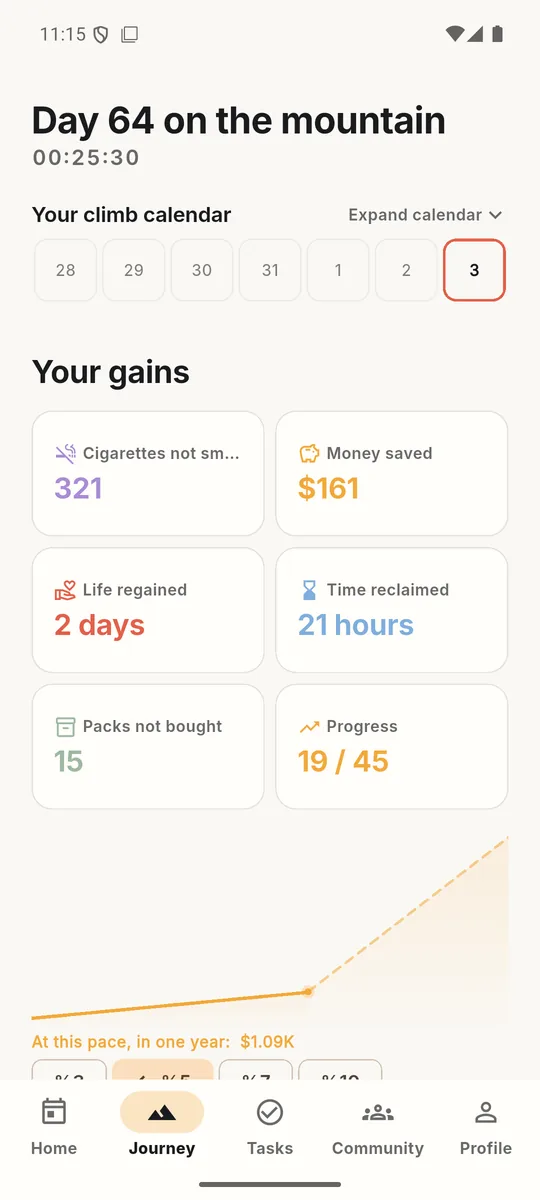
Your gains day by day: cigarettes not smoked, money saved, life reclaimed.
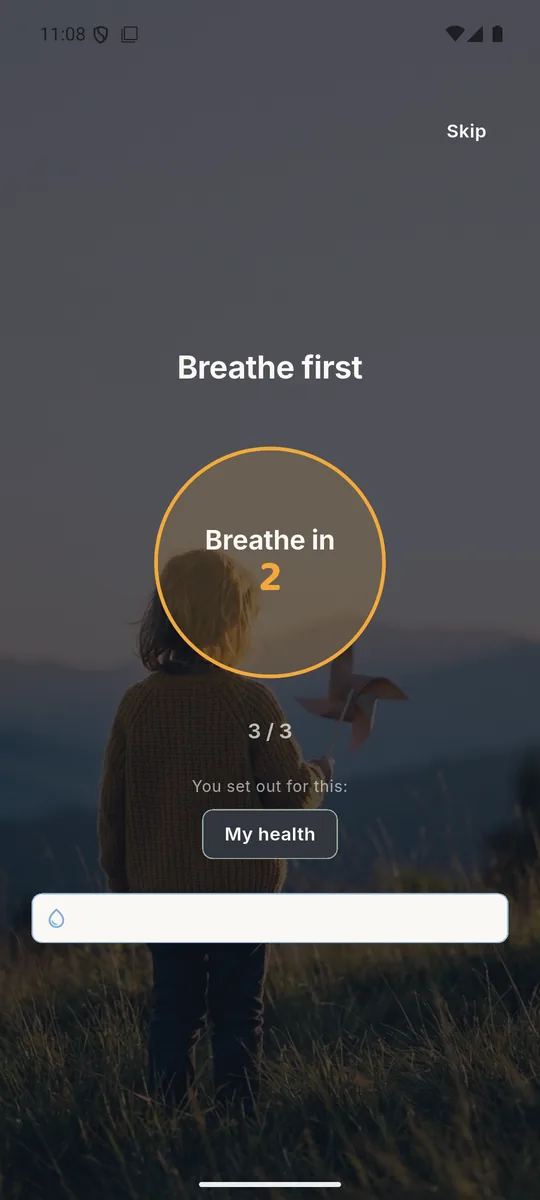
One tap when a craving hits: breathe first. A three-round guided breathing exercise.
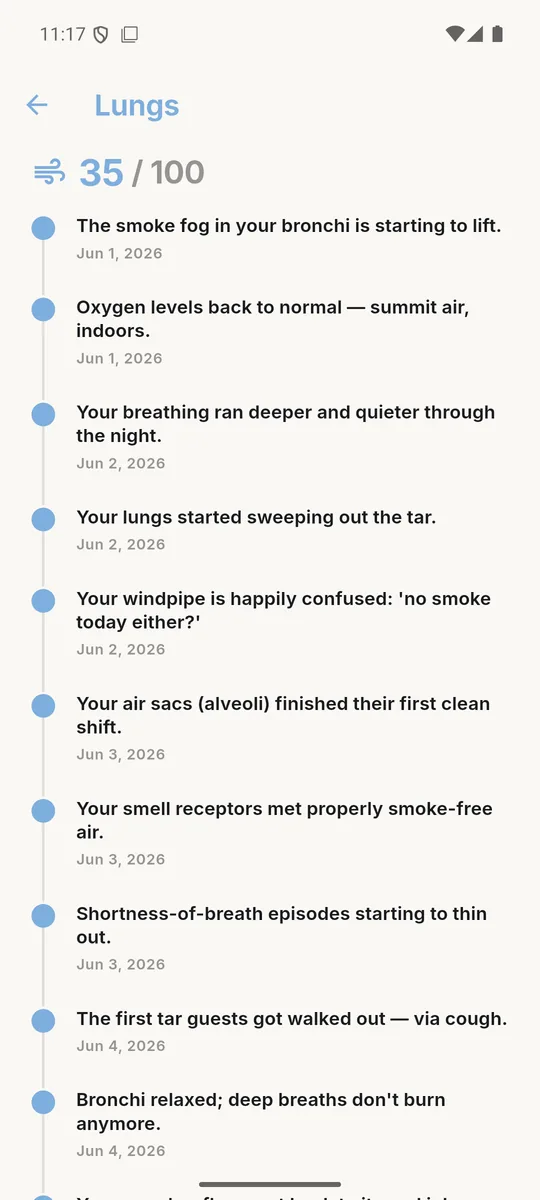
Six routes, 600 stops. Whatever is repairing in your body, you read it there.
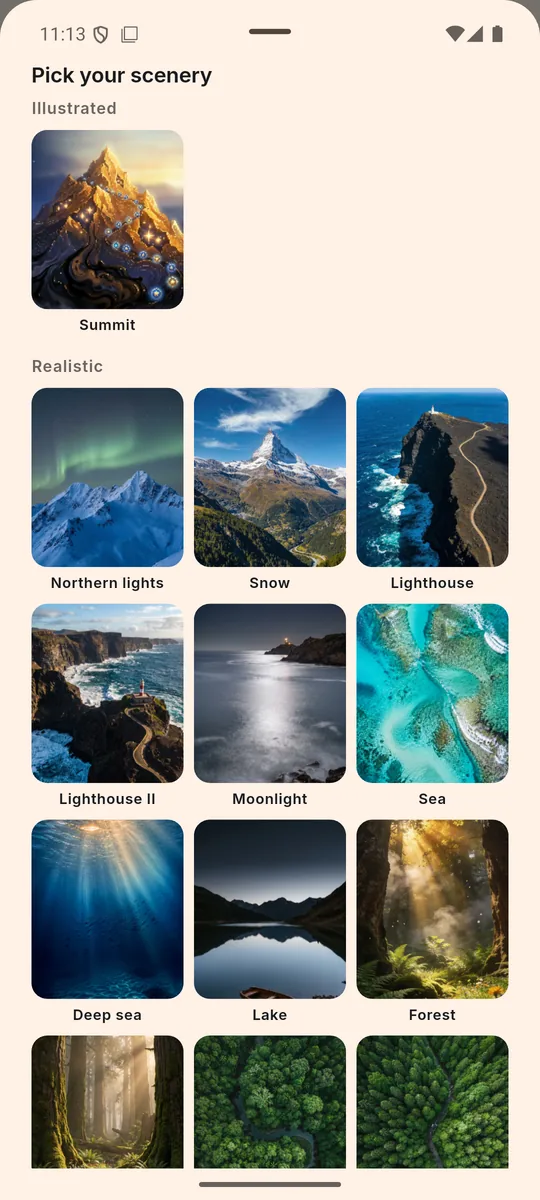
You choose the view you are climbing — summit, forest, sea, or your own photo.
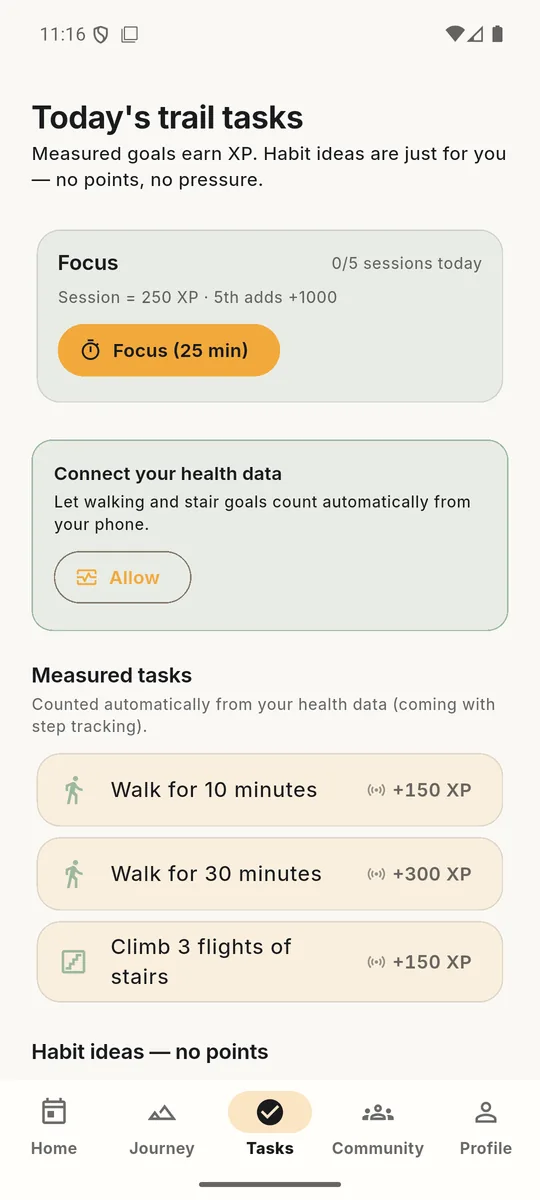
Small tasks every day. You are building a habit, not willpower.
Real screens from the app.
- Hear your own voice when a craving hits — the reason you quit, in your own words. You can add the voices of people you love, too.
- One tap for guided breathing and a distracting task — enough to fill those four minutes.
- 600 stops across six routes: read exactly what is repairing in your body today.
- Your numbers live on your device and keep counting offline — even on a plane.
- You pick the view you are climbing: summit, forest, sea, or your own photo.
- Interface, content and notifications in 14 languages.
You start free. The first day of the journey and the last are both yours.