Is It a Bad Idea to Quit Smoking in a Stressful Period?
July 30, 2026·7 min read
Quitting under stress is genuinely harder — but the idea that smoking relieves stress is addiction’s oldest trick. Real exceptions, and a plan for stressful stretches.
Let’s be honest from the start: yes, quitting while you’re stressed is harder. Any article pretending otherwise isn’t being straight with you.
But that’s not the whole story. Because “I’m stressed” can mean two very different situations — and they don’t deserve the same answer.
Situation 1: Everyday stress
Busy at work, deadlines closing in, not sleeping well, an argument here and there.
That’s… normal life. And here’s the problem with “I’ll wait until things calm down”: that low‑stress window never really shows up. One project ends, the next one begins. We broke down why that “waiting list” never empties in a separate piece: Is there ever a right time to quit smoking?
In this situation, the answer is: don’t wait — but do make a plan. That part’s below.
Situation 2: A real shock to the system
Losing someone close, divorce, losing your job, moving house, a serious illness.
Here, waiting a few weeks can be reasonable. That’s not an excuse; it’s a question of load: there’s only so much you can carry at once.
⚠️ Two exceptions though: pregnancy and an upcoming surgery are not reasons to wait — they’re reasons to start right away. In both cases, tell your doctor.
“Smoking reduces my stress” — where this goes wrong
This is one of the most common beliefs that delays quitting, and the way it works is almost upside‑down.
Someone who smokes rides a wave all day: as nicotine levels drop, tension rises; when they smoke, the tension fades. The brain records this as “the cigarette calmed me down.”
But the tension that goes away is created by the cigarette itself. In other words, you use smoking to fix the restlessness that smoking is causing — and then call that feeling “relief.”
The practical result: after the first weeks, people who quit usually report that their overall tension level has gone down. Those constant ups and downs through the day are gone.
The easiest way to see this loop is by looking at the clock. Someone who smokes a pack a day — about twenty cigarettes — usually lights up every 45–60 minutes. The day is chopped into hour‑long blocks, and at the end of each block there’s a little rise in restlessness. After the first weeks smoke‑free, what people notice is that those little “restless blocks” aren’t there anymore.
⚠️ You can see the same thing from the other side: a long flight, a long meeting, waiting in a hospital corridor. Any situation where you can’t smoke cranks up the tension — but the real trigger isn’t the plane, the meeting, or the hospital. It’s the nicotine level dropping. So smoking isn’t reducing stress; it’s creating stress every time you can’t smoke.
So what actually feels calming?
It’s not all in your head — there really are three parts of a cigarette break that feel soothing:
Deep breathing. Smoking forces you to take slow, deep breaths. A simple breathing exercise can do the same thing without the cigarette.
Taking a break. Stepping away from your screen, going outside, stopping for five minutes. The break itself is calming — and you can keep the break and lose the cigarette.
Ritual. A familiar sequence of actions is comforting just because it’s familiar.
⚠️ There’s a fourth piece that mostly shows up at work: an approved escape. A “smoke break” is the one kind of break almost nobody questions. Saying “I’m just stepping out for five minutes” feels completely acceptable when there’s a cigarette in your hand, and strangely harder when there isn’t. But it doesn’t actually need an explanation — keeping the break while quitting is exactly about unhooking that sentence from the cigarette.
All three are possible without smoking. The hard part of quitting isn’t losing them — it’s re‑attaching them to something new.
A plan for quitting in a stressful period
If you’ve decided not to wait, here are five extra steps that make quitting under stress more doable:
1. Write your bad‑day plan in advance. Just two lines: what you’ll do first on a bad day, and what you won’t do. We broke this down in more detail here: What will be different this time?.
2. Lower the bar for asking for support. High nicotine dependence plus high stress makes the “I’ll just tough it out” route a lot harder. Nicotine patches/gum or a quitline can genuinely change the picture here — ask your doctor about options.
3. Park the alcohol for the first three weeks. Stress plus alcohol is one of the strongest combos for blowing up a quit attempt.
4. Protect your sleep. Lack of sleep ramps up both stress and cravings. Going to bed earlier in the first weeks is one of the least‑discussed but most effective tools on the list.
5. Halve your coffee. This one matters especially if you’re quitting in a stressful time: smoking makes your body clear caffeine faster. When you quit, the same amount of coffee hits harder, and the jitters, racing heart, and broken sleep can all get blamed on “withdrawal.” Cutting your coffee intake in half for the first two weeks wipes out a chunk of that problem.
If you decide to wait: a four‑week assignment
This part is for people in that second situation — the real upheaval — and the key is not letting the waiting time be empty.
There are four things you can do while you wait that don’t require you to quit yet:
Track one full day. This is your first step, and it only takes a day. You can do it while you’re still smoking.
Count the cigarettes and the money. A quick two‑minute calculation; the numbers don’t care whether you’ve quit yet.
Talk to your doctor about support. Booking an appointment doesn’t force you to pick a quit date.
Put your quit date in the calendar. By the time this rough patch is over, you want that date to already be sitting there.
⚠️ If none of these four are happening, “I’m waiting” often really means “I’m not doing anything” — and the difference usually only shows up months later.
The test for “I’ll quit when things calm down”
There’s one simple way to tell if your plan to wait is reasonable:
Does the thing you’re waiting for have an end date on a calendar?
Surgery date → has a date, makes sense. Grief after a loss → no fixed date, but it’s real; a few weeks can be reasonable. “When work slows down” → no date. That’s not a plan, that’s a delay.
We collected the full set of delay sentences in another article.
Stress can actually be a reason to quit
One last flip of perspective.
When you postpone quitting because of stress, there’s something easy to miss: the smoking itself is a stress source. Checking whether you’re running out, feeling on edge in places where you can’t smoke, that wired feeling before the first cigarette of the day, the money.
So in a stressful period, quitting can look like adding one more burden — but after a while, it turns out you’ve actually removed one.
There’s a measurable side to this: someone who smokes twenty cigarettes a day spends around 100 minutes a day smoking — and most of that time comes out of the workday. In a busy period, the load you remove isn’t just tension; it’s also about an hour and a half of your day you get back.
Everyday stress doesn’t really justify waiting; a genuine life shock might justify a few weeks. The key test is whether there’s an actual end date in the calendar.
One thing you can do today: write down the end date of whatever you say you’re “waiting for.” If there is no date, write down a quit date instead.
If you want to see what you start gaining from that date on, enter it in the counter on the right. For breathing exercises and crisis tools, the Tar2Star app is built exactly for those tough minutes.
This page is a photo. The app is the film.
These numbers show today. Tar2Star shows you a new one every morning — and stays with you when a craving hits.
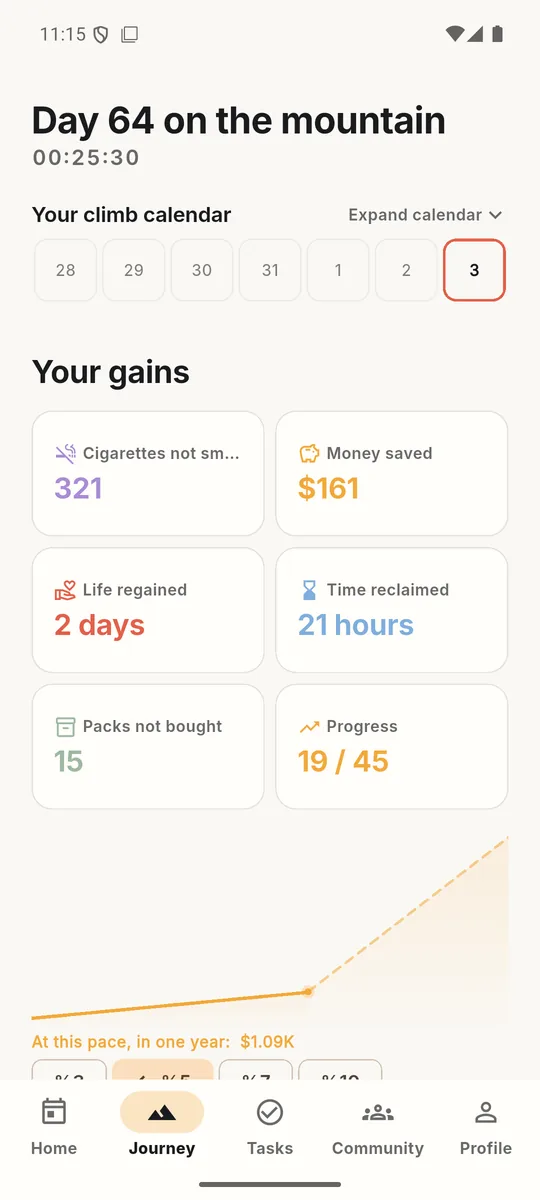
Your gains day by day: cigarettes not smoked, money saved, life reclaimed.
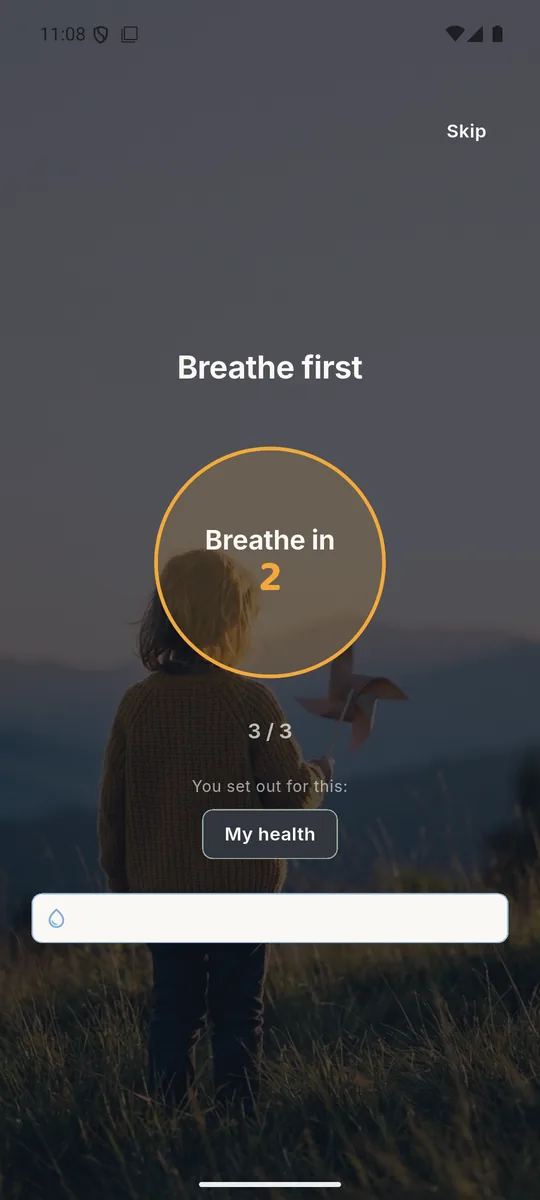
One tap when a craving hits: breathe first. A three-round guided breathing exercise.
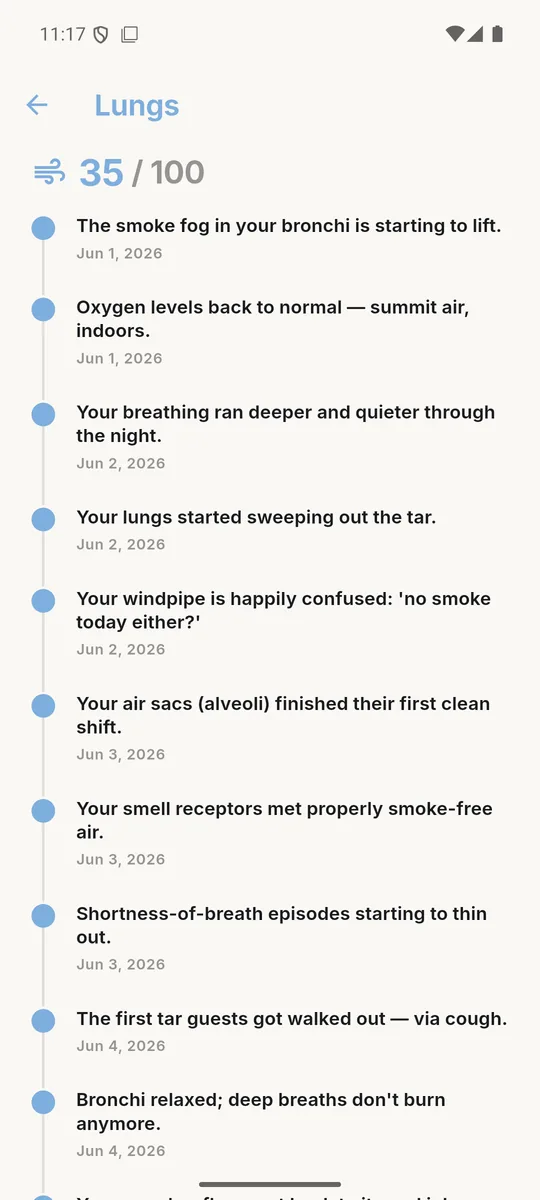
Six routes, 600 stops. Whatever is repairing in your body, you read it there.

You choose the view you are climbing — summit, forest, sea, or your own photo.
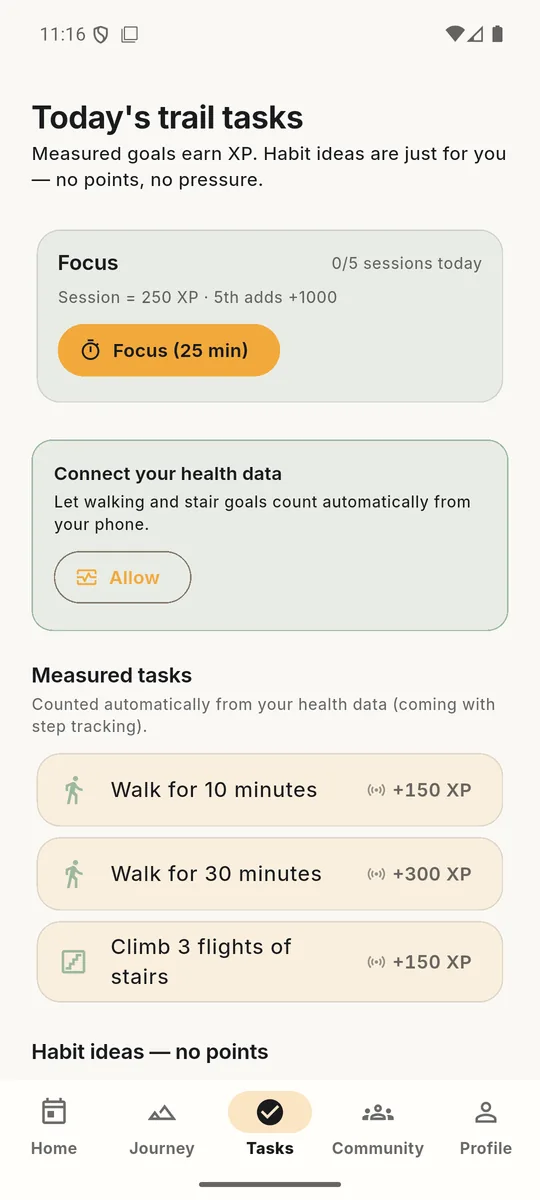
Small tasks every day. You are building a habit, not willpower.
Real screens from the app.
- Hear your own voice when a craving hits — the reason you quit, in your own words. You can add the voices of people you love, too.
- One tap for guided breathing and a distracting task — enough to fill those four minutes.
- 600 stops across six routes: read exactly what is repairing in your body today.
- Your numbers live on your device and keep counting offline — even on a plane.
- You pick the view you are climbing: summit, forest, sea, or your own photo.
- Interface, content and notifications in 14 languages.
You start free. The first day of the journey and the last are both yours.