Smoking at home with the window open: does it actually help?
July 30, 2026·7 min read
Opening a window reduces smoke, but doesn’t clear it or the residue. See what really stays in your home and the one rule that actually works.
Cracking a window and lighting up is the classic compromise at home. It feels logical: the smoke goes out.
What actually happens in the air is a bit different.
Does the smoke really leave through the window?
Some of it does. But cigarette smoke isn’t one single thing — it has two main parts, and they behave differently.
Gaseous components (like carbon monoxide) mix into the air and drop with ventilation. Here, a window really does help — for comparison: carbon monoxide in the smoker’s blood returns to normal about 12 hours after the last cigarette.
Particles are tiny and hang in the air for a long time. Most particles in cigarette smoke are smaller than 2.5 microns — the size range air‑pollution reports call PM2.5. At that size, they can stay suspended for minutes or even hours. Some leave through the window, but a big share spreads around the room and settles onto surfaces; the airflow from a regular window isn’t strong or directed enough to carry all of them out.
So the window reduces exposure; it doesn’t remove it. In measurements, particle levels in a room where people smoke with the window open are still clearly higher than outdoors.
The stubborn part: what sticks to surfaces
Once the visible smoke has cleared, the story isn’t over.
Tar and nicotine residue settle on walls, curtains, couches, carpets, pillows. This is called thirdhand smoke, and it has two key features: it can stay for months, and it doesn’t go away with ventilation.
Measurements show this residue can still be detected in dust and on surfaces months after smoking has stopped indoors. It matters in two ways:
Contact. Especially for small children, because their world is made of surfaces: playing on the carpet, burying their face in the couch, putting their hands in their mouths.
Trigger. For someone trying to quit, the smell itself can trigger cravings. We break this down in detail in the home clean‑up guide.
How well do the usual “fixes” work?
Let’s go through the common tactics one by one.
Smoking under a range hood / extractor fan. A bit better than a window, because there’s a directed suction. But unless you are right under the intake, its effect drops quickly — and it does nothing about the residue left on surfaces.
Air purifier (HEPA). These really do catch particles: the HEPA standard requires trapping 99.97% of particles around 0.3 microns. But they don’t capture gaseous components (including carbon monoxide) and don’t touch what’s already stuck to surfaces. So they lower the number on the display, reduce exposure to a degree, but don’t solve the problem.
Odor‑removing sprays / candles. They mask the smell; they don’t remove it. Once the cover scent fades after a few hours, the smoke smell comes back — usually right when you’re least expecting it.
Smoking in the bathroom with the shower running. Steam does pull some particles down, but in a small, enclosed space, exposure is at its highest. For the person smoking, this is one of the worst options.
So what actually works?
One rule, and it’s simple: no smoking in enclosed spaces.
Balcony, yard, sidewalk — with the door closed. That’s the only change that meaningfully cuts exposure for other people in the home.
⚠️ A balcony isn’t a perfect fix either: when the door opens, smoke drifts back in, and residue still travels on clothes and hands. We go into how much balcony‑only smoking protects kids in a separate piece. But the improvement from “not smoking indoors” is bigger than all the other tricks combined.
How do you actually set this rule at home?
“ No smoking indoors” is easy to say and awkward in the first week. Three details make the difference:
1. Aim the rule at the place, not the person. “You’re not allowed to smoke” starts an argument; “we don’t smoke inside this home” sets a house rule. The second one applies the same way to guests, to you, to housemates — no one feels singled out.
2. Move the gear outside. Ashtray on the balcony, lighter on the balcony. When there’s nothing smoking‑related inside, the rule starts enforcing itself; if a lighter is sitting on the coffee table, you’re back to making the decision from scratch every night.
3. Don’t add exceptions. “Only when I’m sick”, “only when we have people over”, “only when I’m really stressed” — one exception and it stops being a rule. A rule without exceptions turns into a habit in about three days; a rule with exceptions never really settles.
⚠️ The first three days are the hardest. After day four, for most people, “getting up and going out” stops being a debate — and by that point, the daily number is already down.
How much does the number drop?
This is the most concrete benefit of the whole setup, and knowing it in advance helps.
When someone stops smoking inside, they typically lose about one‑third of their daily cigarettes without trying. That’s not willpower; it’s basic math: the one you light as soon as you wake up, the one you automatically spark in front of the TV, the one you hold while talking on the phone — most of those aren’t worth getting up and going out for.
If you’re on 20 a day, that’s roughly 200 cigarettes fewer every month. And the ones that disappear are exactly the ones we mark as “1‑point” cigarettes in the daily log — the easiest ones to drop.
What’s left are the cigarettes you genuinely want. Once that list shrinks, setting a quit date gets much easier.
Using this as a step toward quitting
This is the practical point of this article: a “no smoking indoors” rule isn’t just protection for others; it’s also a step that naturally leans toward quitting.
Here’s why: when home smoking is off‑limits, your daily count starts dropping on its own. Every cigarette suddenly means getting up, putting on shoes, going outside — there’s real distance between the urge and the action.
That distance filters out the automatic cigarettes. The ones that stay are the ones you really choose — which is very similar to the job keeping a daily smoking log does.
⚠️ One caution: this should be a bridge, not the final destination. “I only smoke outside now” can go on for years and quietly turn into an endless cut‑down plan. On the far side of that bridge, there needs to be an actual date on the calendar.
Does the same rule apply in the car?
Yes — and the car is actually tougher than the house.
The reason is volume: the inside of a car is only a small fraction of a room. The same cigarette is mixing into a much smaller pocket of air. Even with the window down, airflow moves past the driver and toward the back seats — which means the heaviest exposure is in the back.
On the residue side, cars are the most stubborn: upholstery, headliner, and air‑conditioning ducts hold onto the smell for months. For many people, their first serious craving after quitting hits in the car for exactly this reason.
The practical fix comes in three steps: take the lighter out of the car, empty and wipe the ashtray, change the cabin air filter. Together they take about half an hour and stop the car from acting like a built‑in trigger.
Rentals, shared homes, guests
A few everyday situations:
If you live with roommates: the rule is non‑negotiable; enclosed space belongs to everyone. The balcony solution works here too.
If guests smoke: a small dish on the balcony is all you need; when they leave, the dish goes with them. Don’t keep an ashtray in the house — it’s basically a backup plan sitting on the table.
In winter, when it’s cold: this is the main reason people drop the rule. Honest answer: the cold is actually the rule’s strongest feature. Having to step out into the cold for every cigarette is the fastest way to bring the number down.
Opening a window cuts down exposure, but it doesn’t eliminate it — and it does nothing for the residue.
One thing you can do today: set the “no smoking in enclosed spaces” rule and move every ashtray outside.
If you want to watch your daily count drop after you set the rule, you can log it in the counter on the right. When you’re ready to put a quit date on the calendar, the Tar2Star app is built exactly for those high‑craving minutes.
This page is a photo. The app is the film.
These numbers show today. Tar2Star shows you a new one every morning — and stays with you when a craving hits.
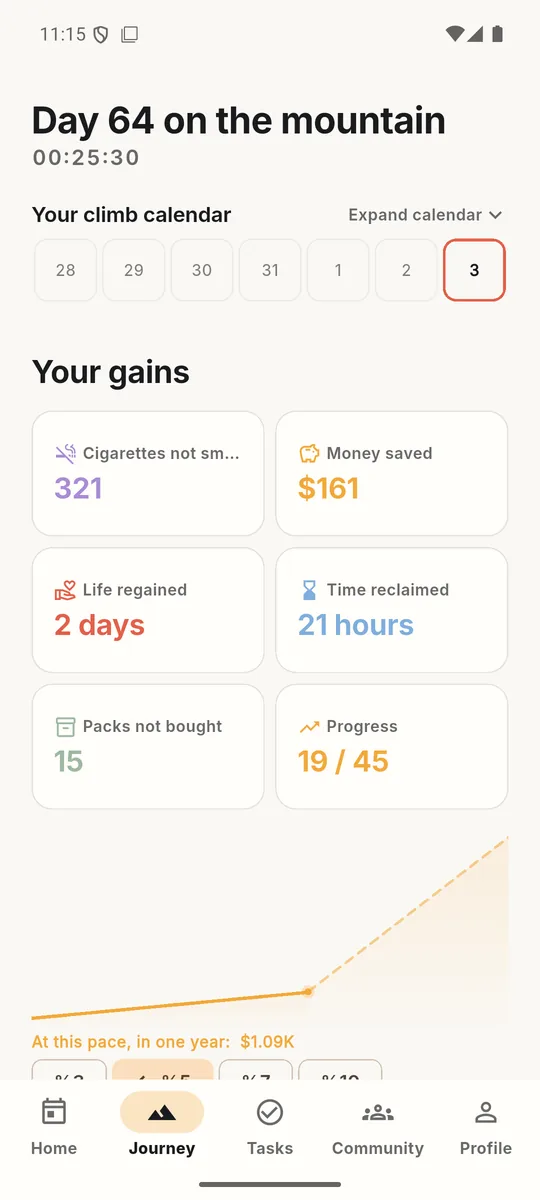
Your gains day by day: cigarettes not smoked, money saved, life reclaimed.
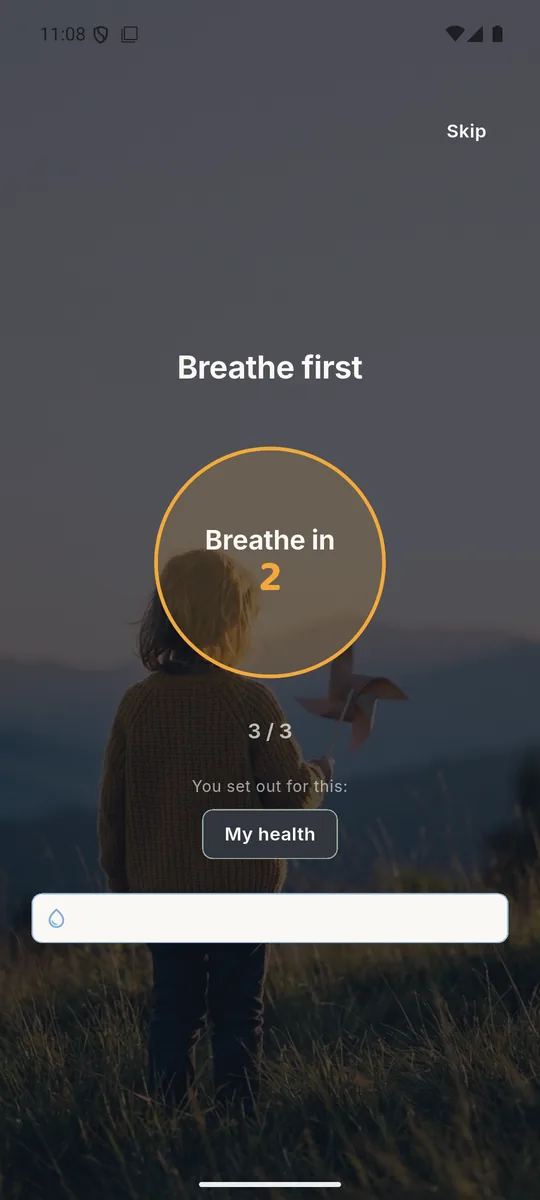
One tap when a craving hits: breathe first. A three-round guided breathing exercise.
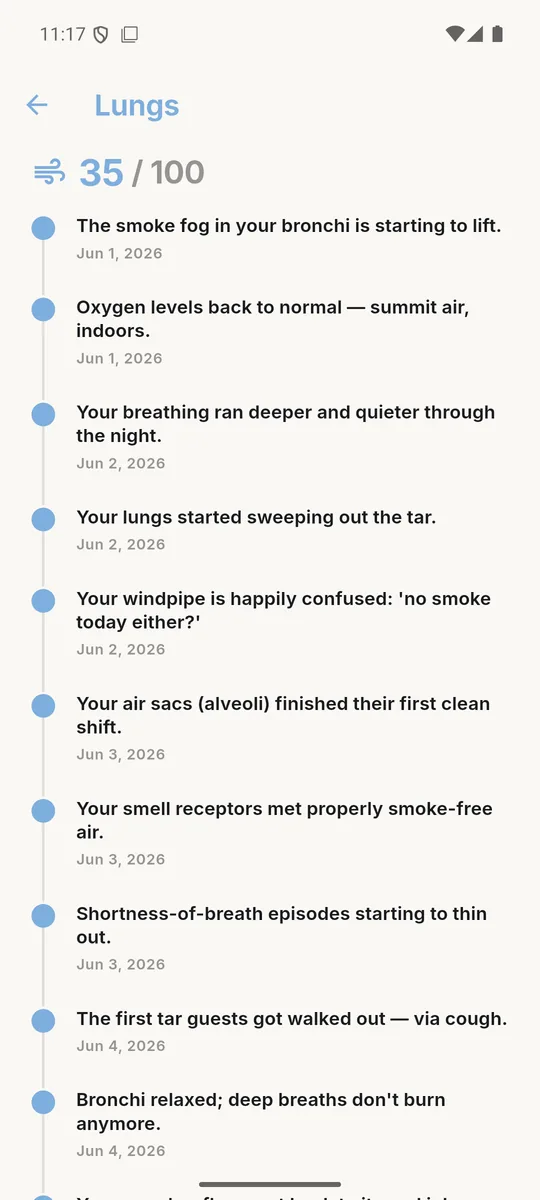
Six routes, 600 stops. Whatever is repairing in your body, you read it there.

You choose the view you are climbing — summit, forest, sea, or your own photo.
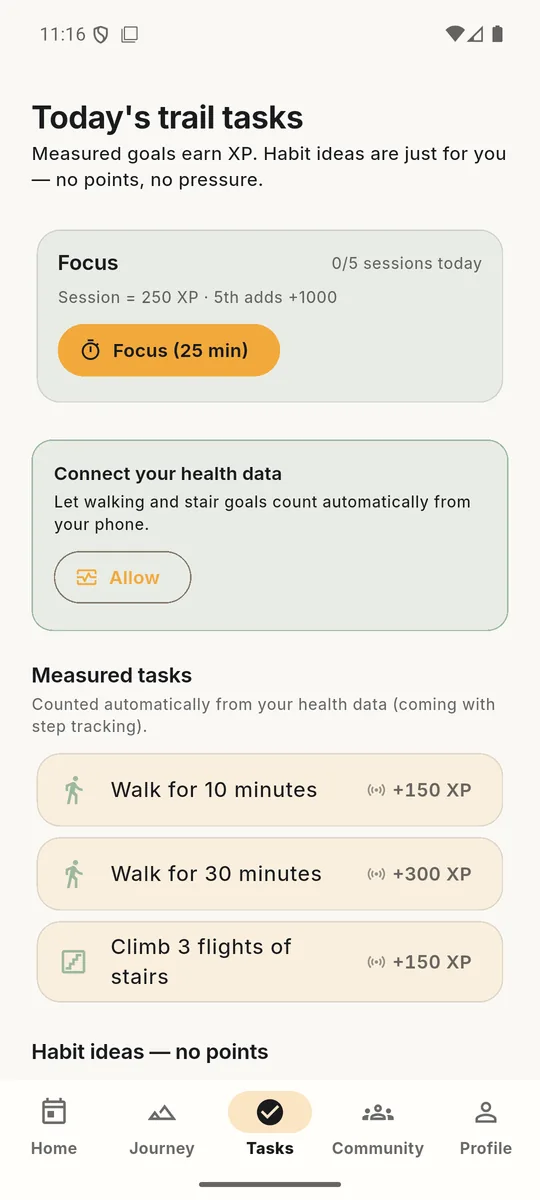
Small tasks every day. You are building a habit, not willpower.
Real screens from the app.
- Hear your own voice when a craving hits — the reason you quit, in your own words. You can add the voices of people you love, too.
- One tap for guided breathing and a distracting task — enough to fill those four minutes.
- 600 stops across six routes: read exactly what is repairing in your body today.
- Your numbers live on your device and keep counting offline — even on a plane.
- You pick the view you are climbing: summit, forest, sea, or your own photo.
- Interface, content and notifications in 14 languages.
You start free. The first day of the journey and the last are both yours.