Exams, moving, a new job: are you really “waiting for the right time” to quit?
July 30, 2026·7 min read
Exams, moving and a new job are genuinely draining — but all three have an end date on the calendar. Which one is a real reason, which one is a cover, and the single question that tells them apart.
Exams coming up. Moving to a new place. Starting a new job.
All three are genuinely exhausting. And all three are classic reasons to push quitting back.
This guide looks at them one by one, because there’s an important difference between them.
One question that separates them
There’s a single test you can use for all of them:
Does this situation have a clear end date on the calendar?
If yes, the delay can be tied to a real plan: “My last exam is June 14, I’m quitting June 16.” That’s a legitimate delay, because it actually ends.
If no, the delay is open‑ended: “When things calm down at work” has no date — and that’s why it never seems to arrive. We wrote separately about why the waiting list never empties.
Now let’s look at these three situations separately.
Exam period
End date: Yes, and very clear.
Real difficulty: Sleep goes off the rails, caffeine intake goes up, and the mental load is heavy. In the first days without nicotine, focus and concentration get temporarily harder — you’ll see this in the withdrawal symptoms list, and it usually lasts a few weeks.
What that means: If exam period is short (a few weeks), waiting can be reasonable. If it’s a long stretch (months), “I’ll wait until exams are over” quietly turns into a cover story.
⚠️ There’s a flip side: during exams, people usually smoke more, not less. So the cost of waiting isn’t just time; that period deepens the dependency.
⚠️ Second flip side: exam season usually means way more caffeine, and nicotine speeds up how quickly your body clears caffeine. So to feel the same effect, you end up drinking more coffee; sleep gets worse and tension climbs. A chunk of your exam‑time restlessness doesn’t come from exams themselves, but from this loop.
Practical move: Pick a quit date for the first Friday evening after your last exam — and pick it now, today. We broke down how to choose that date in a separate guide.
⚠️ The numbers side is easy to miss and easy to calculate: a three‑month exam period for someone who smokes twenty cigarettes a day is around 1,800 cigarettes, about 90 packs. The decision to delay feels abstract, but the price tag is very concrete.
Moving house
End date: Yes.
Real difficulty: Physical exhaustion, your whole routine ripped up, days of mess and uncertainty. This can easily fall into the category of a real life “earthquake”.
But there’s a big advantage here that most people don’t notice:
Moving is one of the few moments when your triggers all reset at once. The chair you smoked in, the balcony corner, the kitchen table — none of them exist in the same way in the new place. A new home is a home with no built‑in smell.
So moving isn’t automatically a bad time to quit; it can be one of the best times. Walking into the new place as a non‑smoker means you never build the habit into that space.
Practical move: Set your quit date for the first days in the new place. Don’t bring ashtrays in at all. Most of the tasks in the “clearing smoke from your home” guide will happen almost on their own.
⚠️ One warning: moving day itself is a rough quit date. That day your exhaustion is sky‑high, there’s no order, and cravings tend to spike. One or two days after you move in works much better — your stuff is roughly in place, the home is starting to feel familiar, but the habit hasn’t yet attached itself to the new environment.
There’s a second bonus: moving usually means throwing a lot of things out. When ashtrays and lighters go onto that same pile, you don’t need a separate “goodbye” ritual — the act of letting go is already happening.
Changing jobs
End date: Partly — the first months pass, but the moment when you truly “settle in” is fuzzy.
Real difficulty: Performance pressure, being the new person, and not having a stable routine yet.
The advantage is similar to moving: At a new job, you don’t yet have a “smoke break crew,” no fixed break rhythm, and no one has you filed in their head as “the one who smokes.”
So it’s much easier to walk in without a smoker identity than to erase it later. In our guide on quitting at work, we look at how to build a break routine — with a new job, you get to build that routine smoke‑free from day one.
⚠️ The flip‑side risk: in some workplaces, the easiest way to socialize is the smoking area. Skipping the smoking corner entirely in the first weeks cuts down that risk a lot.
Practical move: Quit one week before you start the new job. That way, by your first day, the steepest part of withdrawal is behind you and you’re entering that environment as someone who doesn’t smoke. That’s noticeably easier than trying to quit after you’ve already settled in.
A fourth situation: expecting a baby
This one doesn’t fit neatly into the previous three — but it’s often used with the very same sentence: “I’ll wait until the baby is here, until things settle, then I’ll quit.”
Here, the rule flips. In the first three situations, waiting was at least an option; in this one, waiting means the exposure continues — both during pregnancy and later inside the home.
There’s a practical side too: the first months after the baby arrives are, in terms of sleep and intensity, some of the hardest months to quit. So “I’ll wait until things settle” quietly becomes “I’m choosing the hardest time to do this.”
⚠️ The same applies to partners and future dads, and it’s rarely talked about: when there’s a second person smoking at home, it makes things much tougher for the first person trying to quit.
Shared prep work for all three
Even if you’ve decided to wait, that waiting period doesn’t have to be empty. There are four things you can do in any of these situations without actually quitting yet:
Keep a one‑day log — take a day to map your triggers with a trigger list.
Calculate your pack‑years and costs — do the two‑minute math.
Talk to a doctor if you want support — getting an appointment doesn’t require a quit date.
Write both the end date and your quit date in your calendar — side by side.
If these four are done, when that period ends your prep is complete and your quit date doesn’t slide into the next “busy season.” If they’re not done, “I’m waiting” quietly turns into “I’m not doing anything yet.”
One shared illusion
All three situations rest on the same assumption: “Once this is over, it will be easier to quit.”
But there’s always another phase lined up behind them. Exams end and work starts. The move ends, a new routine builds up and new triggers form. You settle into the new job and a break group appears.
These periods aren’t exceptions blocking “real life.” They are real life.
They also share a hidden advantage that rarely gets mentioned: all three break your routine. Smoking leans heavily on fixed patterns — same desk, same time, same route, same people. Exam season, moving, and a new job are rare chances when that structure is shaken up.
So these situations can make quitting harder and easier at the same time. Which side wins is individual — but the statement “this is definitely a terrible time to quit” simply isn’t accurate.
What to do with this? Two steps
1. Write down the end date. A real, specific date. “My last exam is June 14.”
2. Make the first Friday after that date your quit date — and put it in your calendar now.
Step two is the crucial one. A date that never gets written down quietly drifts to the next phase — and that drift barely registers while it’s happening.
That’s exactly why we made the quit agreement: to keep the date on paper, not just in your head.
All three reasons are real. But all three have an end date — and that date can be the starting line for quitting, not another excuse to delay.
One thing you can do today: write down when this phase ends, then write your quit date right next to it.
If you add that date to the counter on the right, the countdown becomes visible from today. And for rough moments and cravings, the Tar2Star app was built exactly for those days.
This page is a photo. The app is the film.
These numbers show today. Tar2Star shows you a new one every morning — and stays with you when a craving hits.
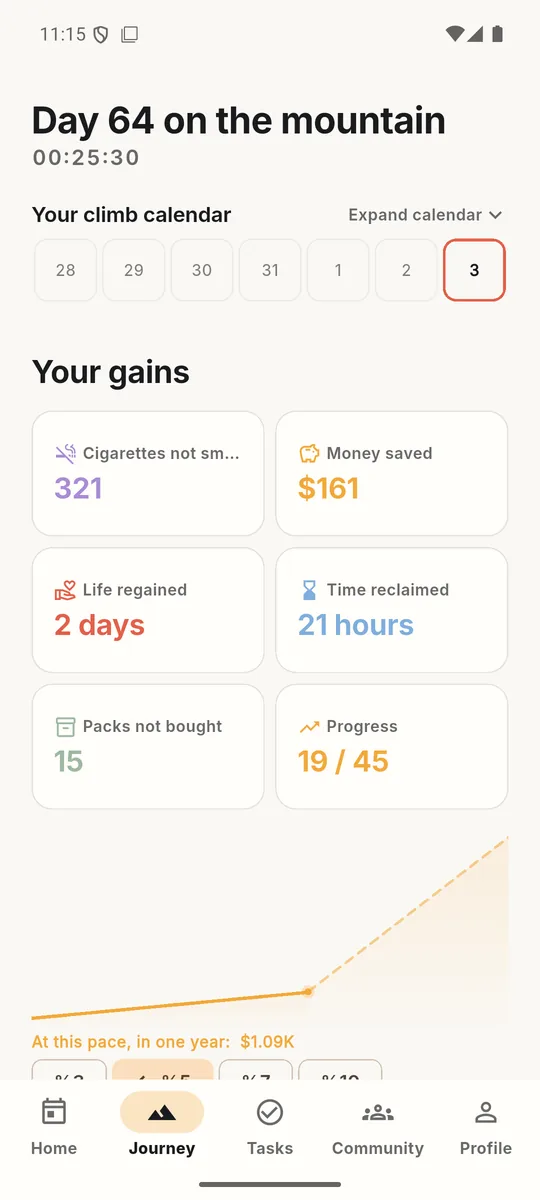
Your gains day by day: cigarettes not smoked, money saved, life reclaimed.
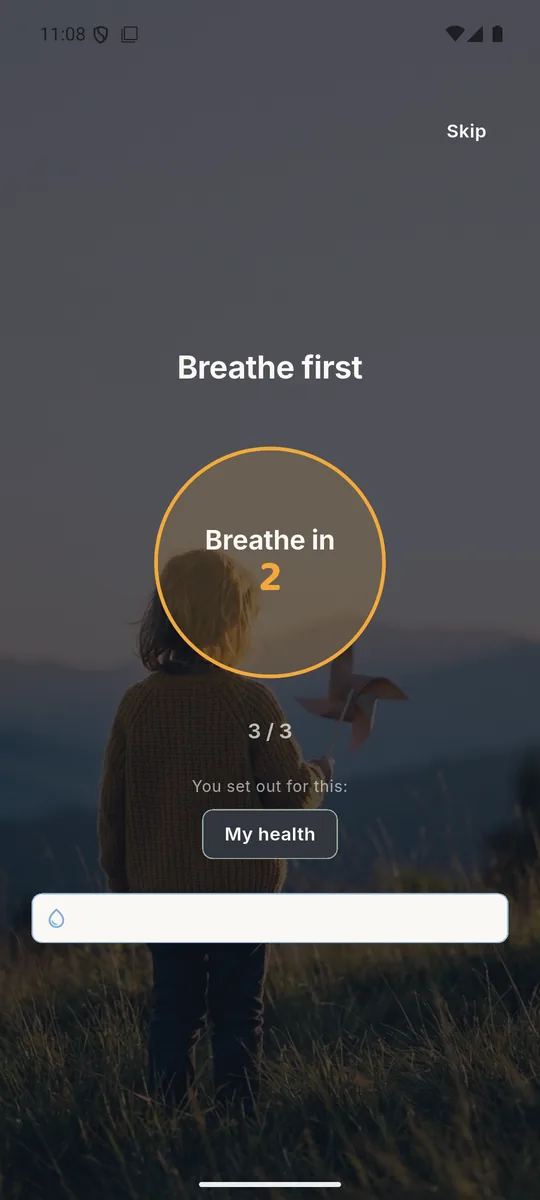
One tap when a craving hits: breathe first. A three-round guided breathing exercise.
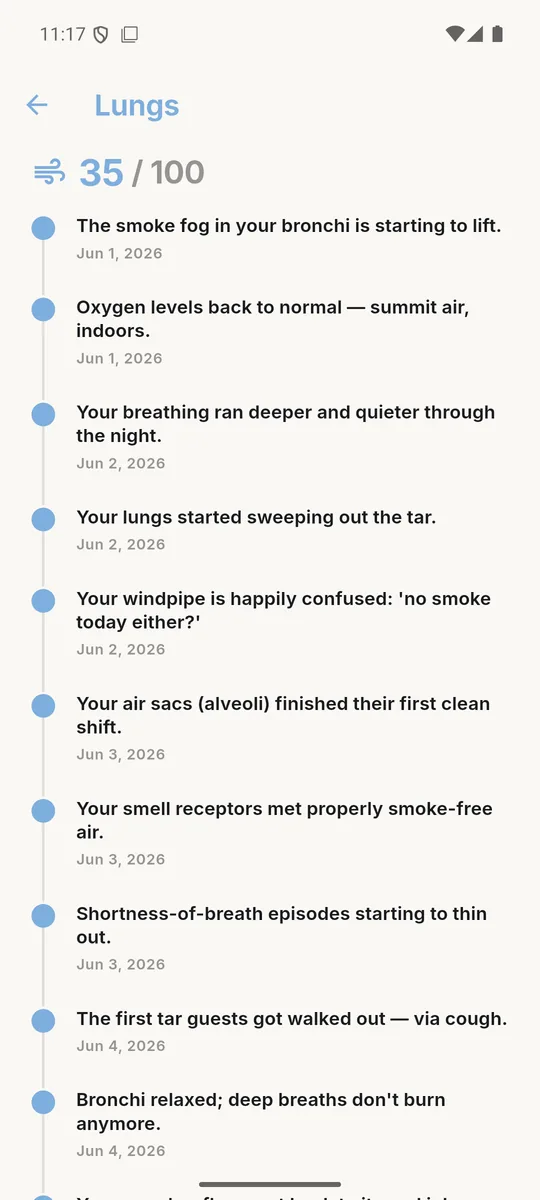
Six routes, 600 stops. Whatever is repairing in your body, you read it there.

You choose the view you are climbing — summit, forest, sea, or your own photo.
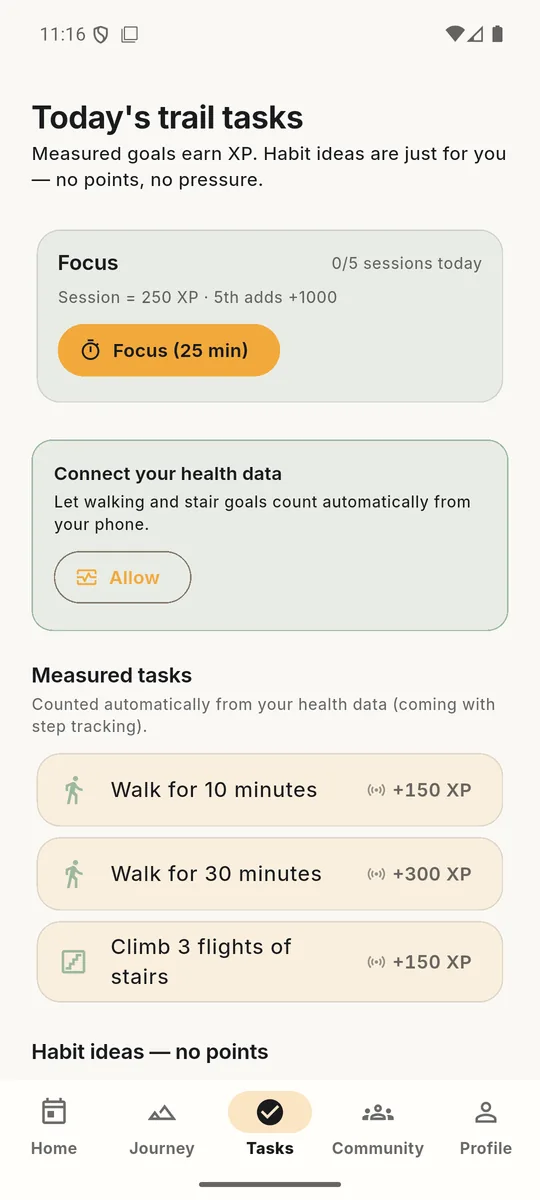
Small tasks every day. You are building a habit, not willpower.
Real screens from the app.
- Hear your own voice when a craving hits — the reason you quit, in your own words. You can add the voices of people you love, too.
- One tap for guided breathing and a distracting task — enough to fill those four minutes.
- 600 stops across six routes: read exactly what is repairing in your body today.
- Your numbers live on your device and keep counting offline — even on a plane.
- You pick the view you are climbing: summit, forest, sea, or your own photo.
- Interface, content and notifications in 14 languages.
You start free. The first day of the journey and the last are both yours.