“I’ll lose weight first, then quit smoking” — why that order backfires
August 4, 2026·6 min read
Worried you’ll gain weight if you quit smoking? The concern is real, but the order is flipped. Here’s why it’s “first cigarettes, then weight.”
“I’ll lose some weight first, then I’ll quit smoking.”
The worry behind that sentence is real. Some people do gain weight after they quit, and for many women especially, it’s one of the main reasons to keep postponing.
But the order is upside down — and the reason is very down-to-earth.
Does quitting actually make you gain weight?
On average, yes. In the first months after quitting, many people see a small bump on the scale — usually about 4–5 kilos (9–11 pounds) on average. Some people don’t gain at all, some gain more.
The reasons are a mix:
Taste and smell come back. Around 48 hours after you stop, your senses get noticeably sharper and food genuinely tastes better.
Your mouth wants something to do. Cigarettes are replaced with snacks — it’s the exact problem those small tools are designed to solve.
Metabolism slows a little. Nicotine speeds it up a bit; once it’s gone, that effect disappears.
⚠️ And then there’s the fourth, most ignored reason: what you put in your mouth instead. Sugary gum, nuts, mint candies — all get labeled “better than smoking” and eaten with no limit. Forty sticks of sugary gum a day is a serious, invisible calorie load. A chunk of that early weight gain isn’t from meals; it’s from these.
The numbers also help put it in perspective: that 4–5 kilo (9–11 pound) average gain is small next to the breath and stamina you get back in the same period. And “average” never means “everyone” — some people don’t gain at all.
Why is the order backwards?
There are three reasons.
1. Quitting actually makes losing weight easier. Your breathing and stamina improve clearly within two to three weeks — the heart and circulation gains kick in that fast. Exercise gets easier after you quit, not before.
2. “Weight first” is a goal with no finish line. How many pounds have to go before you’re “allowed” to quit? If you hit the target, a new one appears; if you don’t, the delay continues. Waiting with no end date is just another word for postponing.
3. Doing two hard things at once is risky. Dieting and quitting both involve cutting back. When you try both at the same time, the odds that one will fail go up — and it’s usually the smoking part that breaks.
The third one matters: it’s the part where the “weight first” idea undercuts itself. It’s true you shouldn’t do both at once — but if you have to choose, which one goes first?
Which should come first? A side‑by‑side look
A fair comparison:
What you gain when you quit smoking: lower heart and vessel risk, better lungs, lower cancer risk, better sense of smell, more money, freedom from the habit.
What 4–5 kilos (9–11 pounds) cost: a real metabolic effect, but clearly smaller when you put it next to the list above.
Health organizations are very clear on this: the benefits of quitting are considered much bigger than the impact of that possible early weight gain. You can see this in the overviews from the World Health Organization and the CDC.
So the order is: cigarettes first, weight second.
Three ways to limit weight gain
You can build these into your quit plan from day one:
1. Don’t fill the “mouth gap” with food. Go for gum, water, sugar‑free mints, cinnamon sticks. The “what to keep with you” list is exactly for this.
⚠️ The sugary gum and nut trap: both get eaten endlessly because they’re “better than smoking,” and a chunk of the weight comes from there.
2. Put a walk in the plan. Fifteen minutes a day is enough. It takes the edge off cravings and helps balance the metabolism side. As your breathing improves, the time tends to increase on its own.
3. Don’t step on the scale in the first month. In those first days, the scale is pure anxiety fuel. This was already on the “don’ts” list for day one.
4. Keep breakfast and your meal routine. In the first weeks, skipping meals cranks up your appetite and leads to “making up” for it at night. Three regular meals aren’t a diet; they’re an anchor.
5. Drink more water. The first item on the small tools list quietly does a second job here: it keeps your mouth busy with zero calories.
What if you do gain weight?
People rarely ask this upfront, and because they don’t, the first few pounds become a reason to quit… quitting.
The answer is about timing: in month one, you do nothing. That first month belongs to quitting. Adding a second goal brings back the third problem — trying to do two hard things at once.
From month two on, the situation has changed: breathing is better, stamina is up, you can walk farther. The same diet is simply easier to follow than it was when you were smoking.
⚠️ And in that first month, staying off the scale is one of the most useful rules. The moment you see a number, the second goal jumps onto the stage and your focus splits.
If you’re already trying to lose weight
In that case, a practical shift: loosen the diet, move quitting up.
Putting your weight goal on hold for three to four weeks makes it possible to focus on quitting. After a month, you can go back to the second goal — and by then your breathing and stamina are already better.
“If I gain weight, I’ll look worse”
That worry is real and doesn’t need to be minimized, but the other side of the scale also deserves a line.
Quitting has visible effects too, and they show up within weeks: skin tone, tooth color, smell, breathing. In the piece on quitting in your 20s, we talked about why these are some of the most motivating changes.
So both sides are visible — it’s just that one is measured in numbers and the other isn’t.
Who says this sentence the most?
It’s worth naming, because the advice shifts a bit by group.
Women mention this fear much more often, and that’s not something to brush off — the pressure around appearance is real. But the outcome is the same: waiting doesn’t help with weight; it only stretches out the smoking.
The second group: people who quit once, gained weight, and went back. Their fear isn’t a guess; it’s based on experience, and it deserves to be taken seriously.
A practical answer for this group: last time, there was no “weight” line in the plan. The five points above (mouth gap, walking, scale, meals, water) fill that hole. For this group, the answer to “what will be different this time?” is already right there.
⚠️ One honest note: those five points don’t erase weight gain; they limit it. Expecting a perfect result and giving up at the first pound leads to the same outcome as last time.
The worry is real. The order is reversed. Quitting makes losing weight easier; the other way round doesn’t hold.
The one thing to do today: put your weight goal on pause for a month and write down your quit date.
If you want to watch how your breathing and stamina change from today on, enter your date in the counter on the right. And for the tough moments, the Tar2Star app is built exactly for those minutes.
This page is a photo. The app is the film.
These numbers show today. Tar2Star shows you a new one every morning — and stays with you when a craving hits.
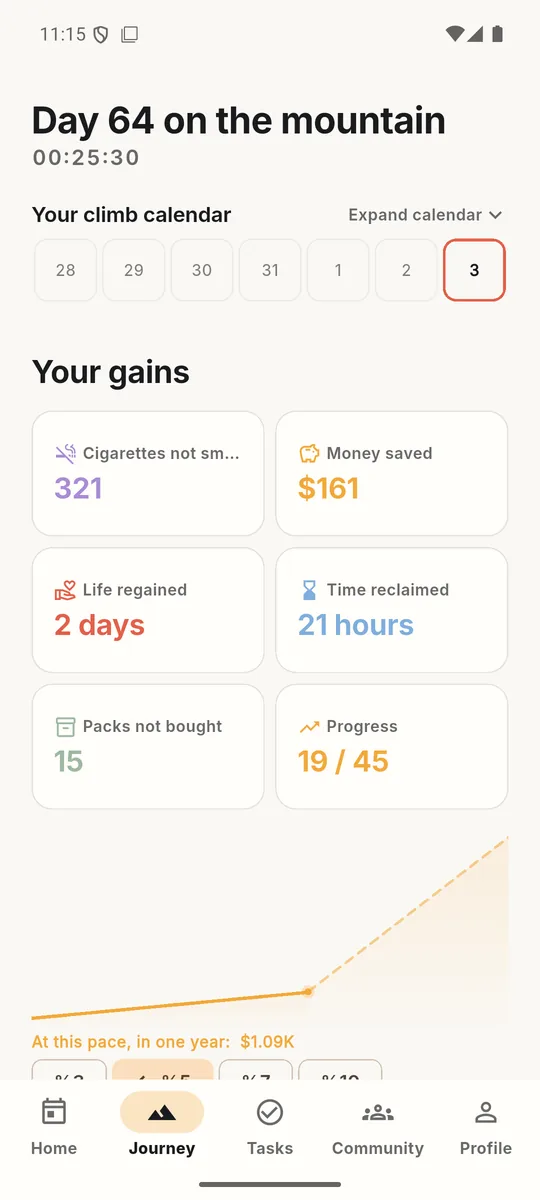
Your gains day by day: cigarettes not smoked, money saved, life reclaimed.
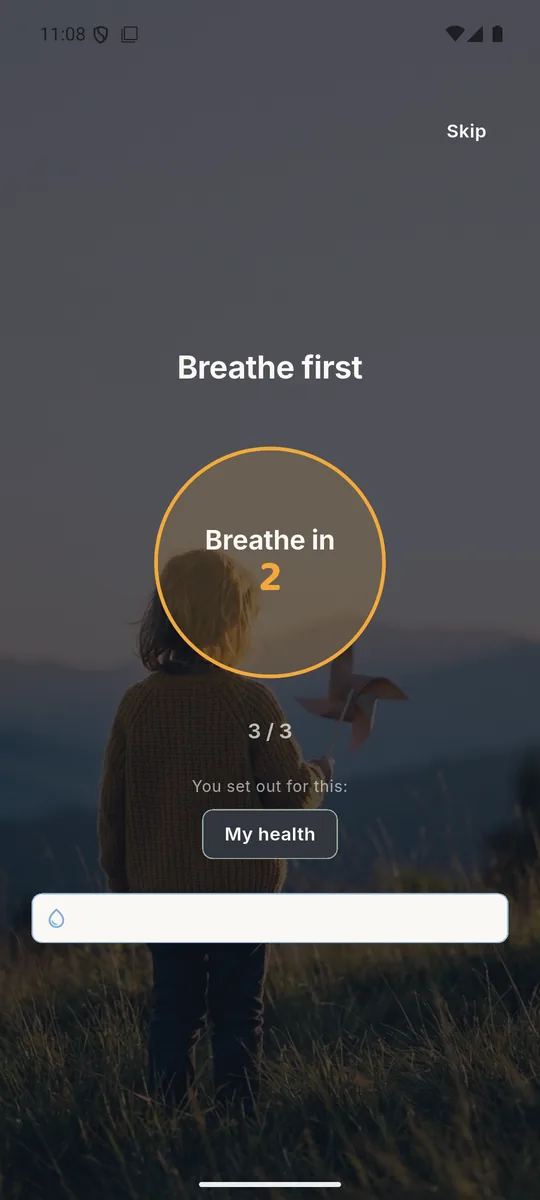
One tap when a craving hits: breathe first. A three-round guided breathing exercise.
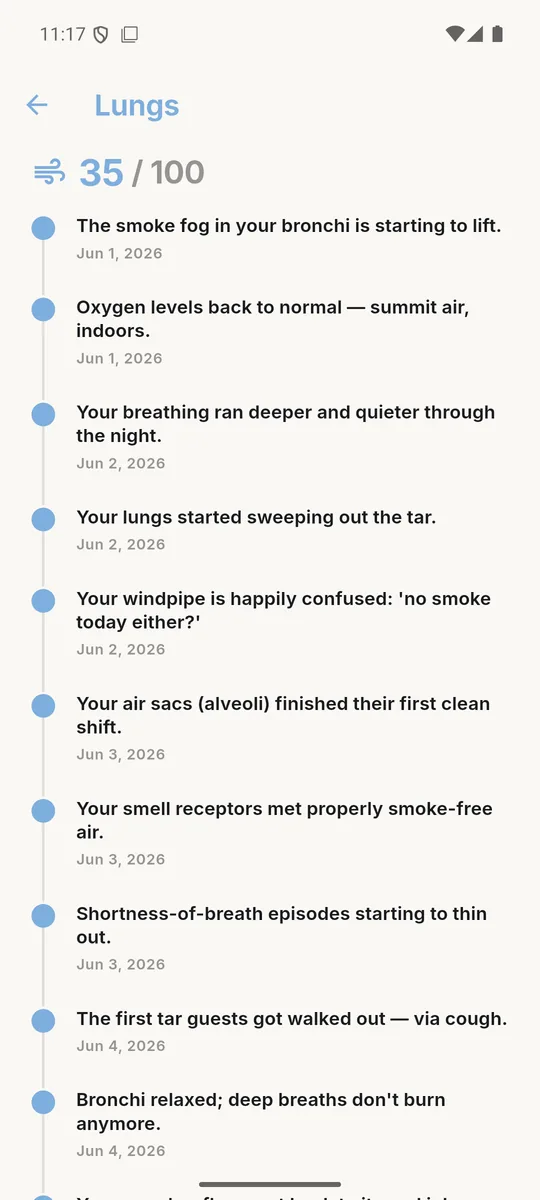
Six routes, 600 stops. Whatever is repairing in your body, you read it there.

You choose the view you are climbing — summit, forest, sea, or your own photo.
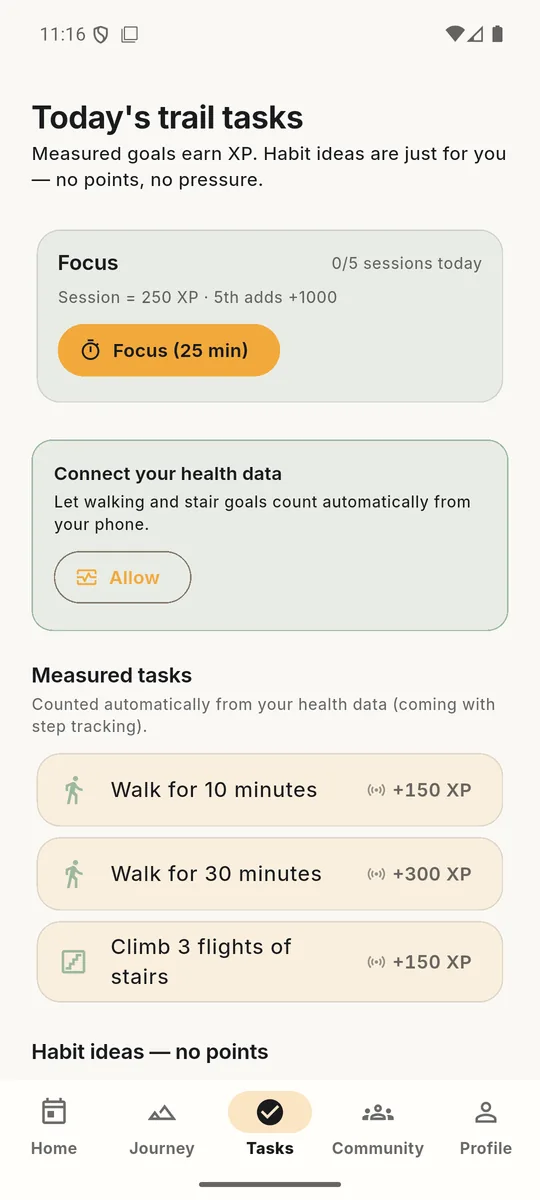
Small tasks every day. You are building a habit, not willpower.
Real screens from the app.
- Hear your own voice when a craving hits — the reason you quit, in your own words. You can add the voices of people you love, too.
- One tap for guided breathing and a distracting task — enough to fill those four minutes.
- 600 stops across six routes: read exactly what is repairing in your body today.
- Your numbers live on your device and keep counting offline — even on a plane.
- You pick the view you are climbing: summit, forest, sea, or your own photo.
- Interface, content and notifications in 14 languages.
You start free. The first day of the journey and the last are both yours.