What Happens in Your Body When You Quit Smoking? A Timeline of Recovery
July 29, 2026·4 min read
From 20 minutes to 15 years: see how your body starts to repair itself after your last cigarette, with a clear hour‑by‑hour and year‑by‑year timeline.
The moment you put out your last cigarette, a timer starts running in your body.
You can’t see it, you don’t feel a bell ring — but it’s ticking. And the first win shows up much earlier than most people expect: twenty minutes in.
The timeline below is based on data from the World Health Organization and the U.S. Centers for Disease Control and Prevention (CDC).
What happens in the first 24 hours?
20 minutes. Your heart rate and blood pressure start to return to normal. The nicotine‑driven tightening in your blood vessels begins to ease.
8–12 hours. Carbon monoxide levels in your blood drop and move back toward normal. Carbon monoxide binds to hemoglobin about 200 times more strongly than oxygen; when it lets go, oxygen can take its place again. The amount of oxygen reaching your muscles and brain rises.
24 hours. Your risk of heart attack begins to go down. This is the first measurable gain for your heart and blood vessels.
The first week
48 hours. The nerve endings for taste and smell start to regrow. For many people, this is the first change they really notice: food tastes different.
72 hours. The bronchial tubes in your lungs relax and breathing gets easier. Measurable nicotine has completely cleared from your body. Around the same time, withdrawal peaks and then starts to ease off — we broke down why the first 72 hours are the hardest in a separate guide.
1 week. Your sleep pattern starts to settle. Your cough may actually get worse for a while; that’s a sign the tiny hairs in your lungs are waking back up and starting to move built‑up tar out.
The first year
2–12 weeks. Your circulation improves noticeably. Walking and climbing stairs start to feel easier.
1–9 months. Coughing and shortness of breath decrease. The cilia (those tiny hairs) in your lungs are largely restored; your defenses against respiratory infections improve.
1 year. Your risk of coronary heart disease is cut by about half compared with someone who keeps smoking.
Long‑term changes
2–5 years. Your risk of stroke moves closer to that of a non‑smoker. The risk of cancers of the mouth, throat, and esophagus goes down.
10 years. Your risk of dying from lung cancer is about half that of someone who continues to smoke. The risks of larynx and pancreatic cancer also fall.
15 years. Your risk of coronary heart disease is similar to that of a person who has never smoked.
Is this timeline the same for everyone?
No — and it’s important to be upfront about that.
These numbers are averages. How many years you smoked, how many cigarettes a day, your age, and your current health all shift the calendar. If you’ve smoked for a long time, some benefits may show up later.
There’s also a part that doesn’t fully come back: tissue lost to emphysema doesn’t regrow. But the progression of that damage does slow or stop — and over the years, that difference adds up to two very different lives.
⚠️ This article is for information only. If you have an existing medical condition, talk through your quit plan with your clinician.
The part of the timeline that surprises most people
A lot of people think quitting is a “long‑term investment”: suffer now, maybe see results ten years from today.
The timeline says the opposite. The first win shows up in twenty minutes, the second in twelve hours, the third in forty‑eight hours. Your hardest days are also the days your body is improving the fastest.
This happens at the same time as that tough second day — and seeing both side by side can completely change how that day feels.
Why do the numbers help?
Because a vague “you’ll be healthier” doesn’t move the needle for most people. But “in twelve hours, the carbon monoxide in your blood drops back toward normal” shows you something concrete.
That’s the whole idea behind this blog: not scaring you into quitting, but showing you what’s happening. A timeline like this is the most down‑to‑earth way to show it.
Your timer started the moment you put out that last cigarette. Where are you on the calendar right now?
In the Body repair stage, each of these lines turns into its own deep‑dive article.
To see where you are, plug your quit date into the counter on the right. And if you want to follow this same calendar day by day, across six different routes and 600 checkpoints, that’s exactly what the Tar2Star app was built for.
This page is a photo. The app is the film.
These numbers show today. Tar2Star shows you a new one every morning — and stays with you when a craving hits.
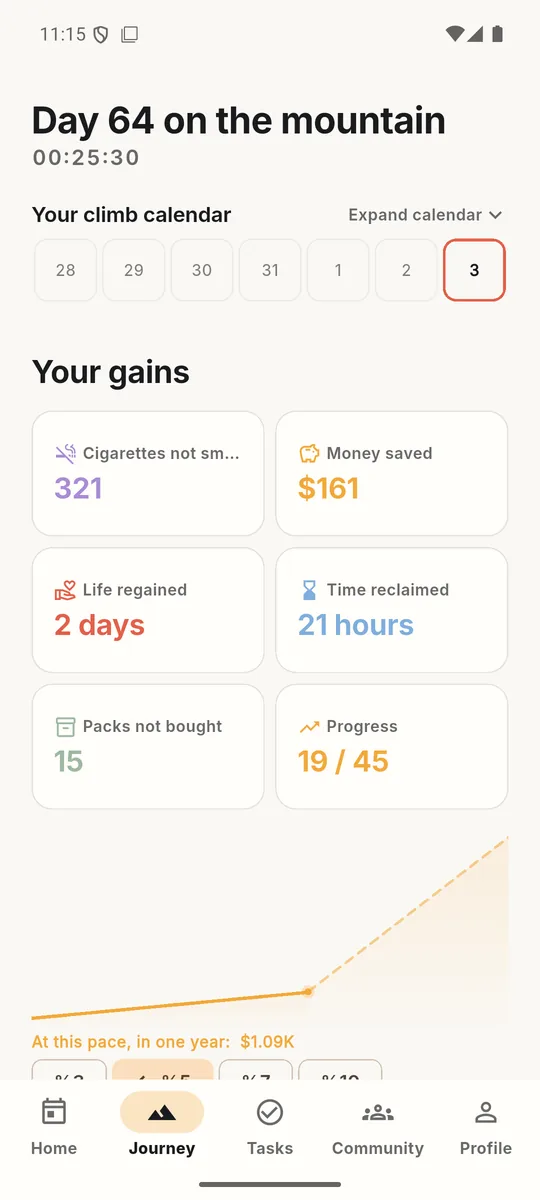
Your gains day by day: cigarettes not smoked, money saved, life reclaimed.
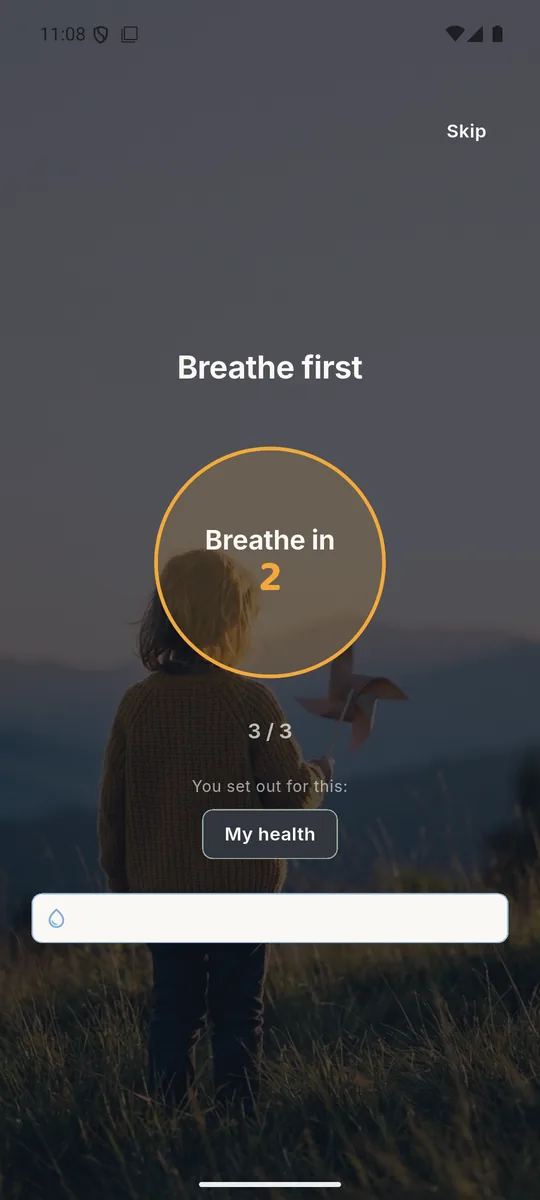
One tap when a craving hits: breathe first. A three-round guided breathing exercise.
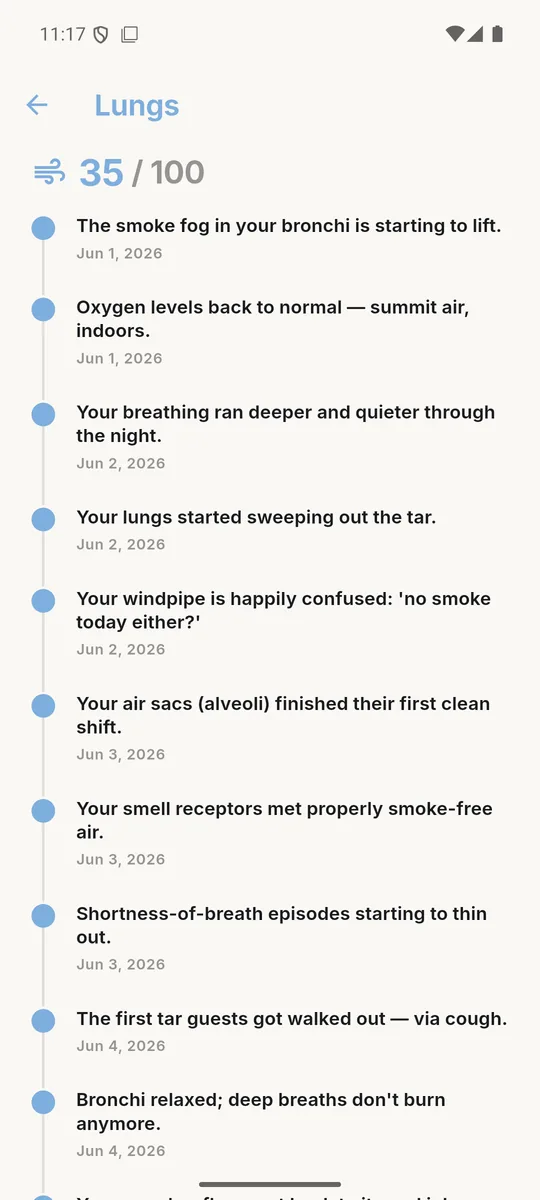
Six routes, 600 stops. Whatever is repairing in your body, you read it there.

You choose the view you are climbing — summit, forest, sea, or your own photo.
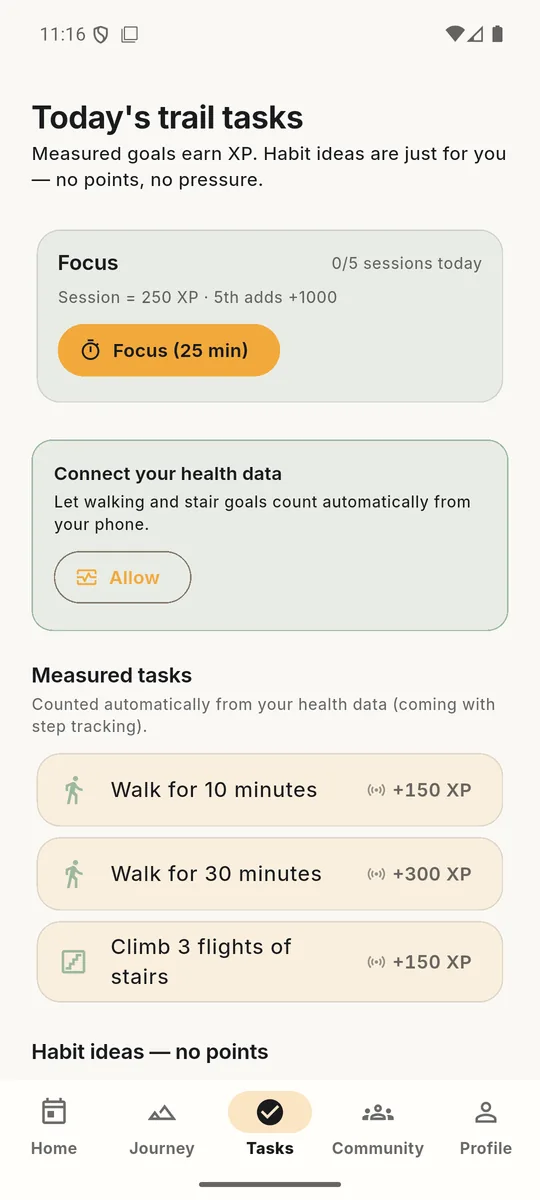
Small tasks every day. You are building a habit, not willpower.
Real screens from the app.
- Hear your own voice when a craving hits — the reason you quit, in your own words. You can add the voices of people you love, too.
- One tap for guided breathing and a distracting task — enough to fill those four minutes.
- 600 stops across six routes: read exactly what is repairing in your body today.
- Your numbers live on your device and keep counting offline — even on a plane.
- You pick the view you are climbing: summit, forest, sea, or your own photo.
- Interface, content and notifications in 14 languages.
You start free. The first day of the journey and the last are both yours.