Quitting at work: how to get through the day without “smoke breaks”
July 29, 2026·7 min read
At work, the hard part isn’t nicotine, it’s your schedule. How to keep breaks, social time and sanity — just without the cigarettes.
Quitting at work is hard for a simple reason — and it’s not nicotine. It’s your schedule.
Smokers slice the day into cigarettes. The 10:30 break, the one after lunch, the 3 p.m. slump, the “right before I leave” smoke. Take those away and you’re left with one long, eight‑hour block that your brain reads as punishment.
The answer isn’t working straight through with no breaks.
The answer is keeping the break, losing the cigarette.
Why is the smoke break so locked in?
Because it’s quietly doing three jobs at once:
Permission to stop. A legitimate reason to get up from your desk. “I’m going for a smoke” needs no explanation; “I’m just going to stand around for five minutes” sounds… odd in most offices.
Change of scene. A chance to step away from the screen, get some air, stop sitting.
Social time. Some of the easiest, most relaxed conversations of the day happen in those five minutes.
When you quit, you lose all three in one go. What’s gone isn’t just the cigarette — it’s your daily rhythm.
That’s why your first‑week goal at work isn’t “tough it out”. It’s to replace those three functions in other ways.
What do you put in place of a smoke break?
Same frequency, same length, different content. Every two–three hours, five minutes to:
Take the stairs. Go down one floor and back up. You get movement and a change of scenery.
Water break. Walk to the kitchen, fill a glass, drink it there. Don’t bring it back to your desk — the point is getting up, not the glass.
Window break. Spend two minutes looking outside, focusing on something far away. Your eyes get a break along with your head.
Short walk. A loop around the building, out to the parking lot, or to the end of the hallway and back.
⚠️ Dropping breaks altogether is the classic trap. “I don’t go out to smoke anymore, I’ll just power through.” Then you sit for six straight hours, tension builds, and one late‑afternoon cigarette wipes out the whole day.
An urge wave averages about four minutes — the length of the break was already about right.
Put your new breaks in your calendar. It feels overly formal, but there’s a reason: the smoke break used to remind you by itself; the new one doesn’t. For the first week, set three alarms on your phone (for example 10:30, 1:30, 4:00). By week two you can usually turn them off — the new rhythm has started to stick.
Also decide the place up front. “I’ll get up and do something” is too vague; “I’ll walk down one flight of stairs and stand by the window for two minutes” is concrete. When the spot is fixed, getting up stops being a decision.
What do you tell your smoke‑break crew?
This is the sensitive bit, because in the first few days you may get invited out four or five times a day.
One sentence is enough, and the non‑judgmental version tends to work best:
“I’ve quit, but I’ll still come out with you — just don’t offer me one.”
That line keeps the relationship, shuts down the offers, and keeps you in the loop. We go into more detail on how to tell people you’ve quit.
⚠️ Even so, it’s usually smartest not to hang out in the smoking area for the first three–four days. That’s not weakness, it’s strategy. The smell of smoke alone is a strong trigger, and your defenses are at their lowest in the early days. By the second week, being in the same spot is noticeably easier.
Desk‑chair crises
Most work cravings don’t come straight from stress. They come from transitions: the end of a meeting, hitting send on a long email, hanging up the phone. In other words, when a chunk of work is done.
Your brain is expecting a reward. If you’ve celebrated every “done” with a cigarette for years, your mind goes looking for that reward at each finish line.
So you build the replacement in the exact same place — right at the transition:
After a meeting: stand up, roll your shoulders, drink some water.
After an email: two minutes at the window.
After a phone call: clear your desk, jot down the next step.
Keep your hands busy: pen, paperclip, gum. Most of the day‑one tactics work just as well at your desk.
When a crazy week hits
It will, because “calm weeks” are rare in real life.
The key distinction: stress by itself doesn’t bring cigarettes back. Stress plus no plan does. On a busy day you don’t have more triggers — you have less energy to handle them. That’s when the planning you did earlier really matters.
Three tweaks for heavy days:
Don’t cancel breaks, shrink them. If you don’t have five minutes, take two. Zero minutes is what doesn’t work.
Don’t skip lunch. When your blood sugar crashes, the jittery, edgy feeling can feel almost identical to withdrawal — and it’s easy to mix them up.
Plan your after‑work slot. The riskiest moment is often right after work: the load lifts, and your brain expects a reward. Decide that 20‑minute window in the morning.
What’s the best day to quit?
Thinking about your workweek, there are two options that usually make sense, and each has a logic behind it:
Friday evening. Your first 48–72 hours land on the weekend, so you get through the steepest stretch without work pressure. The risk: weekend social plans and alcohol.
Monday morning. The week starts with work, your mind is occupied, there’s less boredom. The risk: withdrawal peaks mid‑week, right when things tend to get busy.
For most people, Friday evening is a little easier. We’ve broken down how to pick a quit date in more detail elsewhere.
If you work shifts or out in the field
If you’re not at a desk all day, the triggers are different: driving, waiting around, team breaks, the middle of a night shift.
Two things help a lot: no lighter in the vehicle, and always having some alternative in your pockets (gum, nuts, a cinnamon stick). If smoking has been your stay‑awake tool on nights, you’ll need water and short walks in its place — otherwise tiredness alone can derail your decision.
Shift work has another specific challenge: picking your quit day. The “Friday night” tip works for a standard schedule, but not for rotating shifts. The rule is the same, the content changes: aim to put the hardest 48–72 hours into the emptiest block in your rota.
On many shift patterns that’s the first day of a longer off‑duty stretch.
If you drive as part of your job, one extra note: on long drives in that first week, you really do need to stop every two hours. The cigarette break used to do this for you. Remove it and don’t replace it, and the tiredness builds — and tired people have a much harder time riding out a craving.
“All the real conversations happen on smoke break — what now?”
This is a real complaint from people who quit at work, and it doesn’t get talked about much.
In some workplaces, information genuinely flows through the smoking area: decisions are discussed there, news gets shared there. When you quit, you step out of that channel as well.
The answer isn’t going back to cigarettes — it’s moving the channel. Go out on break without smoking (that sentence above is exactly for this), or set up a regular coffee break with the same people. The magic isn’t in the smoke; it’s in being in the same place at the same time.
Quitting at work doesn’t mean grinding through the day with no breaks. It means keeping the breaks and changing what happens in them.
Pick three break times for tomorrow and write down exactly what you’ll do. Any break you leave blank is where the old habit will try to move back in.
If you want to see your smoke‑free days and the money you’ve saved add up right in the middle of your workday, plug your quit date into the counter on the right. And to keep your “emergency tools” handy at your desk, the Tar2Star app is built exactly for these minutes, with breathing exercises and quick, distraction‑level tasks.
This page is a photo. The app is the film.
These numbers show today. Tar2Star shows you a new one every morning — and stays with you when a craving hits.
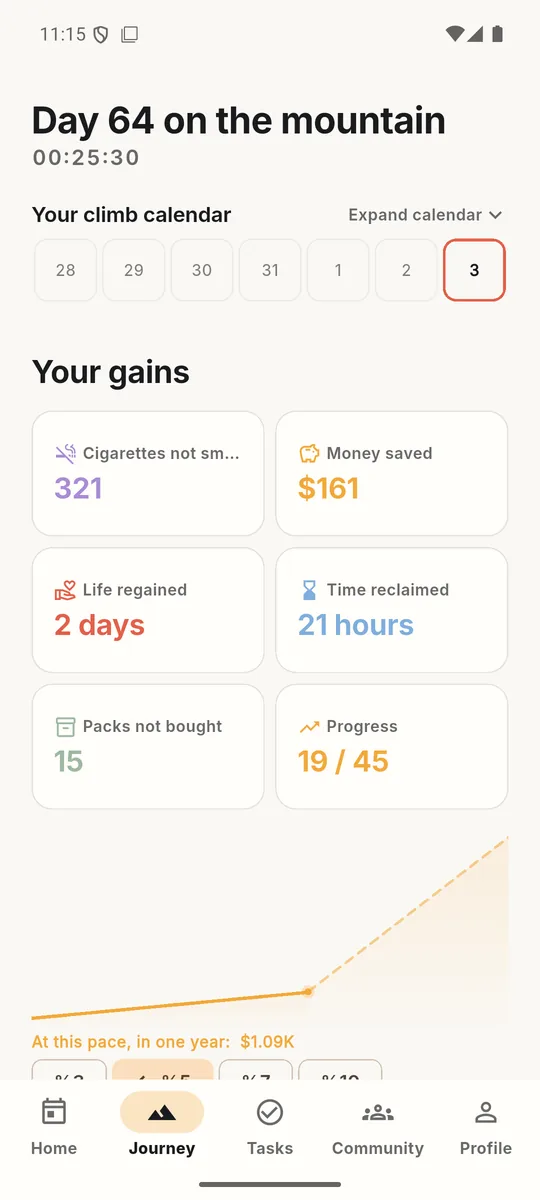
Your gains day by day: cigarettes not smoked, money saved, life reclaimed.
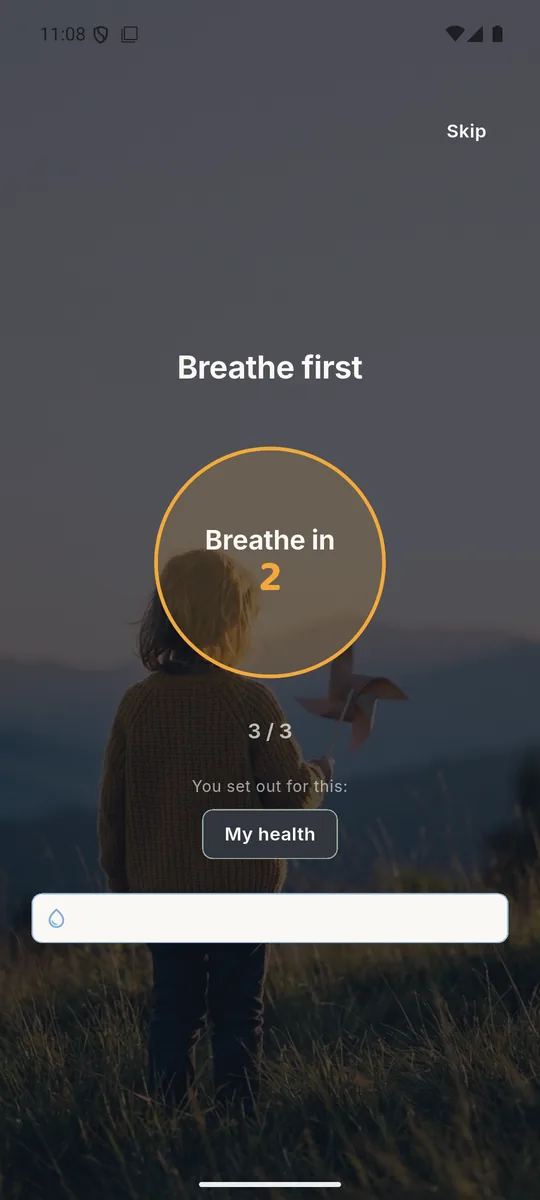
One tap when a craving hits: breathe first. A three-round guided breathing exercise.
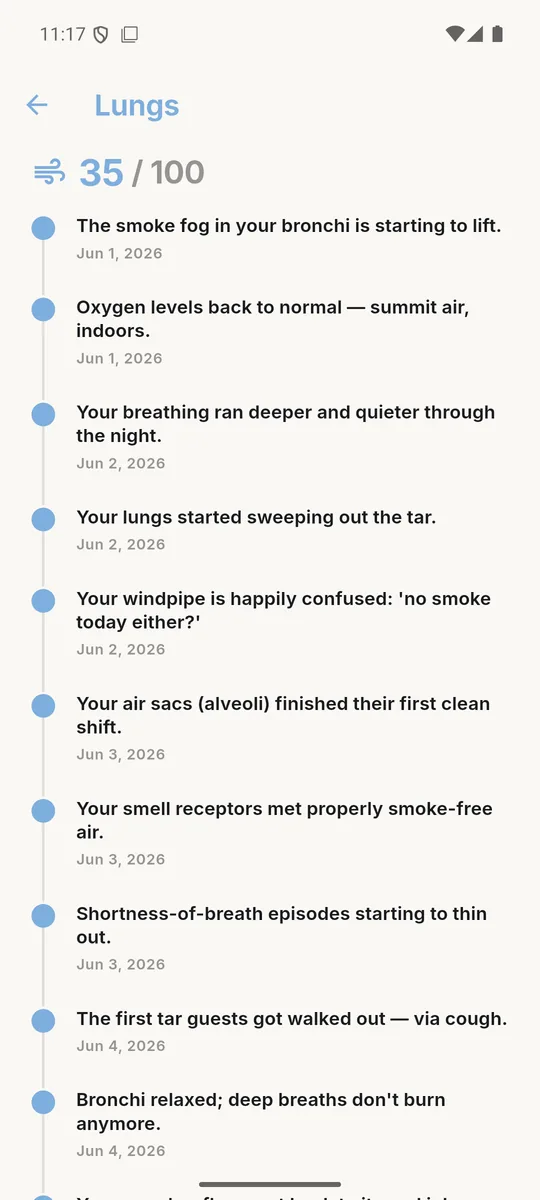
Six routes, 600 stops. Whatever is repairing in your body, you read it there.

You choose the view you are climbing — summit, forest, sea, or your own photo.
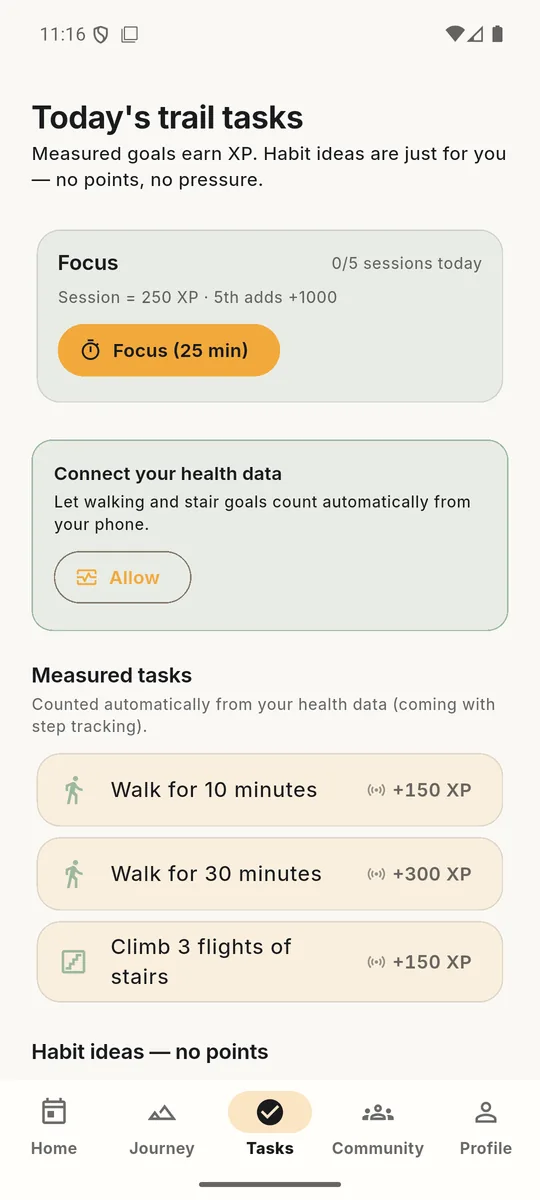
Small tasks every day. You are building a habit, not willpower.
Real screens from the app.
- Hear your own voice when a craving hits — the reason you quit, in your own words. You can add the voices of people you love, too.
- One tap for guided breathing and a distracting task — enough to fill those four minutes.
- 600 stops across six routes: read exactly what is repairing in your body today.
- Your numbers live on your device and keep counting offline — even on a plane.
- You pick the view you are climbing: summit, forest, sea, or your own photo.
- Interface, content and notifications in 14 languages.
You start free. The first day of the journey and the last are both yours.