Should You Quit Smoking on Vacation or on a Workday?
July 30, 2026·7 min read
Quit on vacation or on a workday? Pros, cons, and a practical third option (Friday night) so ilk days are easier but real-life triggers still get tested early.
This is a fair question — and the answer isn’t as obvious as it sounds.
Instinct usually points to vacation: less stress, the day is yours, nobody from work is pinging you. But a lot of people who quit on holiday end up smoking again the week they go back — for the exact same reason vacation felt like an advantage.
The upsides of quitting on vacation
They’re real, and they’re not trivial:
Stress is lower. Your first 72 hours — the steepest part of the climb — pass without work pressure on top.
The day is yours. Walks, naps, breaks — you control the schedule. A hour‑by‑hour plan is much easier to follow.
Your usual routine is already broken. Most triggers are tied to everyday structure: morning coffee at your desk, the drive home, the smoke break crowd. On vacation, almost none of that is there. The chain is already loosened.
Where vacation turns into a trap
That last advantage is also the main problem.
Those triggers simply don’t show up on vacation — so they never get tested. When you go back, they all come back at once: same desk, same car, same break area, same hours.
That’s when people think, “It was fine all week, why is this suddenly so hard?” The reason: the easy week wasn’t a rehearsal for real life.
⚠️ Second issue: for many people, vacation is when alcohol is at its highest. And in the first weeks, alcohol is the single thing most likely to knock over your decision.
⚠️ Third issue is quieter but common: vacation often means more boredom. Empty hours are one of the sneakiest early triggers, and you barely meet them in a normal workday. “There’s nothing to do” pulls more people back to a cigarette than “I had a tough day.”
The two options in numbers
It helps to put numbers on this, because the debate is usually all feelings.
For someone who smokes twenty cigarettes a day, a workday often looks like this: 2 in the morning, 2 on the way in, 4 before lunch, 3 at lunch, 4 in the afternoon, 2 on the way home, 3 in the evening. Most of the day is tied to structure, and that structure repeats every day.
A vacation day is scattered: wake‑up time is fuzzy, there’s no fixed “break,” social situations are unpredictable, alcohol is more likely. The total number doesn’t usually drop on its own; for a lot of people, it even goes up.
So: the person who quits on a workday faces twenty known triggers. The person who quits on vacation faces twenty unpredictable ones. You can write a plan for the first.
The benefits of quitting on a workday
It feels counter‑intuitive, but you can count the advantages:
Your mind is busy. Boredom is a very under‑rated trigger early on. Work pulls your focus away without you having to try.
Real life gets tested from day one. Your chains show up immediately, and you start building your responses immediately. There’s no “shock” when you return from anything.
There’s structure. Start time, breaks, end of day — they’re all set. That makes it easier to follow a plan than in a completely empty day.
The downside is also clear: days 2–3 — when withdrawal tends to peak — might land on a heavy workday.
A middle path that fits most people
There’s a third option, and in practice it’s the one that works best for a lot of people: quit on Friday night.
That way:
The first 48–72 hours (the steepest part) fall on the weekend — stress is lower.
By Monday, when you go back, the very worst stretch is behind you.
But your triggers still get tested within the first week, not months later.
Your routine doesn’t disappear; the hardest days are just softened.
One condition: keep the weekend alcohol‑free. That one rule closes off the biggest weak spot of this option.
If you pick Friday night, it’s worth putting the exact date into the counter on the right: watching those hours add up over the weekend is one of the few concrete things that helps on the steep section.
We wrote more about how to choose a date here — Friday night comes out ahead there, too.
If you’re quitting on a long vacation
It can still work — but you need one extra step.
Plan your return day as well. Before the vacation ends, write out your first day back at work hour by hour: what you’ll do during breaks, what the drive will look like, whether you’ll even step into the usual smoking area.
Most people who struggle after a vacation stumble on this point: they go in unprepared. A planned return day removes a big part of that problem.
In practice: on the last day of your vacation, use the first‑24‑hours plan and map your return day into those six blocks. That day is effectively a second “day one,” and you need to treat it that way.
⚠️ There’s also a reverse trap: if you quit on a long break, it’s easy to think “I’m basically done” once you’re back. In reality, the main test is just starting that week. Week three is often the most critical, and if you quit on vacation, week three often lands right on your return week.
If you work shifts
Most standard advice doesn’t fit this group well, so it’s worth calling out separately.
With shift work there’s no fixed “morning block”; wake‑up times move, break times change, sleep is uneven. Triggers line up with parts of the shift, not with specific clock times: clock‑in, first break, the middle‑of‑the‑night slump, clock‑out.
Practical takeaway: build your plan around these four anchors, not around specific hours. And set your quit date not for the end of a long time off, but for the start of a familiar shift — a familiar pattern is one you can plan for.
⚠️ Sleep needs its own mention here: if you work shifts, you’re probably already short on sleep, and in the first weeks cravings tend to rise with tiredness. For this group, one of the most helpful tweaks is simply not choosing your most chaotic shift week as your start date.
When not to quit
This has less to do with the calendar and more to do with what’s on it:
Don’t stack your quit date right on top of a wedding, a long trip, or a big night of drinking.
Don’t put it in the middle of a major life shake‑up like moving or changing jobs.
Outside of that, everything else — a busy week, a tough project, a packed schedule — is normal life. You don’t wait for normal life to pause; you quit inside it. More on that here.
⚠️ One more, and this is personal: don’t repeat the exact setup where you already fell once. If you’ve twice quit on vacation and twice relapsed your first week back, there’s not much reason to pick vacation a third time. The easiest answer to “What will be different this time?” is often right here. We unpack that question in this article.
⚠️ And a final pattern: “I’ll quit on vacation” is often not a plan, but a delay. If the vacation is three months away, nothing changes in those three months. If it’s in two weeks, it’s a plan; if it’s far off, it’s usually postponing.
Vacation makes the first days easier — and the return harder. Workdays do the opposite. Friday night sits in the middle.
One thing you can actually do today: open your calendar, pick the nearest Friday night that feels workable, and write it down.
If you’d like a tool with you over the weekend or on your return day, the Tar2Star app keeps your timer and “crisis tools” in one place so you’re not doing this climb empty‑handed.
This page is a photo. The app is the film.
These numbers show today. Tar2Star shows you a new one every morning — and stays with you when a craving hits.
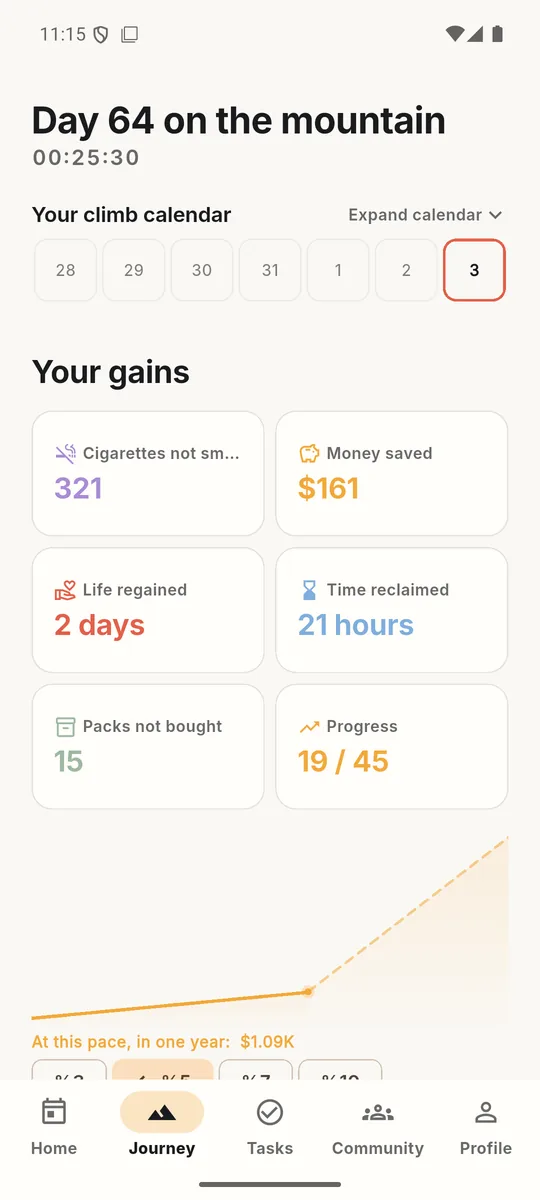
Your gains day by day: cigarettes not smoked, money saved, life reclaimed.
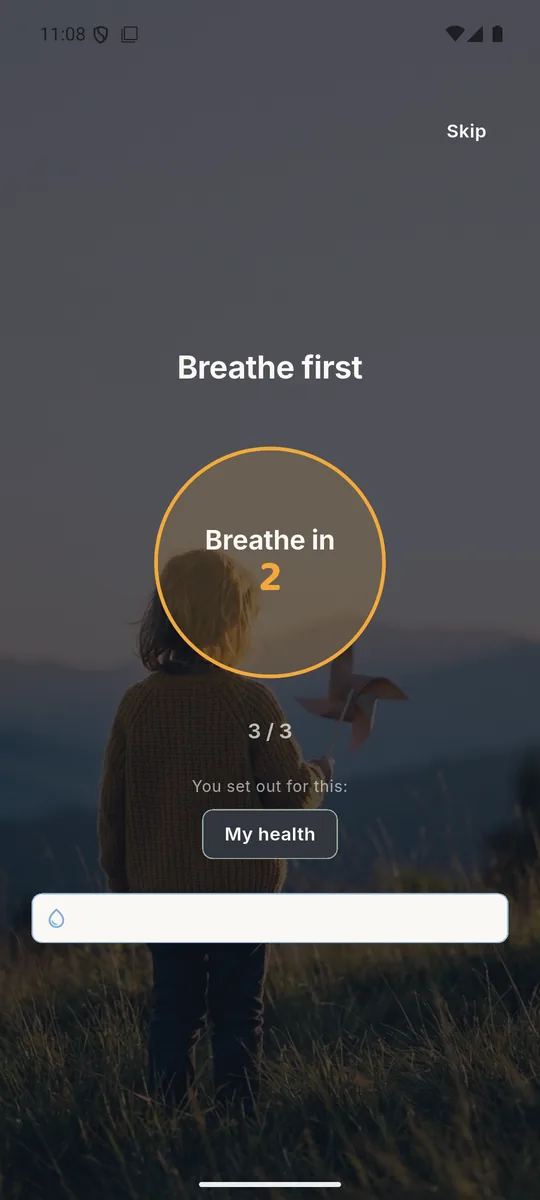
One tap when a craving hits: breathe first. A three-round guided breathing exercise.
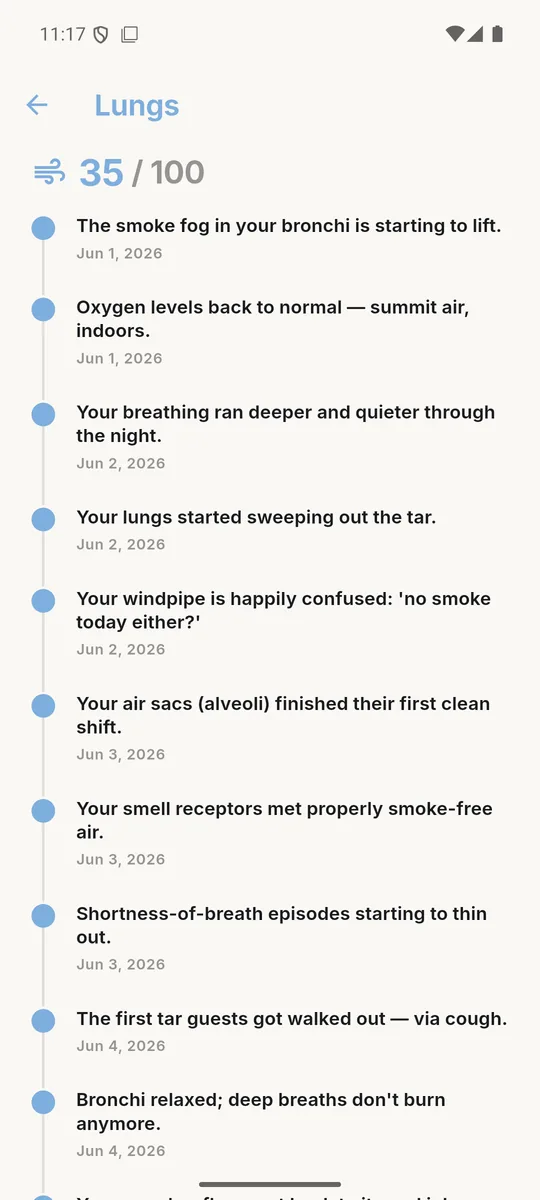
Six routes, 600 stops. Whatever is repairing in your body, you read it there.

You choose the view you are climbing — summit, forest, sea, or your own photo.
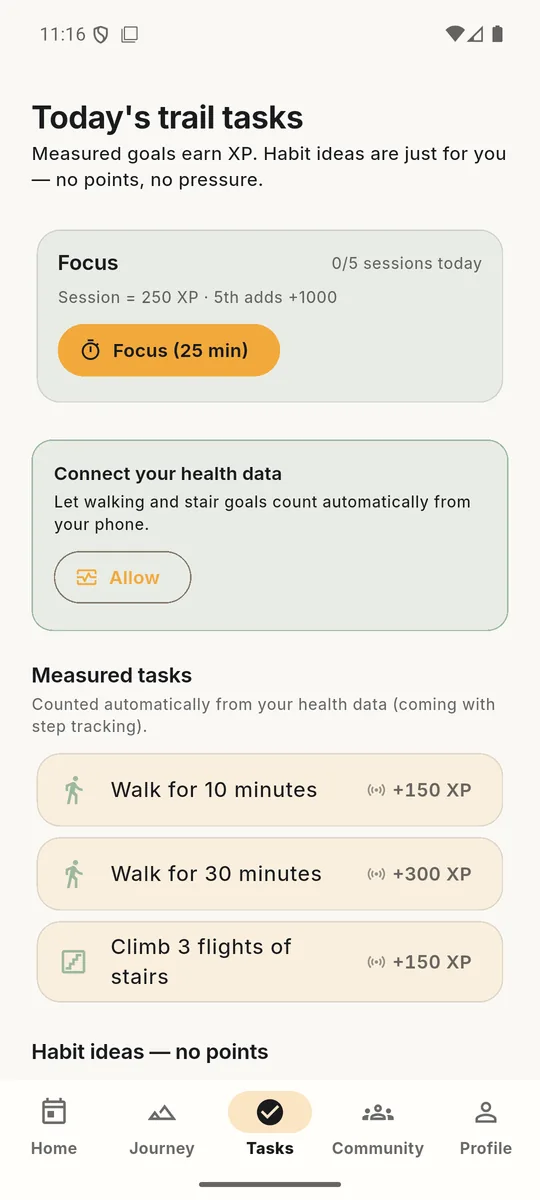
Small tasks every day. You are building a habit, not willpower.
Real screens from the app.
- Hear your own voice when a craving hits — the reason you quit, in your own words. You can add the voices of people you love, too.
- One tap for guided breathing and a distracting task — enough to fill those four minutes.
- 600 stops across six routes: read exactly what is repairing in your body today.
- Your numbers live on your device and keep counting offline — even on a plane.
- You pick the view you are climbing: summit, forest, sea, or your own photo.
- Interface, content and notifications in 14 languages.
You start free. The first day of the journey and the last are both yours.