Expecting a baby? Why it matters that *you* quit too
July 30, 2026·7 min read
Pregnancy talk is all about mom, but dad’s cigarettes matter too: for the air at home, mom’s chances of staying smoke‑free, and your time with your child.
Pregnancy talk usually revolves around the mom. Dads often get one line: “Just smoke outside.”
That line misses two big things. First, “smoking outside” doesn’t protect as much as people think. Second, whether you quit or not directly changes her chances of quitting and staying quit.
This isn’t about being “nice”
There are three very concrete mechanisms.
The air at home. Any cigarette smoked in an enclosed space spreads smoke to everyone who lives there. For someone who’s pregnant, that means exposure to carbon monoxide and nicotine even if they don’t smoke at all.
Residue. Smoke leaves tar and nicotine on surfaces, fabric, and clothing; in the research this is called third-hand smoke. It doesn’t fully disappear with airing out and can stay for months. When the baby comes home, these are exactly the surfaces they’ll be touching.
Her chance of quitting. This is the least talked-about and the most decisive. If there are cigarettes in the house, that familiar smell, a pack on the table — someone who’s trying to quit gets hit with dozens of triggers a day. We broke down how triggers work in a separate piece: it’s not about willpower, it’s about distance.
“I only smoke on the balcony” — is that enough?
It helps a bit, but not nearly as much as people imagine.
When the door opens, smoke drifts inside; plus you’re carrying residue on your clothes, hands, and breath. So “smoking outside” doesn’t actually make the home smoke‑free — it just reduces the amount.
We covered why cracking a window isn’t enough in another article — that one goes into the physics.
The honest frame is this: smoking outside is better than smoking in the room. But it’s not the same as quitting, and it’s not enough as preparation for a home a baby is about to move into.
After birth: the real critical period
A lot of moms who quit during pregnancy start again in the months after birth. The reasons make sense: no sleep, exhaustion, stress.
If there’s a dad who smokes at home in that period, her chances of going back up clearly. Your decision is carrying her decision.
The reverse is also true: quitting together is the strongest option. Two people are going through the same hard thing, there are no triggers lying around at home, and nobody is policing the other. In the pregnancy article, the section on relapse after birth looks at this from the mom’s side.
You have your own side of this
So far this has all been framed as “for someone else,” and there’s a trap there: an external reason gets harder around week two.
So you need your own reasons as well. For expectant dads, two tend to stick:
Playing without running out of breath. Most time with a small child is physical: carrying, chasing, picking up, stairs. The difference in breath shows up here, every single day.
Being around long-term. It sounds like a cliché, but there’s a measured side: years gained by quitting at different ages have been calculated. Which parts of your child’s life you’ll be there for is tied to what you do now.
How many months until the due date? Plan around that
Pregnancy is ideal prep time, but what you do depends on how much time is left.
More than six months to go. No need to rush — but also no point in stalling. The upside of quitting in this window: by the time the due date is close, you’ll already be past the hard part, instead of stacking withdrawal on top of late‑pregnancy stress.
Two to three months left. This is the most efficient window. Pick your quit date now, give yourself two weeks to get ready; being smoke‑free at least a month before birth also gives you time to clear out the house.
Less than a month left. Here the priority shifts: detox the home and the car first, then quit. The practical reason — once the baby is home, time and energy for deep cleaning basically disappear, and the surfaces your baby will touch will stay as they are.
⚠️ Trying to quit in the first week after birth is the hardest version: sleep is at its worst, there’s no daily routine, stress is high. If you can, don’t make that week your quit date.
A practical plan in four steps
Pregnancy is a great planning window because there’s a real date on the calendar.
Set a date — at least one month before the due date. We have a separate guide on how to choose a quit date.
Detox home and car — before the baby arrives. There’s an room‑by‑room guide ready.
Decide: together or separately — if your partner smokes too, talk about quitting together; but pressure doesn’t work.
Write down your own reason — if your only reason is the baby, that reason loses its force once the baby is here.
⚠️ One warning: don’t pressure your partner. Pushing someone to quit during pregnancy mostly produces guilt, and the guilt loop makes quitting harder. Doing your part is more effective than telling her what to do.
If she has quit and you keep smoking, what happens?
This setup is more common than people think, and the effects are measurable.
For her: the smell at home, a visible pack or lighter, smoke drifting in from the balcony — each of these is a trigger. Someone who has quit ends up having to “decide” not to smoke dozens of times a day. Your habit puts her decision on trial, every day.
For you: continuing to smoke while someone at home has quit slowly becomes a point of tension. Even if it’s not mentioned, it sits there — and usually surfaces in some other argument.
For both of you: in the months after birth this equation is at its most fragile. With no sleep and high stress, having cigarettes in the home clearly raises the odds that the mom starts again.
The solution doesn’t have to be quitting together — but there’s a basic minimum worth agreeing on: no smoking in the home or car, no packs left in sight, and airing out your clothes before you come in. None of these replaces quitting; they just mean you stop making it harder for her.
“But I barely smoke”
If you smoke very little, quitting tends to be easier — there are fewer ties to untangle. The 3‑cigarettes‑a‑day article talks about the advantages of this group.
But in terms of the air at home, the difference is small: three cigarettes in an enclosed space still affect that space. So “I don’t smoke much” might matter for your own health risks, but it doesn’t really change how much the household is exposed.
The first three months after birth
This is the last piece of prep, and it’s usually not planned at all.
In the first three months, both parents are at their most stretched: sleep is broken, there’s no clear daily rhythm, stress is constant. Going back to cigarettes in this period doesn’t usually feel like a “decision” — it feels like “just one,” usually at night, usually on the balcony, usually from sheer exhaustion.
Three things can be set up in advance:
Split night duty. Sleep loss alone is one of the biggest risks. Taking turns at night so each of you gets stretches of real sleep directly raises both your ability to cope.
Close the balcony “smoking spot.” If your old smoking corner is still set up, at 3 a.m. it becomes the easiest option. Bringing the chair inside for three months is a small but effective move.
Pick who you’ll call if you slip. If you’ve both quit, it can feel hard to admit a slip to each other; having one outside person (sibling, friend) lined up for this period really helps.
A dad‑to‑be quitting isn’t a courtesy; it’s part of getting ready.
One thing to do today: pick a quit date at least one month before the due date and put it in your calendar.
If you want to see how many days and how much money will build up from that date, drop it into the counter on the right — when you’re pricing baby gear, those numbers become very real. And for crisis moments, the Tar2Star app was built for exactly those minutes.
This page is a photo. The app is the film.
These numbers show today. Tar2Star shows you a new one every morning — and stays with you when a craving hits.
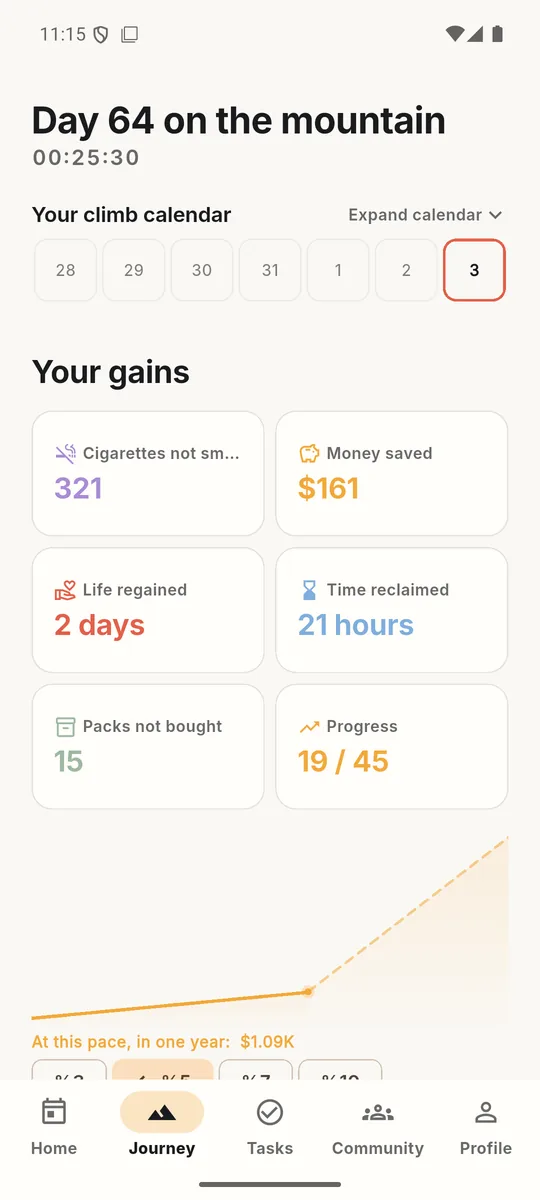
Your gains day by day: cigarettes not smoked, money saved, life reclaimed.
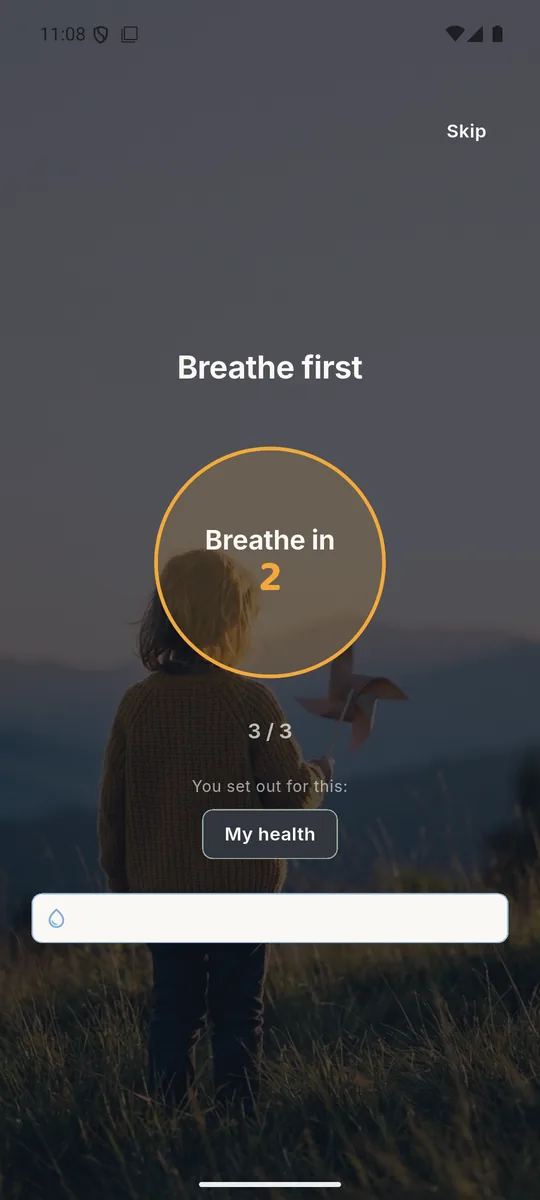
One tap when a craving hits: breathe first. A three-round guided breathing exercise.
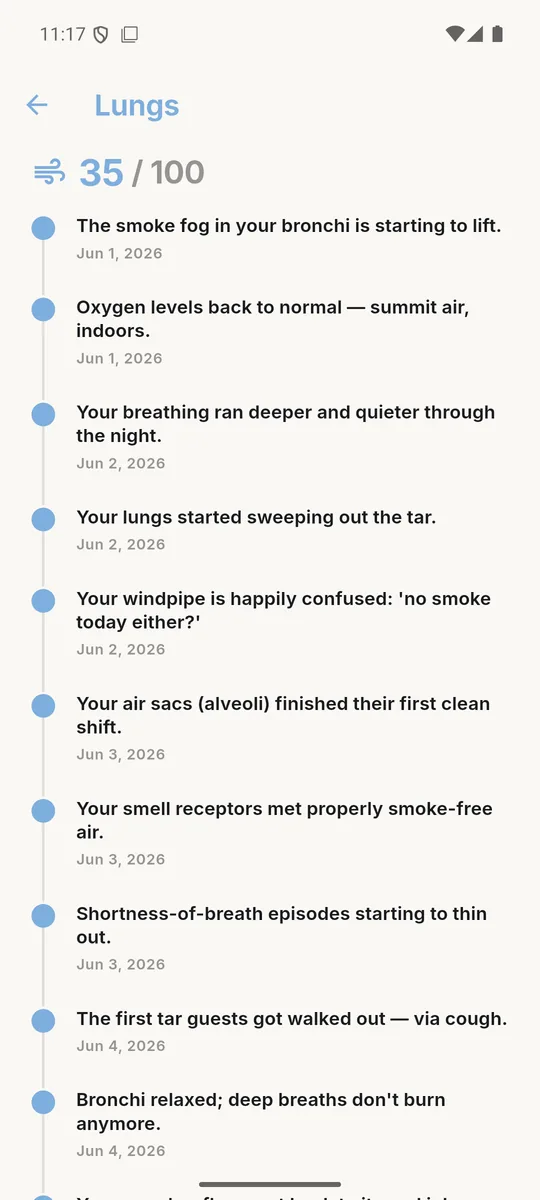
Six routes, 600 stops. Whatever is repairing in your body, you read it there.

You choose the view you are climbing — summit, forest, sea, or your own photo.
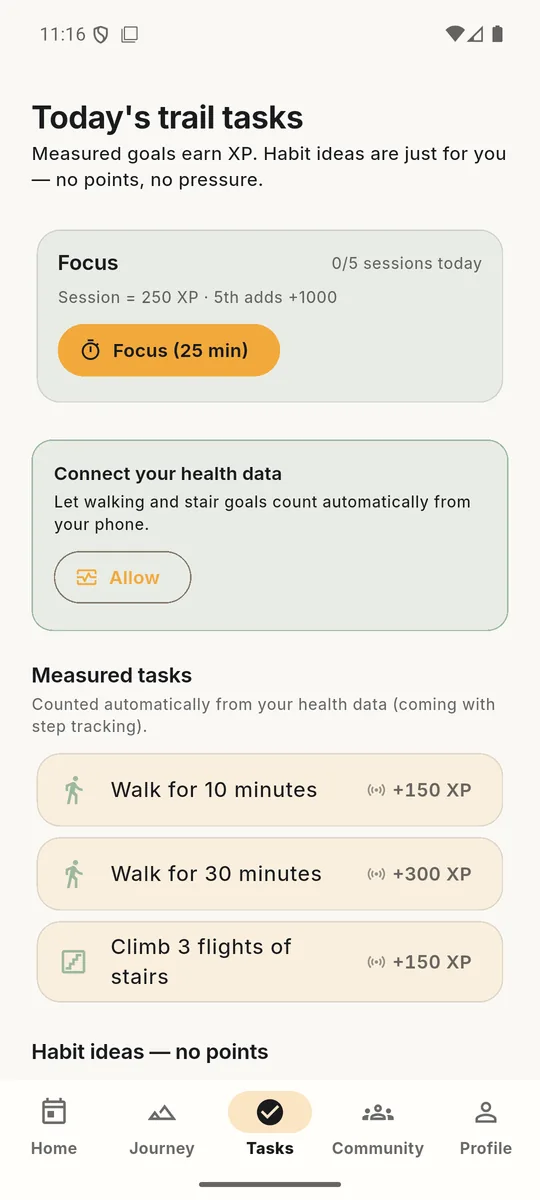
Small tasks every day. You are building a habit, not willpower.
Real screens from the app.
- Hear your own voice when a craving hits — the reason you quit, in your own words. You can add the voices of people you love, too.
- One tap for guided breathing and a distracting task — enough to fill those four minutes.
- 600 stops across six routes: read exactly what is repairing in your body today.
- Your numbers live on your device and keep counting offline — even on a plane.
- You pick the view you are climbing: summit, forest, sea, or your own photo.
- Interface, content and notifications in 14 languages.
You start free. The first day of the journey and the last are both yours.