Nicotine withdrawal symptoms: timeline, full list, and when they ease
July 29, 2026·5 min read
Nicotine withdrawal symptoms rarely last forever — most ease in 2–4 weeks. Here’s a clear timeline for each symptom and what’s happening in your body.
The hardest part of withdrawal usually isn’t the symptoms themselves — it’s not knowing when they’ll end.
An open‑ended struggle feels endless. A struggle with a calendar feels like something you can wait out.
So this guide is a timeline: every common symptom, when it starts, when it peaks, and when it usually fades.
How long do nicotine withdrawal symptoms last?
Most symptoms ease noticeably within 2–4 weeks. The peak tends to be packed into the first three days.
The longer answer is in the list below. If you want to see why these symptoms show up and what you’re gaining in return, check out your body’s repair timeline.
Cigarette cravings — starts around: 1–2 hours · peaks around: Days 2–3 · usually fades by: 2–4 weeks (with occasional waves for months)
Irritability — starts around: Day 1 · peaks around: Days 2–3 · usually fades by: 2–4 weeks
Trouble concentrating — starts around: Day 1 · peaks around: Days 2–3 · usually fades by: 2–4 weeks
Sleep problems — starts around: Day 1 · peaks around: First week · usually fades by: 2–4 weeks
Headache — starts around: 4–12 hours · peaks around: Days 1–2 · usually fades by: About 1 week
Cough / phlegm — starts around: Days 1–3 · peaks around: Weeks 1–2 · usually fades by: 1–3 months
Increased appetite — starts around: First week · peaks around: Weeks 2–4 · usually fades by: Variable
Restlessness — starts around: Day 1 · peaks around: Days 2–3 · usually fades by: 2–4 weeks
Constipation — starts around: First week · peaks around: Weeks 1–2 · usually fades by: 2–4 weeks
⚠️ These are averages. Everyone’s different, and it’s also normal not to get some of these at all. The most intense entries in the list mostly belong to the first 72 hours.
Why do these symptoms happen?
Because your brain is expecting a substance — and it suddenly stops arriving.
Nicotine’s half‑life in the blood is about two hours. For someone who smokes regularly, the brain gets a “nicotine level dropping” signal more than ten times a day. When you stop, those signals keep firing for a while — but there’s no nicotine coming to answer them.
Measurable nicotine leaves the body within about 72 hours. That’s also when withdrawal tends to peak, which is why day two often feels harder than day one.
Why does the cough start after you quit?
This is the symptom that scares a lot of people — and it’s actually one of the best signs things are improving.
The inside of your lungs is lined with microscopic hair‑like structures called cilia. They act like your lungs’ cleaning crew, sweeping mucus and particles upward so you can clear them. Hydrogen cyanide in cigarette smoke paralyzes these tiny cleaners. So while you’re smoking, your lungs aren’t really being cleaned — they’re just unusually quiet.
When you stop, the cilia gradually wake up and start working again. They begin to move the tar and mucus that’s been sitting there, up and out. The cough is the sound of that cleanup job.
For most people, it settles down within 1–3 months. ⚠️ If a cough drags on, is bloody, or comes with fever, that’s not typical withdrawal — it’s something to get checked by a doctor.
Is post‑quit weight gain real?
It’s real — but usually blown out of proportion.
Research typically reports an average weight gain of about 4–5 kilos (roughly 9–11 pounds). Compared with the long‑term damage your body is now repairing, that’s a small price to pay, and most of it happens in the first few months. There are two main reasons: nicotine speeds up your metabolism a bit, and the “something in my mouth” habit often turns into extra snacking.
For perspective: World Health Organization data show that the heart and circulation benefits of quitting far outweigh the risks linked to a few extra kilos. It’s a trade‑off — and the direction of that trade‑off is very clear.
Are mood changes normal?
Yes. Feeling more on edge, snapping quickly, or having dips in mood is very common in the first weeks.
The good news: beyond this temporary phase, studies have found that people who quit tend to have lower levels of anxiety and depression symptoms over time. In other words, cigarettes weren’t really calming you down; they were mainly quieting the tension they themselves were creating. The same misunderstanding sits behind the idea that “you can’t quit when you’re stressed”.
⚠️ If symptoms are severe, last a long time, or you already live with a mental health condition, it’s important to go through this process with a health professional. This article is for information only and is not medical treatment advice.
When does a symptom count as “not just withdrawal”?
One simple rule of thumb: any symptom that keeps getting worse after 4 weeks is not typical nicotine withdrawal.
Cravings are the big exception. Urges can pop up as brief, occasional waves for months — but their strength and frequency keep dropping. Each wave usually lasts 3–5 minutes; we’ve broken down why cravings are so short‑lived in a separate article.
What actually helps while symptoms are happening?
The things people most often report as helpful: drinking water, going for a walk, going to bed a bit earlier, cutting down caffeine (once nicotine is gone, caffeine stays in your system longer, so the same coffee hits harder), and simply knowing how long a craving is likely to last.
It also helps to see the calendar. The body repair timeline shows what you’re gaining as each symptom passes — and putting those two lists side by side can make the tough days more manageable.
Withdrawal isn’t a malfunction. It’s a transition — and transitions have a timetable.
Which entry on the list are you on right now? Knowing that makes the rest of the climb more predictable.
The counter on the right tells you what day you’re on. If you want to track, day by day, what you’re gaining in return for these symptoms, the Tar2Star app opens up 600 milestones across six routes as you go.
This page is a photo. The app is the film.
These numbers show today. Tar2Star shows you a new one every morning — and stays with you when a craving hits.
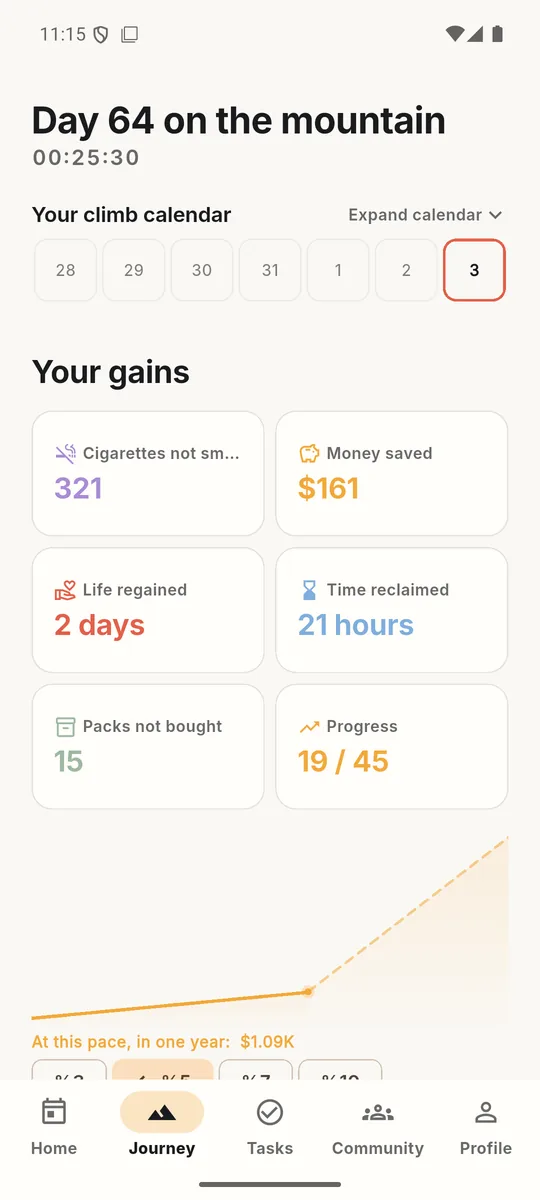
Your gains day by day: cigarettes not smoked, money saved, life reclaimed.
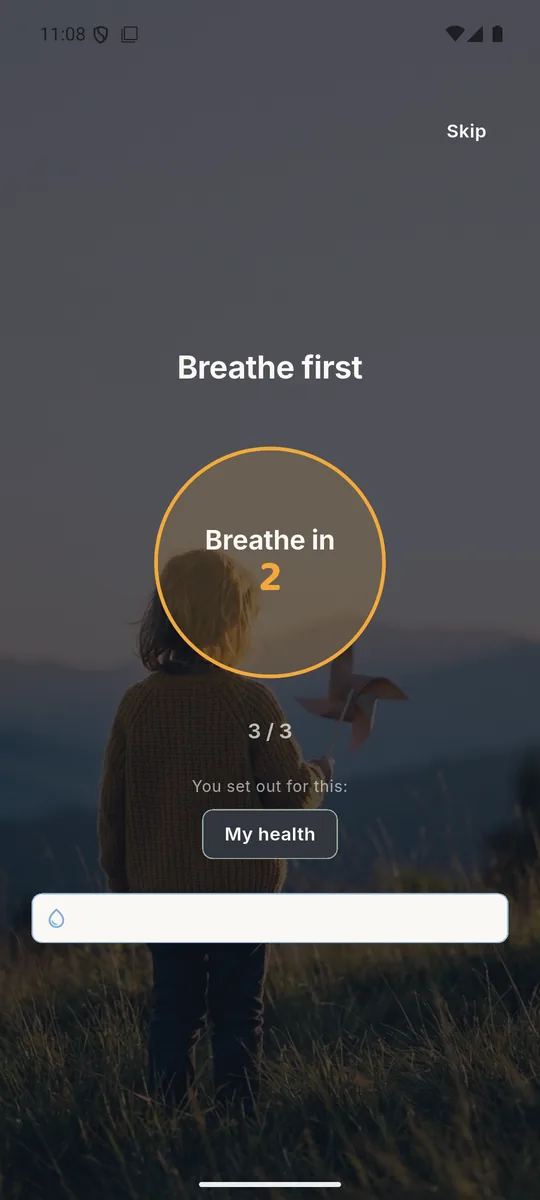
One tap when a craving hits: breathe first. A three-round guided breathing exercise.
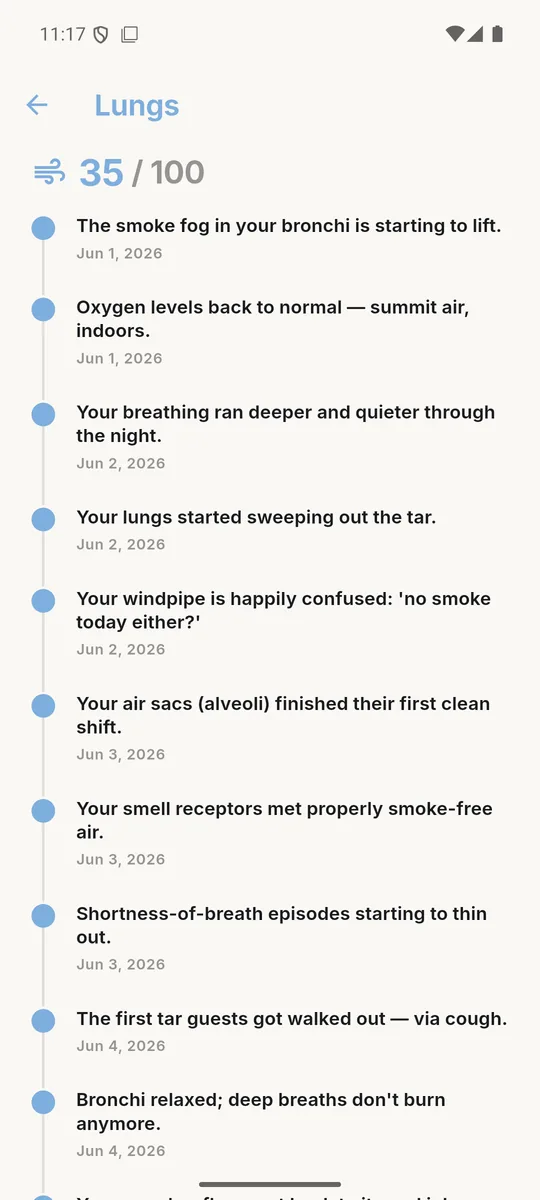
Six routes, 600 stops. Whatever is repairing in your body, you read it there.

You choose the view you are climbing — summit, forest, sea, or your own photo.
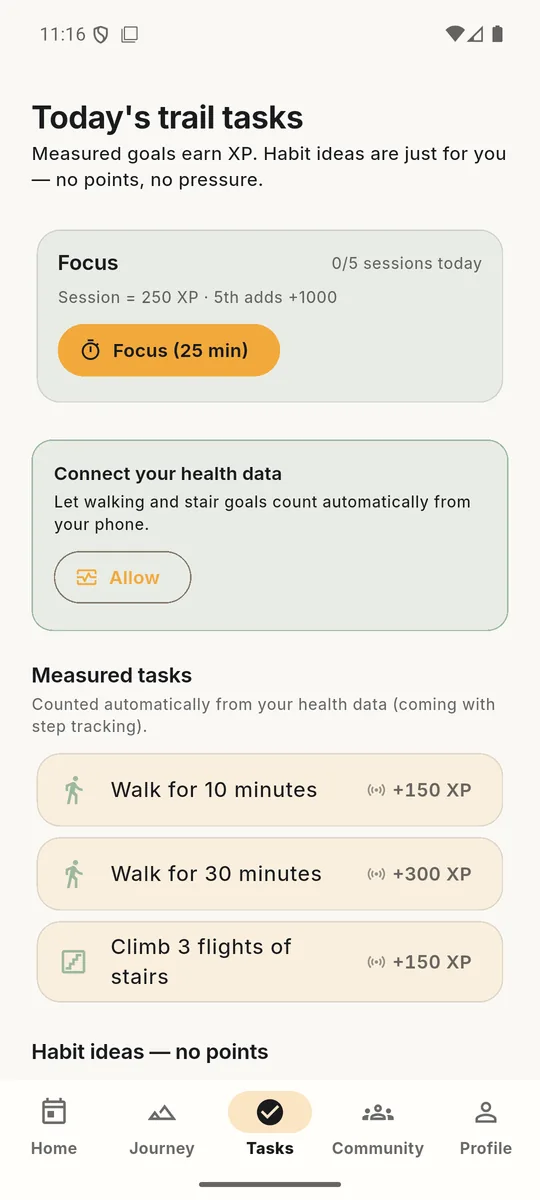
Small tasks every day. You are building a habit, not willpower.
Real screens from the app.
- Hear your own voice when a craving hits — the reason you quit, in your own words. You can add the voices of people you love, too.
- One tap for guided breathing and a distracting task — enough to fill those four minutes.
- 600 stops across six routes: read exactly what is repairing in your body today.
- Your numbers live on your device and keep counting offline — even on a plane.
- You pick the view you are climbing: summit, forest, sea, or your own photo.
- Interface, content and notifications in 14 languages.
You start free. The first day of the journey and the last are both yours.