If I’ve Been Smoking for Years, Is the Damage Already Done?
July 29, 2026·8 min read
Smoked for years and feel it’s “too late” to quit? See what really improves, what doesn’t, and how much life you can still gain at any age.
“I’ve been smoking for years. The damage is done. What difference would quitting make now?”
It sounds like an excuse, but it’s actually an honest question. And it has an honest answer.
Short answer: some damage does improve, some doesn’t, and even the part that doesn’t reverse can stop getting worse.
Does smoking damage really reverse?
Your body isn’t one single system; each part has its own repair speed.
The quick wins. Carbon monoxide levels in your blood drop back to normal in about 12 hours. Your sense of taste and smell become noticeably sharper within 48 hours. The airways in your lungs begin to relax in around 72 hours. These are changes you can literally measure in days.
The medium-term wins. Your circulation improves over a few weeks. The tiny hair-like structures in your lungs — the “broom” that sweeps out junk — start working again within a few months. That annoying cough many people get in this period is often part of healing: your lungs are clearing out built-up tar.
The long-term wins. According to the World Health Organization’s recovery timeline, your risk of coronary heart disease drops to about half that of someone who keeps smoking after 1 year. Your stroke risk moves closer to that of a non-smoker’s over the next few years. Your risk of lung cancer falls to about half after 10 years.
What doesn’t come back. Lung tissue destroyed by emphysema doesn’t grow back. Hardened, narrowed arteries don’t simply dissolve on their own. That’s the blunt part.
So what’s the point of quitting if some damage won’t reverse?
This is where most misunderstandings start.
Damage that doesn’t reverse can still have its progress slowed or stopped. Lung capacity goes down with age in everyone; smoking just makes that decline steeper and faster. When you quit, that extra steep drop levels off, and the curve returns to a normal aging line.
So what you’ve already lost may not return, but the speed of future loss goes back to normal. Over years, that difference adds up to two very different lives.
Think of a car rolling downhill with the brakes off. Hitting the brakes won’t magically take the car back up the hill. But it will stop the fall — and where the car eventually ends up depends completely on when you pressed the pedal.
In everyday terms: today you might need to stop twice when you climb a couple of flights of stairs. If you quit, you can likely stay at “two stops” for a long time. If you don’t, a few years from now you might need to stop after just one flight. The difference isn’t a promise of superhuman fitness — it’s avoiding extra loss, and over the long run that shapes almost everything.
How do I know where I stand right now?
People who say “the damage is already done” usually don’t actually know how much damage there is. Our guess is often darker than reality.
There’s a simple test that measures this: a lung function test (spirometry). It measures how much air you can blow out in the first second and compares your lung function to what’s expected for your age, as a percentage. A primary care provider can order it; the test itself takes about ten minutes.
Why it helps: if the result is good, the “it’s already too late” story loses its power. If the result is poor, the urgency to quit stops being abstract and becomes concrete. Either way you trade a vague fear for a clear number — and a number is easier to live with than a foggy worry.
⚠️ This isn’t a blanket screening recommendation, just an answer to the feeling of “I have no idea how bad it is.” Only your clinician can say what’s right for you.
How much life do you gain if you quit at different ages?
This has actually been measured, and the numbers are surprisingly clear.
In a famous 50‑year cohort study of British doctors, researchers estimated the average life gained by quitting at different ages:
Quitting at 60 — about 3 extra years
Quitting at 50 — about 6 extra years
Quitting at 40 — about 9 extra years
Quitting at 30 — about 10 extra years
The key point: even the latest quitters still gained time. Quitting at 60 is not “too late”; on average it meant about three additional years.
And these are averages. What any one person gains depends on how much they’ve smoked and their current health.
Why does “I’m already damaged” feel so comforting?
Because it makes the decision feel pointless.
If the damage is already done, there’s nothing you can do; and if there’s nothing you can do, there’s nothing to feel guilty about. Among all the delay lines, this is one of the most soothing.
⚠️ But there’s a quiet shift inside that sentence: it treats past damage and future damage as if they were the same thing. They’re not. The past is closed; the future is open. Every cigarette not smoked today is a piece of damage that never has to exist.
Is quitting harder when you’re older?
Not necessarily — in some ways, it can be easier.
If you’ve smoked for a long time, you have one big asset: experience. You’ve tried things before, you know your triggers, and you recognize your own excuses. Someone who has tried to quit before has an advantage over someone who never has — you’re not walking into unknown territory; you’re holding a map.
Motivation also tends to get more concrete with age: grandchildren, a diagnosis, getting short of breath on the stairs. Tangible reasons usually hit harder than vague ones.
There is a tougher side too, and it should be named plainly: years of smoking deepen the physical dependence on nicotine. If you reach for your first cigarette within five minutes of waking, going it alone on willpower gets tougher. That’s not a character flaw; it’s about dose — and the answer is not “more willpower” but the right kind of support.
What if I already have a diagnosis?
This is the heaviest version of “I’m already damaged” — and also the one with the clearest answer.
A diagnosis doesn’t make quitting less meaningful; it makes it more so by increasing the chance that treatment will work. Smoking slows wound healing, reduces how much oxygen reaches your tissues, and changes how your body processes some medications. Quitting isn’t just about how the illness itself behaves; it’s also about how well your treatments can do their job.
If you have surgery or a procedure coming up, this becomes even more obvious: quitting weeks before is one of the first things a surgical team is likely to suggest.
⚠️ The single most practical step here: tell your clinician you plan to quit. If you’ve smoked for years and take regular medication, quitting can mean dose adjustments are needed — smoking can change how quickly some drugs are broken down. It’s not a barrier, just something they need to know.
Two questions people ask all the time
“I’ve smoked for years and my cough has gotten worse — will quitting make it even worse?” In the first weeks, cough can actually increase, and that alone sends many people back. The reason is the opposite of what it looks like: those tiny lung hairs start working again and push old tar and mucus upward. So the extra cough is not a sign of new damage; it’s a sign of clean‑up. It usually settles down after a few weeks.
“At my age, can my lungs ever go back to what they were?” Not completely — tissue that’s gone doesn’t come back. But it’s the wrong question anyway. The real goal isn’t the lungs you had years ago; it’s the lungs you’ll have in the years ahead. Their story is being written now, and today is still in your hands.
Where do I even start?
No matter what age you are when you quit, the first 72 hours look very similar. Knowing why those three days are the hardest and what to expect ahead of time shrinks the part that depends on sheer willpower.
After that, it’s a timeline you can track. We’ve broken down what happens hour by hour — and that timetable works the same for someone who’s smoked for decades.
“The damage is already done” is true for the past. “So nothing I do now matters” is not.
The past is fixed, but the slope can change. The Body · Recovery route is all about that — the measurable side of how your body repairs.
If you want to see your “years smoked” and “years gained from today” side by side, plug your info into the counter on the right. And if you’d like to follow that math day by day, the Tar2Star app walks you through 600 milestones across six routes, one step at a time.
This page is a photo. The app is the film.
These numbers show today. Tar2Star shows you a new one every morning — and stays with you when a craving hits.
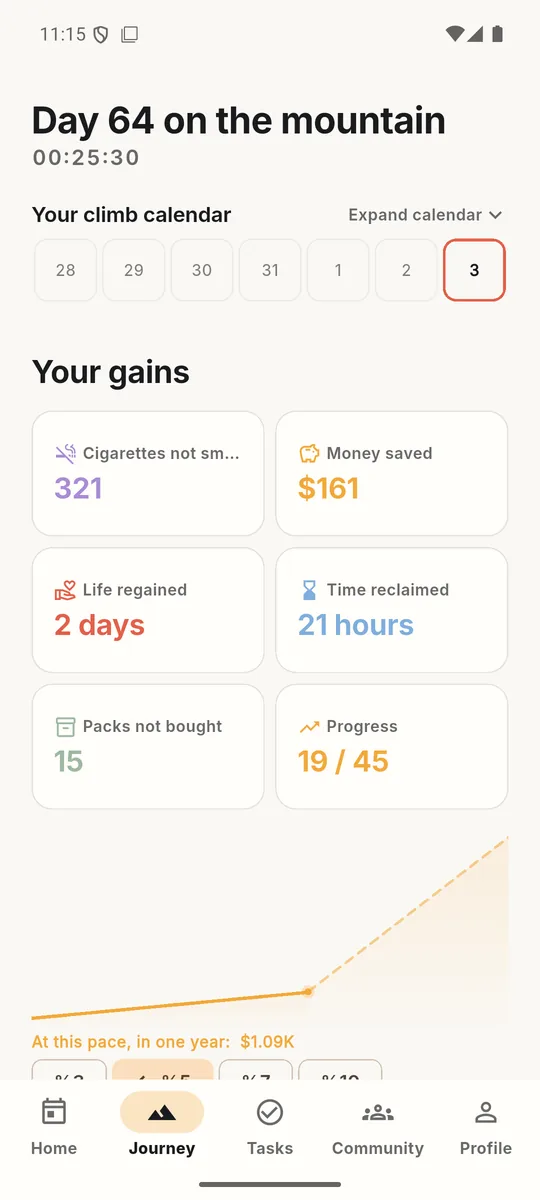
Your gains day by day: cigarettes not smoked, money saved, life reclaimed.
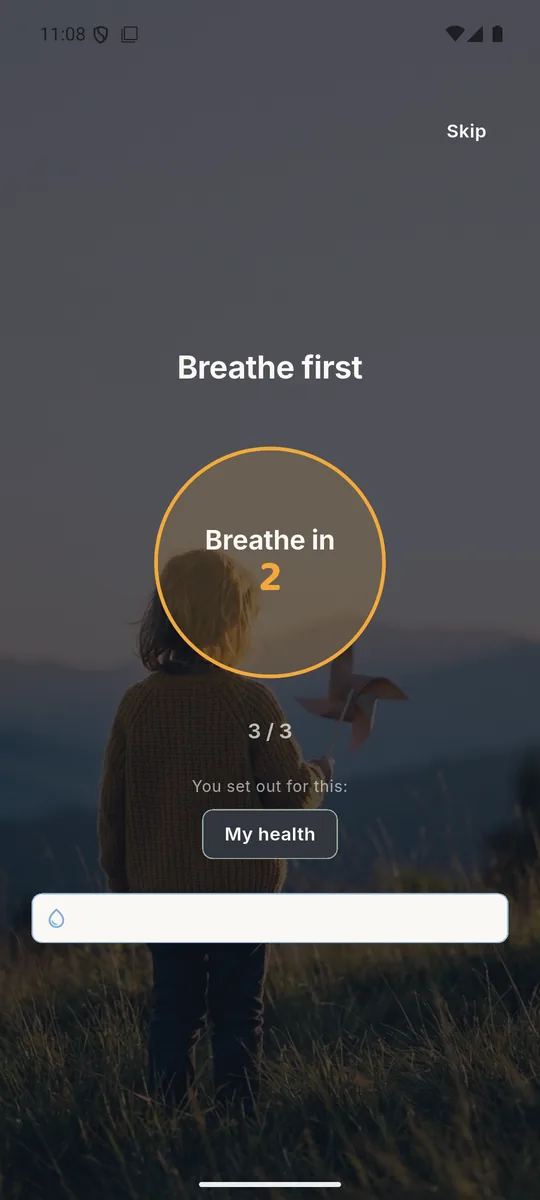
One tap when a craving hits: breathe first. A three-round guided breathing exercise.
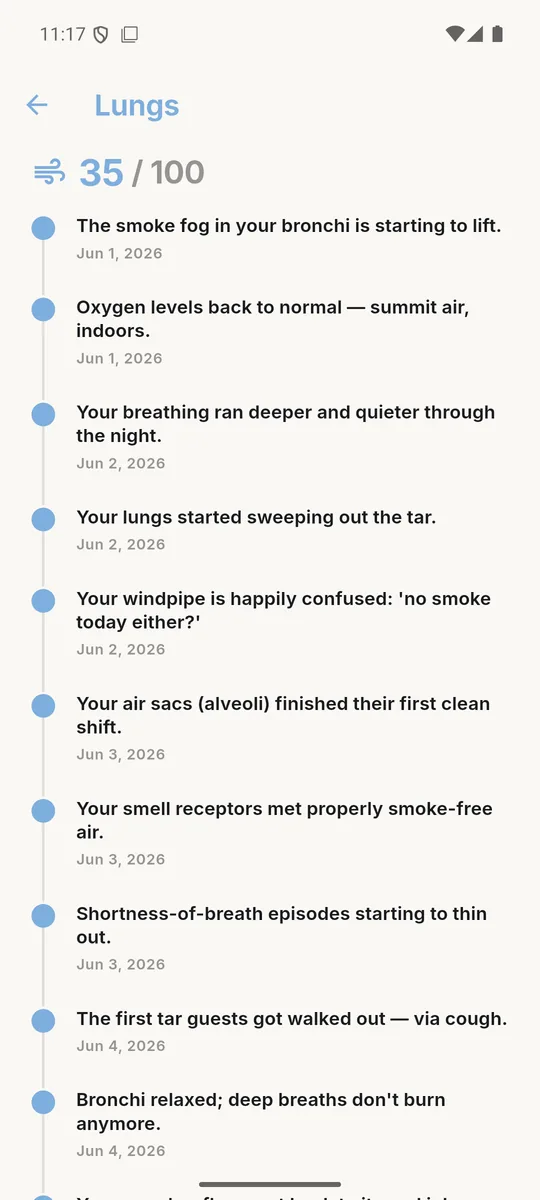
Six routes, 600 stops. Whatever is repairing in your body, you read it there.

You choose the view you are climbing — summit, forest, sea, or your own photo.
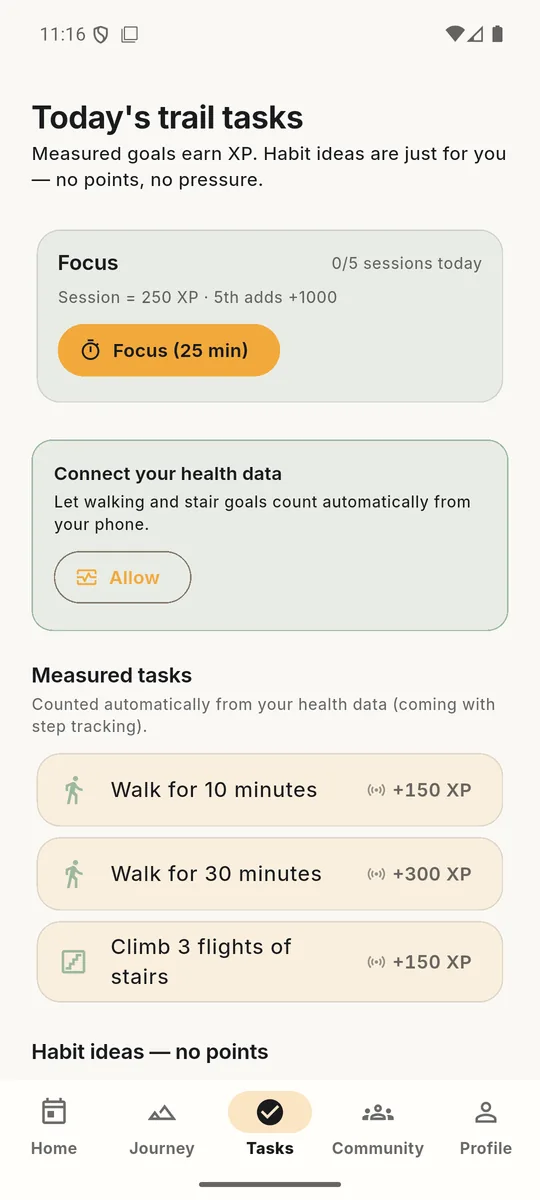
Small tasks every day. You are building a habit, not willpower.
Real screens from the app.
- Hear your own voice when a craving hits — the reason you quit, in your own words. You can add the voices of people you love, too.
- One tap for guided breathing and a distracting task — enough to fill those four minutes.
- 600 stops across six routes: read exactly what is repairing in your body today.
- Your numbers live on your device and keep counting offline — even on a plane.
- You pick the view you are climbing: summit, forest, sea, or your own photo.
- Interface, content and notifications in 14 languages.
You start free. The first day of the journey and the last are both yours.