What Will You Do With the Money You Save After Quitting Smoking? Decide Now
July 30, 2026·7 min read
You know how much you’ll save after quitting smoking. Decide now where that money will go, turn it into a visible goal, and make it work for your motivation.
You’ve already worked out what smoking costs you every month and year. Now comes the more important question: where is that money going to go?
If your answer is “I’ll just save it,” what usually happens is this: the money quietly disappears into everyday spending and never feels like savings. Three months later you’re asking, “Where did that money even go?” Instead of a clear, motivating gain, you’re left with a vague question mark.
Why you need a target
Because “saving in general” doesn’t really motivate anyone.
“I’ll save this much in a year” is a piece of information.
“With that money I’m going to buy this” is an expectation.
The second one creates something you don’t want to lose — and that’s exactly what steps in on the hard days.
You’ve seen the same mechanism in the article on owning your reason: a vague reason turns into something solid, and that’s what makes it durable.
Actually separating the money: three ways
Deciding in your head isn’t enough; the money has to be physically separated from the rest. The three most useful methods:
1. Automatic transfer. Set up a standing order with your bank so that, on the same day every month, the amount you used to spend on cigarettes moves into a separate account. It’s the most reliable method because you only decide once.
2. Daily cash jar. Every evening, put that day’s “cigarette money” into a box or jar. It sounds fiddly, but it has one big advantage: it’s visible. Watching the jar fill up can be more powerful than watching a number on a screen go up.
3. Per-pack transfer. Any time you would have bought a pack, move that exact amount from your main account to your savings account via your phone. You’re replacing an old habit with a new action.
⚠️ Whatever method you use, the money needs to be in a separate place. Money left in your main account doesn’t count as saved; it’s as good as spent.
This isn’t about willpower, it’s about visibility. The balance in your main account is already going up and down all the time, so you never really see whether the “cigarette money” is there or not. A separate account is one‑way — it only grows. A growing number is far more convincing than the abstract idea of “I’m saving.”
Week three’s trap: “I’ve already quit”
This is where most money goals collapse, and it helps to see it coming.
For the first two weeks, the transfer goes through, the money builds up. In week three the struggle eases, and a new sentence appears: “I’ve quit now, this money is just part of my normal income.” The transfers stop, and the goal fades out.
Here’s the problem: once the goal disappears, there’s no concrete loss staring you in the face on a tough night. The money plan isn’t just bookkeeping; it’s an anchor for weeks two and three.
⚠️ The fix is an automatic transfer. You make the decision once and you don’t have to re‑decide in week three. Manual methods tend to fail here; automation keeps going.
How to choose a good goal
Not every goal works the same. The ones that really help have three things in common:
It’s visible. Something with a picture, a name, a form. “Savings” are invisible; “that specific bike” is not.
It’s reachable. Your first target should be something you can afford within 3–6 months. A 10‑year goal can absolutely exist — it just needs to be second in line. The first goal has to be close enough that you actually get feedback.
It’s not about smoking. Not “I’ll reward myself with cigarettes,” obviously, but also not “I’ll buy something to cope with stress.” The goal shouldn’t be a tool for managing cravings; it should be a reward for having quit.
Examples at different scales
The exact numbers change from person to person, but the rough ladder tends to look like this:
1 week: a nice meal, a book
1 month: an item of clothing, headphones, a month’s gym membership
3 months: a short getaway, a gadget
1 year: a vacation, a major household item
10 years: car down payment territory — and with the opportunity cost it can be even higher
Keeping the first‑week goal small really matters: you want that first bit of feedback fast.
⚠️ The logic behind the ladder is this: the first goal isn’t there to motivate you; it’s there to prove the system works. Reaching the one‑week goal lets you say, “This is actually happening,” and that sentence does the heavy lifting. People who jump straight to a one‑year goal often walk three months with zero feedback — and that’s where many of them stumble.
When a goal “doesn’t work”
This part is for anyone who’s tried the money trick and felt, “It just doesn’t do anything for me.” Most of the time, it comes down to one of three things:
The goal is too far away. If your very first goal is a one‑year vacation, the first few months feel completely empty.
You could buy it anyway. If you’d be able to afford the thing even without quitting, your brain doesn’t link it to “cigarette money.” The goal needs to be something you reach only because of that extra money.
It’s a pure necessity. If it’s something you have to pay for anyway (a bill, a basic essential), there’s no sense of reward. That doesn’t mean needs can’t be goals — paying off debt can work really well — but the item you pick has to feel like a visible gain.
A quick test: if you hit the goal, would you feel like telling someone about it? If the answer is no, the goal is probably too weak.
A shared goal with your partner or family
If you’re quitting together with someone, a shared goal can be very powerful, because you’re combining two people’s “cigarette money” and reaching the target faster.
If you have kids, sharing the plan can also help: “This month, instead of spending it on cigarettes, we’re going to do this.” In the article on quitting when you have children, we talked about why this works — the whole process looks like a gain, not a loss.
⚠️ Just don’t turn the goal into a promise to your child. If something goes wrong, the emotional weight lands on them — and for the same reason, they shouldn’t be given the “police officer” role either. That’s covered here.
“I’m already in debt, a goal feels like a luxury”
In that situation, your goal doesn’t have to be a new purchase at all.
Paying down debt is a goal — and an extremely concrete one: “With my cigarette money, I’m knocking out this card’s payment.” It’s visible, reachable, and measurable.
For many people in this group, the motivation is actually stronger, because the numbers show up directly in day‑to‑day life.
⚠️ One warning: don’t make the entire debt the first goal. In most cases, a year’s worth of cigarette money won’t clear everything, and a distant target won’t give you feedback. One installment or one specific card works much better as a first step.
What happens when you hit the goal?
This question almost never gets asked, but the answer shapes everything that comes after.
Most people reach the goal, spend the money, and then the whole system stops — because there’s no “next” goal. But that first goal was never meant to be the finish line; it’s proof that the system works.
A simple rule: on the day you hit a goal, write down the next one. The amounts get bigger, but the structure stays the same — one week, one month, three months, one year.
And then something interesting happens: eventually you run out of things you actively want to buy, and the money stops being about any single object. It turns into savings. If you’ve reached that point, smoking usually isn’t a daily fight anymore — it’s a closed chapter.
Keep the goal in sight
Goals you only write down are easy to forget. Goals you actually see are much harder to ignore.
The simplest version: make your goal the lock‑screen picture on your phone. Your quit agreement belongs there too — they work well side by side: one reminds you why you quit, the other shows you what you’re gaining.
Vague savings don’t move you. A named, visible goal does.
Today, there are just two things to do: write down one goal for this week and one for this month. Then set up the automatic transfer at your bank.
If you want to watch the amount grow day by day, enter your quit date and pack price into the counter on the right. And if you want the same tracking in your pocket, the Tar2Star app was built exactly for that.
This page is a photo. The app is the film.
These numbers show today. Tar2Star shows you a new one every morning — and stays with you when a craving hits.
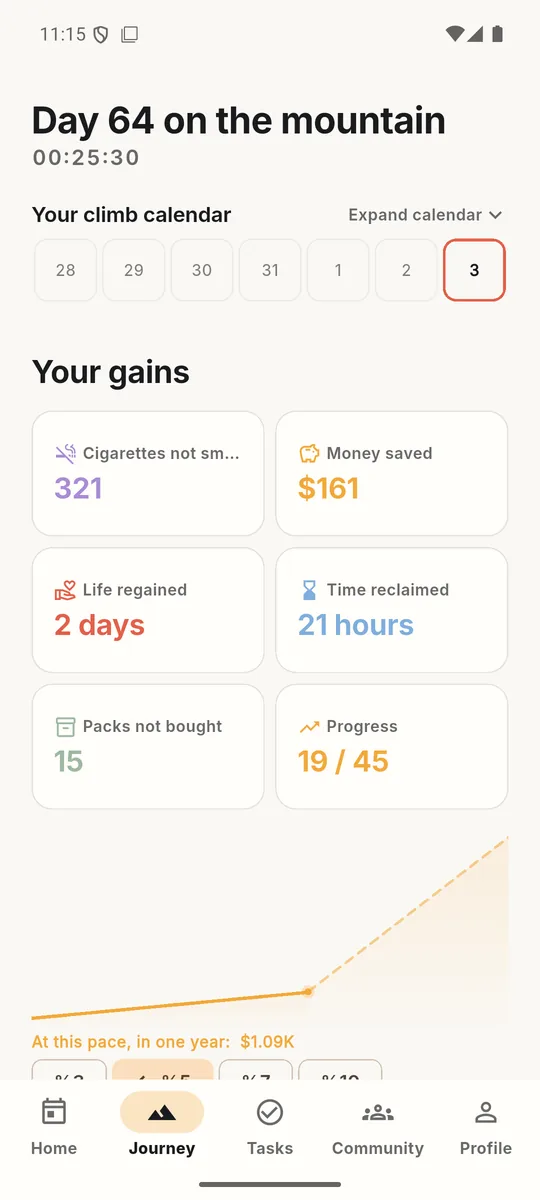
Your gains day by day: cigarettes not smoked, money saved, life reclaimed.
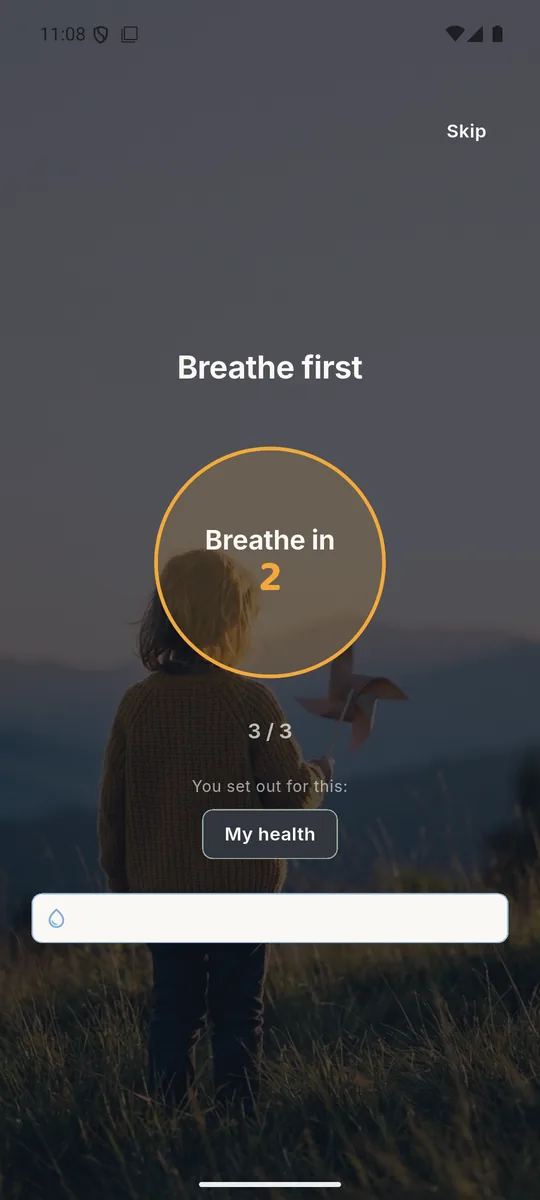
One tap when a craving hits: breathe first. A three-round guided breathing exercise.
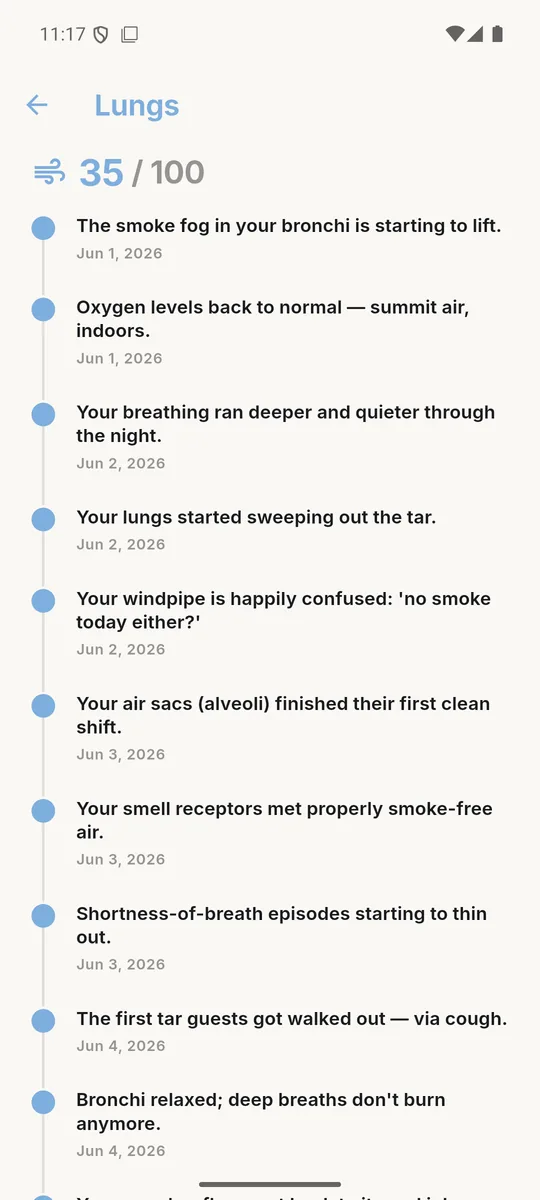
Six routes, 600 stops. Whatever is repairing in your body, you read it there.

You choose the view you are climbing — summit, forest, sea, or your own photo.
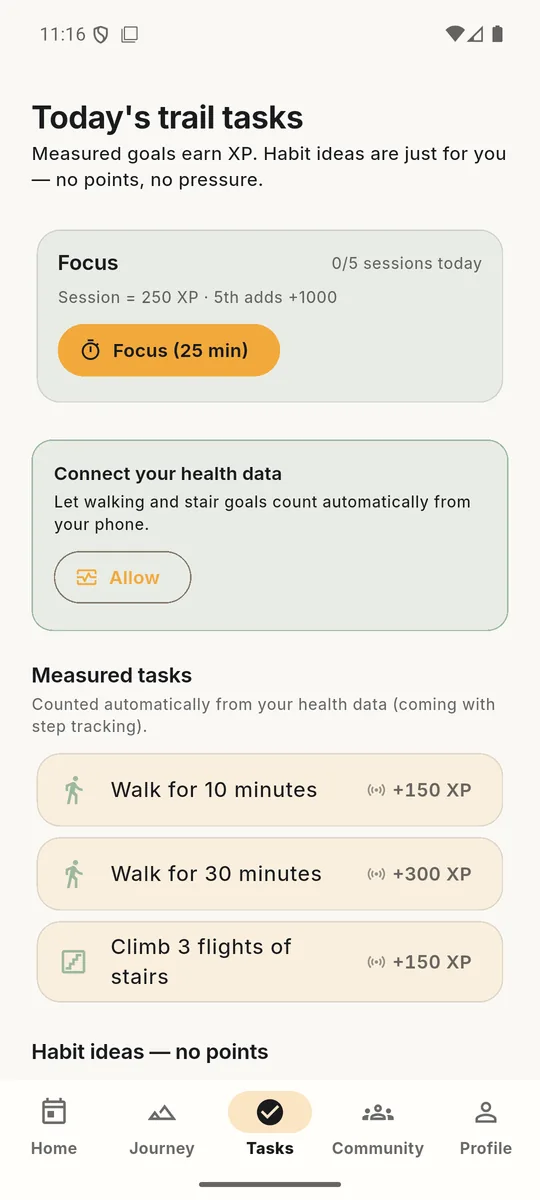
Small tasks every day. You are building a habit, not willpower.
Real screens from the app.
- Hear your own voice when a craving hits — the reason you quit, in your own words. You can add the voices of people you love, too.
- One tap for guided breathing and a distracting task — enough to fill those four minutes.
- 600 stops across six routes: read exactly what is repairing in your body today.
- Your numbers live on your device and keep counting offline — even on a plane.
- You pick the view you are climbing: summit, forest, sea, or your own photo.
- Interface, content and notifications in 14 languages.
You start free. The first day of the journey and the last are both yours.