Quit smoking contract: a 6‑point deal with yourself
July 30, 2026·8 min read
Thinking about quitting every day is exhausting. A simple 6‑point written contract fixes the date, plans your weak spots and stops “I already blew it” relapses.
A decision that only lives in your head gets re‑negotiated every day.
A decision that lives on paper doesn’t get argued with — it either gets followed or it doesn’t. That sounds like a small difference; in practice, it’s huge.
This article is a tool, not a pep talk: a six‑point contract you write with yourself.
Why does writing it down work?
There are three reasons, and none of them are mystical.
1. It pins the decision to a date. A thought like “within two weeks” is elastic — a week later it can still be “within two weeks.” A written date doesn’t stretch.
2. It gives you a ready‑made answer for hard moments. A craving is a terrible time to think clearly. A written note lets you read instead of think in that moment.
3. It makes your promise to yourself visible. An invisible promise isn’t exactly forgotten — but you also don’t have to bump into it.
This is basically an expanded version of your anchor sentence: instead of one line, you create a full document.
And there’s a fourth, rarely mentioned reason: writing closes the “just thinking about it” phase. As long as the decision only lives in your head, it still feels like it’s being considered. The moment it hits paper, the “thinking” phase ends and the “doing” phase starts. A lot of people stay stuck for weeks in “I’m thinking of quitting” — not because they lack willpower, but because that phase doesn’t end on its own.
The six parts of your contract
Grab a sheet of paper or open a notes app. This takes about ten minutes.
1. The date. “I will stop smoking on __ / __ / ____.” Day, month, year. “Soon” is not a date. How to choose the date, what to do with that last cigarette in the evening and how to handle the first hour of quit day are all covered separately.
2. Your reason. Two sentences from your own life. Keep it concrete, not abstract: stairs, that morning cough, money, your kid’s face. And make sure at least one reason is not dependent on anyone else.
3. My three tough moments — and what I’ll do instead. These come from your daily log: three specific “9 out of 10” moments. Next to each, write one concrete replacement action in a single sentence: “I’ll drink my coffee at the table,” “I’ll always keep gum in the car.”
4. Who I’ll call if I struggle. One name and one number. This is the line people skip most often — and the one that helps the most.
5. If I smoke one cigarette, here’s what I’ll do. This one sounds strange at first, but it’s essential — there’s a whole section on it below.
6. Signature and date. Your own signature. It can feel a bit childish; what it really does is turn this from a vague intention into an actual commitment.
Why is point five non‑negotiable?
Most “quit contracts” are written as “never again” — and that’s exactly why they collapse at the very first cigarette.
Here’s the pattern: if your contract has no clause for a slip, then one slip means the contract is over. Cue the familiar sentence: “Well, I’ve already blown it.”
But a slip is not the same as going back. The bridge back to full‑time smoking isn’t the cigarette; it’s that sentence. If you’ve gone back before, then what you’ll do differently this time is actually the most important part of your plan.
Point five blows up that bridge in advance. For example, you might write:
“If I smoke one cigarette: I throw the pack away, I write down the time, and I continue with the same contract the next morning. One cigarette does not cancel this contract.”
This isn’t an escape hatch. It does the opposite: it closes the most common escape hatch — “I slipped, so it’s all ruined.”
What should you NOT write?
There are three things to avoid:
“Never again.” It’s heavier than it looks, and the first slip can make the whole structure collapse.
Punishments. “If I smoke, I’ll donate X dollars” and similar deals help a few people, but for most they just create guilt — and in this area, guilt is gasoline, not brakes.
Promises to other people. Writing “I promise my partner I’ll quit” makes the whole thing about someone else. When things get hard, that can easily flip into resentment. The contract is with you.
Example: a filled‑in contract
A blank template is hard to picture; a filled one is easier. The example below belongs to an imaginary person, but you can copy the structure exactly:
1. I will stop smoking on May 12. 2. My reasons: I don’t want to wake up coughing in the mornings. And my daughter is starting to notice my cigarette pack. 3. Hard moments: (a) Morning coffee → I’ll drink my coffee at the table, not standing. (b) In the car → I won’t keep a lighter in the car; I’ll keep nuts in the glove box. (c) Evening on the balcony → I’ll do the dishes at that time. 4. If I struggle, I’ll call Serkan — 0532 ... . 5. If I smoke one cigarette: I’ll throw the pack out, write down the time, and continue with the same contract the next morning. 6. Signature / May 10
Notice what the replacement plans in point three have in common: none of them say “I’ll just tough it out.” Every one of them says what will go in place of the cigarette. An empty moment is a moment that tends to refill itself with smoking.
⚠️ The most common mistake when writing this contract is filling in point three by guessing. If you haven’t kept a one‑day log, those three moments will probably be wrong — and a plan built for the wrong three moments will fall apart in the first week.
Where should you keep it?
Somewhere you can actually see it — and in two copies:
As your phone lock screen or pinned at the top of your notes app (so it’s there in a crisis)
On the fridge door or your desk (so you catch it with your eyes during the day)
⚠️ A contract filed away in a drawer works just like a contract that was never written. The point is not to archive a document; it’s to have something you can read when things get rough.
Do you need a witness?
Optional, but helpful: showing your contract to one person automatically activates point four.
How to choose: someone you’d feel okay messaging when you’re struggling — but who won’t turn it into a daily exam. The question of who to tell is its own topic.
Review it after the first week
This contract isn’t carved in stone. After a week, read it again and update two things:
Your reason list. Add at least one change you’ve actually felt in your body in that first week: sleep, taste, breathing. That kind of addition is what shifts your motivation from external to internal.
Tough moments. The three times you thought would be hardest and the three that actually hit hard are usually not the same. Swap in the real ones.
⚠️ Do the same review at week two and week four. Here’s why: in week one, your reasons tend to be defensive (“I don’t want to feel bad anymore”). By week four, they often turn into something you can measure (“I’m not out of breath on the stairs anymore”). The second kind is much more solid — and if your contract only has the first kind written down, it doesn’t help much.
What if you “break” the contract?
Point five already contains the official answer — but in real life, two more things usually happen, and it helps to know them in advance.
First: you won’t want to look at the document. People who slip often remove the contract from their lock screen — because seeing it feels like being accused. The contract’s job isn’t to shame you. Its job is to show the way back.
Second: the date question appears. “Do I start over with a new contract or keep using this one?” In practice, the simplest answer is: keep this one and only update point three. Slips usually happen in a moment that wasn’t on your list. Now you know that moment. Writing a brand‑new contract means throwing that information away.
⚠️ You also don’t need a new date. Point one is your “quit date,” not the start of a “perfect streak.” Resetting the date after every slip turns the contract into a scoreboard — and scoreboards are very easy to “lose” on.
A decision in your head is open to debate. A decision on paper isn’t.
Today’s job is simple: write down the six points, sign them, set the contract as your phone lock screen. Ten minutes.
If you also enter the date from point one into the counter on the right, the days you’ve built up become part of the same document. And if you want the contract and your crisis‑tools in your pocket all the time, that’s exactly what the Tar2Star app was built for.
This page is a photo. The app is the film.
These numbers show today. Tar2Star shows you a new one every morning — and stays with you when a craving hits.
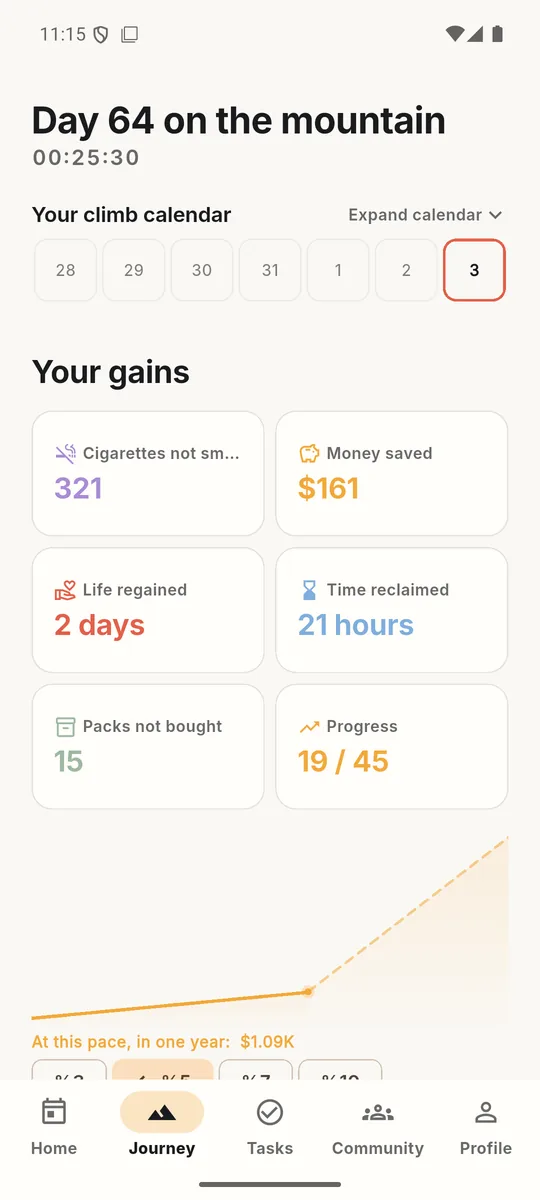
Your gains day by day: cigarettes not smoked, money saved, life reclaimed.
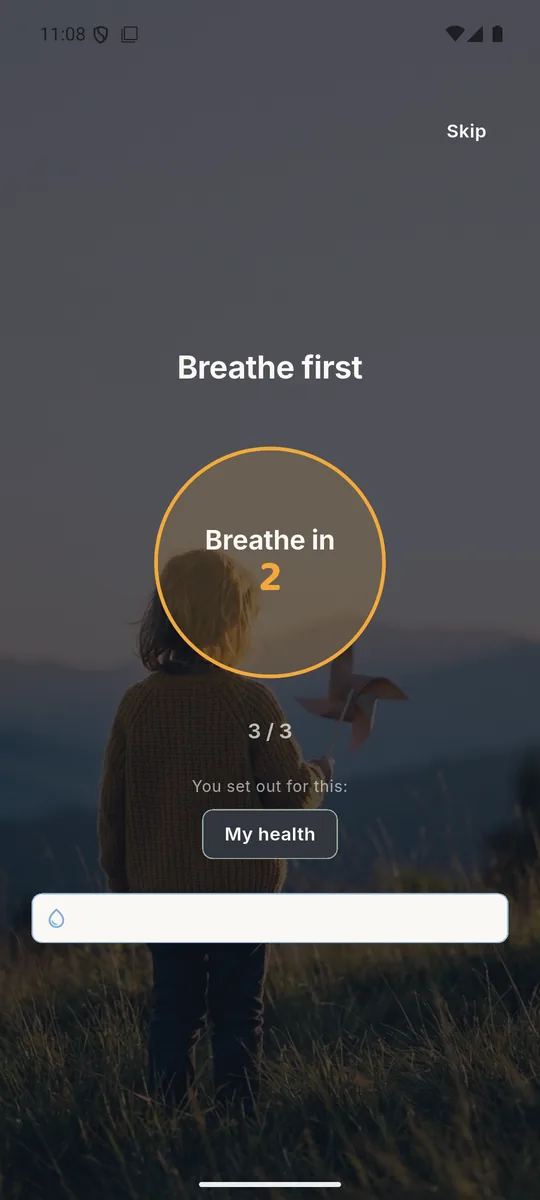
One tap when a craving hits: breathe first. A three-round guided breathing exercise.
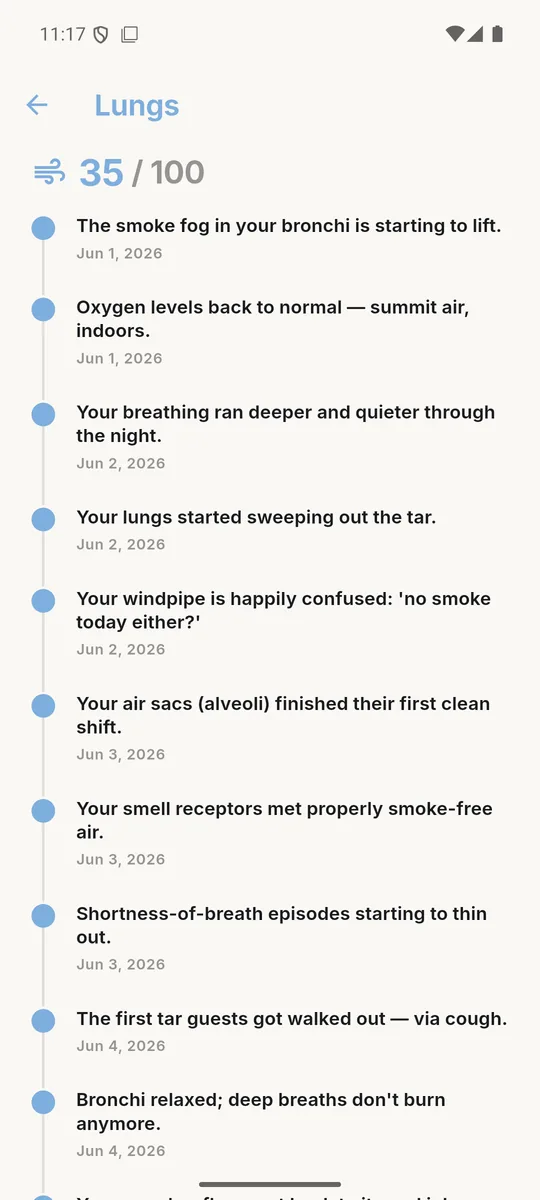
Six routes, 600 stops. Whatever is repairing in your body, you read it there.

You choose the view you are climbing — summit, forest, sea, or your own photo.
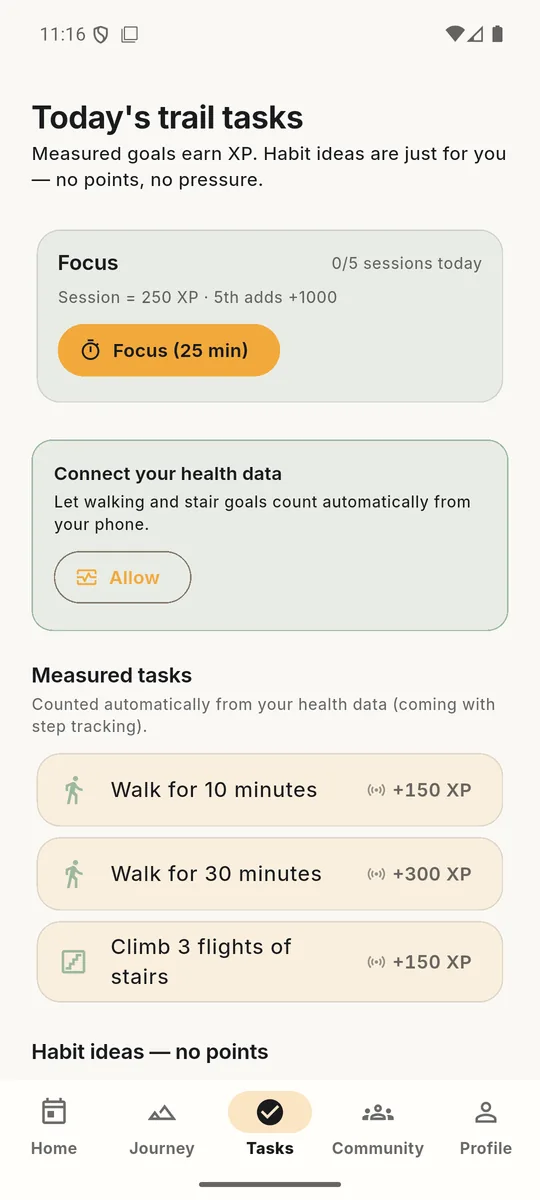
Small tasks every day. You are building a habit, not willpower.
Real screens from the app.
- Hear your own voice when a craving hits — the reason you quit, in your own words. You can add the voices of people you love, too.
- One tap for guided breathing and a distracting task — enough to fill those four minutes.
- 600 stops across six routes: read exactly what is repairing in your body today.
- Your numbers live on your device and keep counting offline — even on a plane.
- You pick the view you are climbing: summit, forest, sea, or your own photo.
- Interface, content and notifications in 14 languages.
You start free. The first day of the journey and the last are both yours.