Does Smoking on the Balcony Really Protect Your Child?
July 30, 2026·8 min read
Smoking on the balcony cuts most of the smoke your child breathes in, but it doesn’t give full protection. Here’s what it fixes, what still leaks, and how to tighten it.
Smoking on the balcony is the most common “solution” for smoking at home — and it does work. It’s important to say that up front, because this article isn’t here to tear that down.
But if the question is “does it fully protect my child?”, the answer isn’t “yes”. It’s: it protects them partly. Knowing exactly where that gap is makes it possible to close a lot more of it.
What does the balcony actually fix?
It blocks the main route of exposure: breathing in smoke directly.
If someone smokes in the same room as a child, the air in that room changes measurably within minutes. When the cigarette is smoked out on the balcony, that spike doesn’t happen. We’ve written separately about why a cracked window isn’t enough — a balcony is a big step up from “window open”.
So the order looks like this: smoking indoors → smoking with a window open → smoking on the balcony → not smoking at all. The balcony is second-best on that list, which is a good spot to be.
So what still leaks in?
There are three routes — and all three can be measured.
1. The door. Every time the balcony door opens, some smoke comes in — especially if the airflow is toward the room. When you finish your cigarette and open the door, the smoke still hanging on the balcony often walks in with you.
Ten cigarettes a day means twenty door openings: once going out, once coming back in. Each one seems tiny; the total isn’t.
2. Clothes, hands, hair, and breath. After the cigarette is out, you still carry residue on you for a while — on your clothes, your skin, your hair, and in your breath. When you pick up your child, they meet all of that up close.
This is especially important with babies: in your arms, their face is right at your chest level, and anything they can reach, they explore with their mouth. The closest contact lines up with the most fragile age.
3. The balcony itself. If your balcony is enclosed with glass, it’s basically another indoor room, and residue builds up there too. If your child plays on that balcony, a lot of the protection disappears.
Those three rules tend to loosen one by one. In many homes, the “door closed” rule is the first to go when winter hits; the “only open balcony” rule often goes when the glass goes in — and neither feels like “we changed the rule”, because there was never a written rule to begin with.
Residue: the part most people miss
After the visible smoke is gone, tar and nicotine stay behind on surfaces. This is called third-hand smoke.
Smoking on the balcony cuts down the build-up of this residue inside the home a lot; that’s a real gain. But what you carry in on yourself is still there: on your clothes, hands, and hair.
There’s also the least visible part: soft, absorbent surfaces — couch fabric, curtains, carpets, toys. They hold on to residue from the air for a long time. So even when the sentence “I don’t smoke inside anymore” is true today, the older build-up can sit there for a while. Our home clean-up guide is aimed exactly at that build-up — it’s the second big job to park next to the balcony rule.
For the wider picture on second- and third-hand smoke, you can check the World Health Organization’s tobacco fact sheet. The detailed picture of your own home, though, is something only you can draw.
That’s why in a home with kids, the balcony rule usually needs two extra habits alongside it — they’re just below.
Why does the rule fall apart in winter?
January is when balcony rules are under the most pressure.
It’s not about willpower, it’s about physics: it’s cold outside, the door gets left slightly open, cigarettes are smoked faster, and balconies get enclosed. Three changes at once, and each one cuts the protection.
⚠️ The most common winter mistake is leaving the door slightly open. A door that’s ajar behaves much more like a fully open door than a closed one: the narrow opening speeds up the air flowing through and pulls smoke into the room. It’s the worst option, disguised as the most convenient.
A practical swap: instead of stretching out your balcony time in the cold, put a coat on. Five seconds of getting dressed keeps the rule alive.
Five rules that make the balcony actually work
If you’re going to keep smoking on the balcony, these moves make a clear difference to how much they protect your child:
Shut the door. A door left ajar wipes out most of what the balcony is doing. Winter is when this one usually slips.
If the balcony is enclosed, open a window. A glassed-in balcony is just a small room.
Wash your hands afterward. Five seconds, and it’s the single highest-return step — contact with kids starts with hands.
Change or air out your top layer. Especially if you’re about to hold a baby.
Don’t keep an ashtray indoors. An indoor ashtray is a backup plan, not just a container.
⚠️ Timing also matters: not picking up a baby right after a cigarette cuts down what’s carried on your breath. Ten minutes makes a noticeable difference.
The honest answer
The balcony does protect your child to a large extent. With the five rules above, that protection gets stronger.
But full protection comes from one thing only — and skipping it here wouldn’t be honest: quitting.
This isn’t about making you feel guilty — guilt usually backfires here. The reason to say it is this: for many people, the balcony rule becomes a parking spot. “I already smoke on the balcony” quietly shuts down the idea of quitting altogether.
Using the balcony as a bridge
Here’s the most practical part.
The balcony rule is actually a built‑in mechanism that pushes you toward quitting: every cigarette now means getting up, opening the door, stepping out into the cold. That puts distance between the urge and the cigarette — and that distance wipes out the “automatic” ones.
Most people who smoke only on the balcony have already cut down, often without noticing. The ones that disappeared aren’t random: they’re the ones that weren’t worth the trip — the least wanted cigarettes. The ones still left are the hardest to shift. That also explains why a “cut down and then quit” plan often stalls right there.
There’s also the time side. Getting up, putting on a layer, stepping out, smoking, coming back in, washing your hands — that’s about 8 minutes per cigarette. Ten cigarettes a day adds up to 80 minutes a day, roughly 490 hours a year — more than thirty full days of awake time. The balcony rule makes that time visible; when you smoke indoors, the same minutes disappear into the background.
In Hemingway’s The Sun Also Rises (1926), one character is asked how he went bankrupt; his answer is two phrases: “Gradually and then suddenly.” Quitting works like that for a lot of people — the balcony rule takes care of the “gradually” part, the quit date is the “suddenly” part.
⚠️ But a bridge needs the other side marked. Without a date, this setup can go on for years and turn into endless cutting down with no finish line. We’ve got a separate guide on how to choose a quit date.
If the balcony rule has already cut your number down, you’re not starting from zero: some of the ties are already broken. One day of note‑taking maps out the cigarettes that are left in about ten minutes — and that list is usually shorter than people expect.
Three common questions
“If I keep the door shut and just crack a window, is that enough?” They do different jobs. The door stops smoke from getting into the room; the window stops it from building up on the balcony. You need both — and neither costs you anything.
“The smoke comes from my neighbor’s balcony. What can I do?” That’s a real problem, and the only tool here is a conversation. The line that tends to work best is information, not complaint: “We have a baby — if possible, could you close the window on our side when you smoke out there?” When the request is specific and small, it’s more likely to land well.
“Can I use an e‑cigarette on the balcony instead?” That’s a separate topic with no short answer here. One thing still holds: if something doesn’t produce smoke, that doesn’t mean it has no aerosol. The “no smoking indoors” rule doesn’t vanish just because the product changes.
Does the same logic work in the car?
No — a car is much worse and needs its own discussion. The space is tiny, ventilation is limited, and a child is fixed in one seat. We’ve written about smoking in the car separately.
A balcony protects your child a lot; closing the door and washing your hands boosts that protection further.
One thing you can do today: make “door fully closed” your new automatic move, and move any ashtrays out of the house.
If you want to see how the balcony rule has already changed your daily number, you can plug it into the counter on the right. And when you pick a quit date, the crisis‑moment tools in the Tar2Star app are built for exactly those minutes.
This page is a photo. The app is the film.
These numbers show today. Tar2Star shows you a new one every morning — and stays with you when a craving hits.
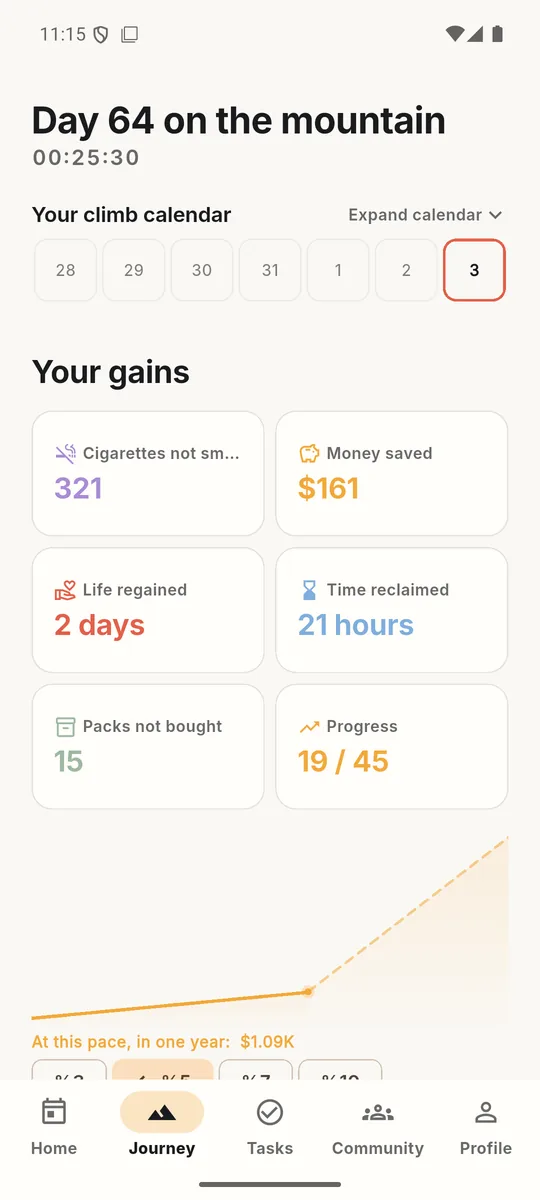
Your gains day by day: cigarettes not smoked, money saved, life reclaimed.
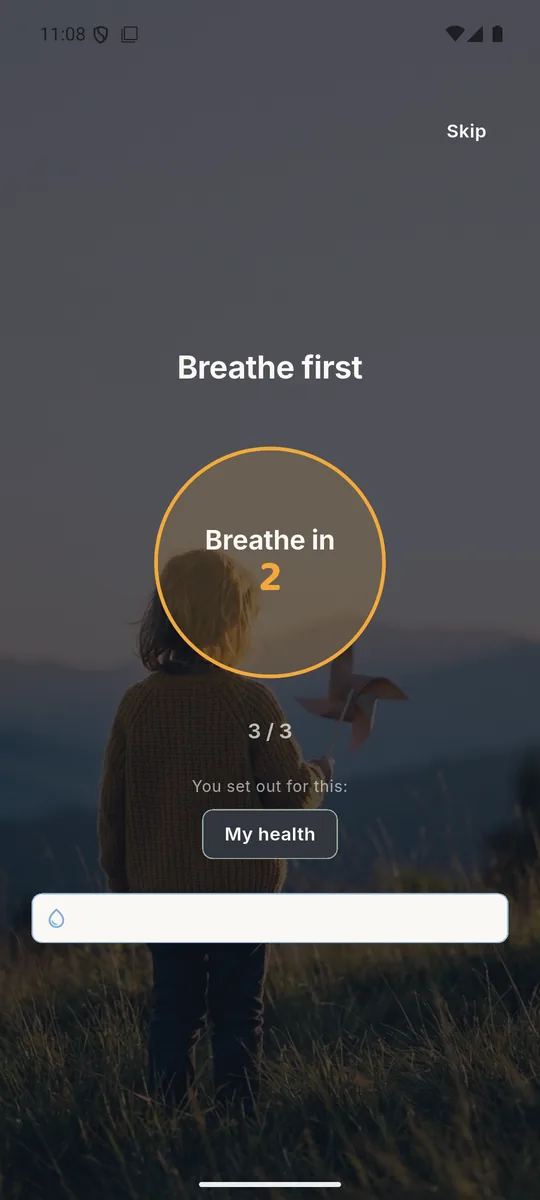
One tap when a craving hits: breathe first. A three-round guided breathing exercise.
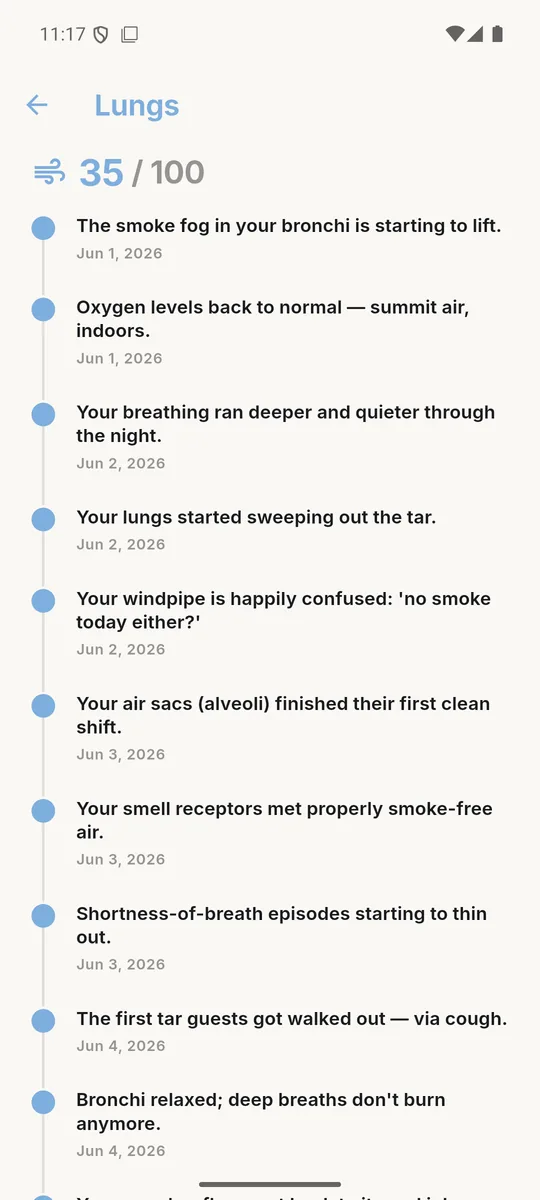
Six routes, 600 stops. Whatever is repairing in your body, you read it there.

You choose the view you are climbing — summit, forest, sea, or your own photo.
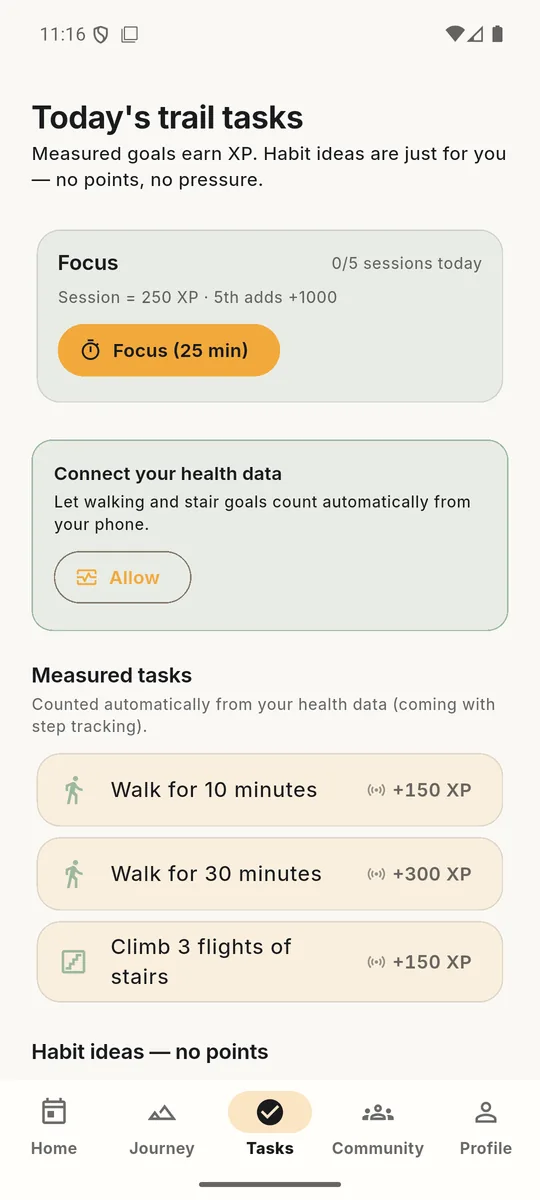
Small tasks every day. You are building a habit, not willpower.
Real screens from the app.
- Hear your own voice when a craving hits — the reason you quit, in your own words. You can add the voices of people you love, too.
- One tap for guided breathing and a distracting task — enough to fill those four minutes.
- 600 stops across six routes: read exactly what is repairing in your body today.
- Your numbers live on your device and keep counting offline — even on a plane.
- You pick the view you are climbing: summit, forest, sea, or your own photo.
- Interface, content and notifications in 14 languages.
You start free. The first day of the journey and the last are both yours.